Ancient Agora of Athens: 3 reliable ways to book tickets
In July 2025, the Ancient Agora of Athens changed its visitor flow. The main entrance closed for redevelopment, and entry and exit were rerouted through the gate opening onto Thiseio Square.
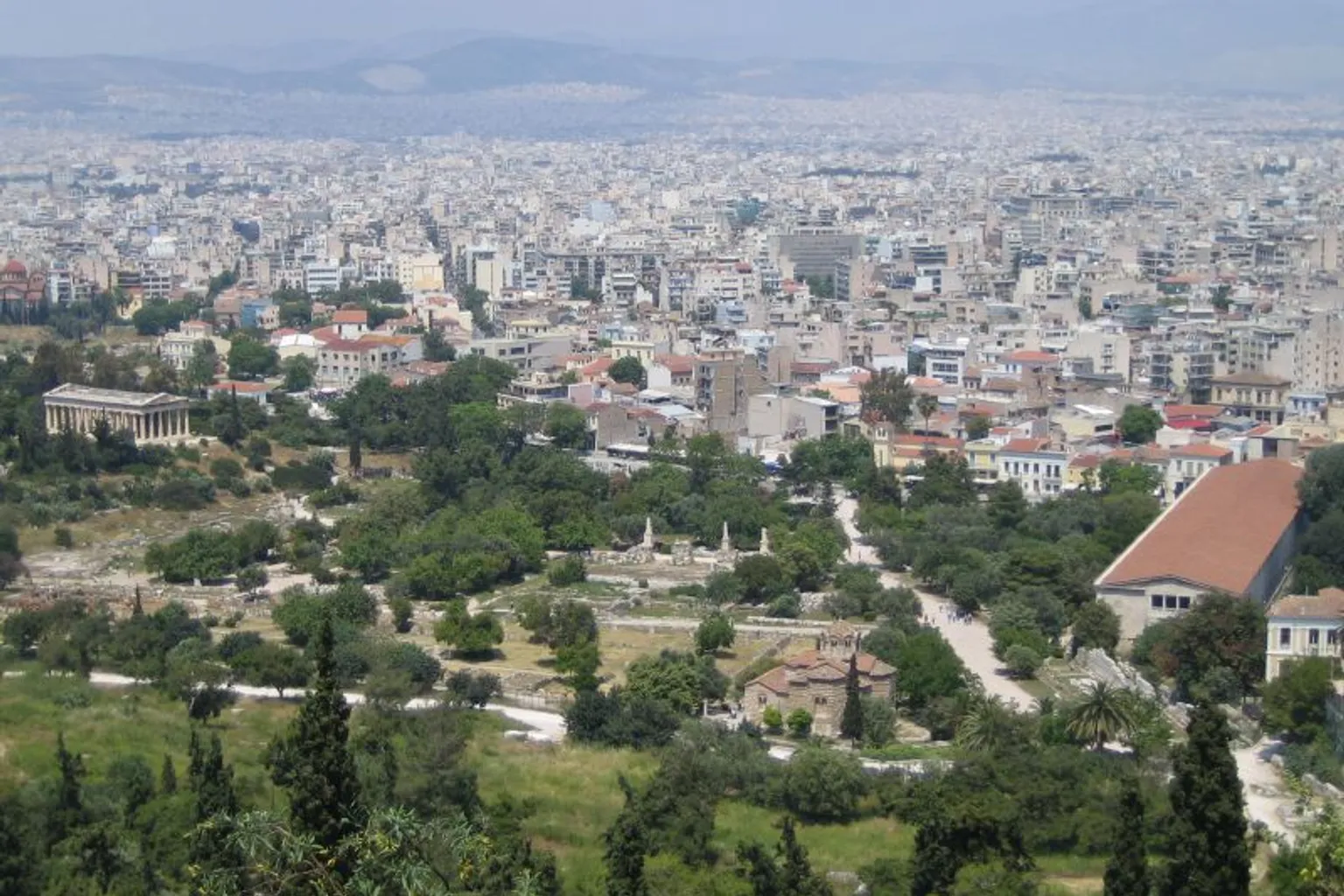
That change is easy to miss when planning from older maps, archived travel posts, or an itinerary built around the familiar Monastiraki approach.
Tickets and prices
Ancient Agora of Athens
| Option | Type | Duration | Rating | From | |
|---|---|---|---|---|---|
| Entry ticket · 2 sites & 2 audio toursGetYourGuide | entry ticket | — | ★ 4.1136 reviews | from€44 | Book tickets |
| Self-guided audio tour · 1.5–2 hoursGetYourGuide | guided tour | 1.5–2 hr | ★ 3.9554 reviews | from€26 | Book tickets |
| Official ticket · State admissionOfficial | official ticket | — | — | from€20 | Book tickets |
At the box officeAdult€20Official website — tickets-athens.com
The ticket itself is not complicated. The difficulty is choosing the channel that matches the kind of visit you are planning: a fixed itinerary booked in advance, a spontaneous walk-in, or a visit with interpretation already built in. There are three dependable ways to book tickets for the Ancient Agora of Athens: the official state e-ticketing portal, the on-site ticket office, and authorized third-party platforms offering digital tickets, audio guides, or guided tours.
Each option solves a different problem. The official portal reduces uncertainty before the day of the visit. The ticket office preserves flexibility. A third-party platform can add explanation and structure, though usually at a higher total cost.
The official e-ticketing portal
The Hellenic Organization for Cultural Resources Development operates the state ticketing system at tickets.hh.gr, the platform used for major archaeological sites under the supervision of the Greek Ministry of Culture. For most independent visitors, this is the most direct way to book tickets for the Ancient Agora of Athens.
The process is relatively plain:
1. Select the Ancient Agora from the list of archaeological sites.
2. Choose an available date and ticket category.
3. Complete the payment process.
4. Keep the digital confirmation available on your phone for entry.
The ticket gives access to the open-air archaeological site and the Museum of the Ancient Agora inside the reconstructed Stoa of Attalos. That detail matters when comparing prices. The museum is not a separate stop requiring another ticket once you have paid for the Ancient Agora; it is part of the same visit.
The portal is available in Greek and English, and the booking interface is designed for visitors who already know what they want: a particular site, a particular day, and a straightforward entry credential. It is less useful as a research tool. The site does not replace a guidebook, and it does not attempt to explain why the Temple of Hephaestus, the Stoa of Attalos, the Panathenaic Way, and the civic buildings of the Agora belong to one historical landscape. Its job is narrower and more practical.
That narrowness is an advantage if your Athens itinerary is already fixed. Someone planning the Acropolis for one day and the Ancient Agora for another can book each site separately, save the confirmations, and avoid making a ticket decision at the entrance. The official portal is also the clearest place to check the current availability, ticket categories, seasonal conditions, and any operational notices connected with the site.
What the official ticket covers
The Ancient Agora ticket covers two connected experiences:
- the archaeological site itself, including the surviving remains and monuments spread across the open-air area;
- the Museum of the Ancient Agora in the Stoa of Attalos.
The Roman Agora is separate. It is nearby, but proximity does not turn the two sites into one admission. Since the multi-site combination pass was discontinued in 2025, visitors who want to see both need to plan for separate site tickets.
This is one of the most important changes for returning visitors. Older advice may describe a single combined pass covering the Acropolis and several other archaeological sites, including the Ancient Agora. That system no longer defines the 2025 visit. The official website for Ancient Agora tickets should therefore be treated as the current reference point rather than relying on a saved screenshot or a travel article written under the previous pricing system.
When advance booking is worth it
Advance booking is most useful when the Agora is one part of a tightly timed day. It can help if you are coordinating the site with:
- a museum reservation;
- a guided visit elsewhere in central Athens;
- a meal or performance with a fixed start time;
- a family itinerary that leaves little room for an uncertain queue;
- a visit planned during a busy period or on a free-admission date.
The official e-ticket does not eliminate every practical uncertainty. It does not change the weather, the amount of shade on the route, or the time needed to explore the Stoa museum properly. It does, however, remove one decision from the day itself. You arrive knowing which site you are entering and which ticket you need.
Buying at the entrance: the on-site counter and the Thiseio Square rerouting
The second reliable option is to buy a ticket at the on-site ticket office. This is the natural choice for visitors who prefer to decide on the day, are already walking through the neighborhood, or do not want to commit to a date before seeing how the itinerary develops.
The ticket office issues same-day admission, with payment by cash and card. The main consideration is not the purchase itself but the current approach to the site.
From July 1, 2025, redevelopment works at the main entrance rerouted both entry and exit through the gate at Thiseio Square. This is the point to keep in mind when following older directions. The relevant change is a change of access point, not a minor adjustment that can be inferred from a previous visit. If your map or travel notes lead you toward the former entrance, check the current route before setting out.
For visitors arriving by metro, Thiseio is the practical reference point for the rerouted approach. The gate opens onto Thiseio Square, and the ticket counter is associated with that current entrance. The surrounding streets can still make the visit feel familiar, but the final approach is not the one many older guides describe.
The on-site option works particularly well for travelers with an open schedule. You can decide after breakfast whether the light and weather are suitable for an extended outdoor visit, or make the Agora part of a longer walk through central Athens. You can also change your mind without having to manage a digital booking made earlier in the trip.
The trade-off is the possibility of waiting. Morning is usually the most pressured part of the day, especially when independent visitors, tour groups, and other travelers converge at the same entrance. A queue is not guaranteed, but it is the main reason to choose the official e-ticket instead when the timetable is tight.
The Thiseio Square gate is now the practical starting point for both entry and exit; older directions to the former main entrance should not be treated as current.
Who should buy on site
On-site purchase is reasonable when:
- the Ancient Agora is an optional stop rather than the fixed center of the day;
- you are traveling outside the busiest periods;
- you prefer to keep the itinerary flexible;
- you are comfortable allowing time for a possible queue;
- you want to decide between the Agora and another nearby archaeological site after arriving in the area.
It is less suitable when you have a strict sequence of reservations. If a delay at the entrance would affect the rest of your day, an advance ticket is usually the calmer choice.
There is also a small psychological difference between the two options. Buying online makes the Agora an appointment. Buying at the counter keeps it as a possibility. Neither approach is more authentic or more correct; they simply suit different ways of traveling.
Third-party platforms, audio guides, and guided tours
The third pathway is booking through an authorized reseller, licensed travel agency, or tour operator. These platforms may offer a digital entry ticket on its own, but their main appeal is the additional layer around admission: an audio guide, a guided walk, or a package that combines the Agora with another attraction.
A third-party ticket can be useful when the visitor is not looking only for access. The Ancient Agora is not difficult to enter, but it is easy to move through without understanding the relationship between its remains. The Temple of Hephaestus, the Stoa of Attalos, the civic buildings, and the Panathenaic Way are not isolated sights placed along a sightseeing route. Their meaning depends on how the Agora functioned as a public, political, commercial, and religious center.
A licensed guide can provide that structure in real time. An audio guide offers a more private version of the same support. It can direct attention to particular buildings, explain the surviving layout, and help visitors distinguish reconstructed elements from ancient remains without requiring them to read every panel in the museum.
This is where third-party platforms justify their markup. The base admission may be the same as the ticket issued through the state system, but the total price can include a service fee or the cost of interpretation. The comparison is therefore not simply between two prices. It is between access alone and access packaged with additional material.
What to check before booking through a reseller
A listing should make several things clear before payment:
- whether the product is an entry ticket, a voucher, or a guided tour;
- whether the Ancient Agora and the Roman Agora are both included;
- whether the Museum of the Ancient Agora is covered by the admission;
- whether the guide is live, recorded, or available only through an app;
- which languages are offered;
- where the tour begins and whether the meeting point is at the Thiseio Square entrance;
- whether the service fee is included in the displayed price;
- how cancellation or date changes are handled.
The distinction between a ticket and a voucher is especially important. Some products require the visitor to exchange a voucher at a designated point before entering. Others provide a QR code that can be presented directly at the gate. The difference may be minor on a quiet day and inconvenient when the itinerary is already compressed.
A guided tour also changes the rhythm of the visit. You follow someone else's sequence and timing, which can be a benefit if you want a coherent explanation rather than an open-ended walk. It can be a limitation if you want to remain in the museum, return to the Temple of Hephaestus, or pause over details that do not fit the group's pace.
An audio guide sits between the two. It offers interpretation without requiring a fixed group, but it depends on your phone, battery, headphones, and the quality of the material supplied by the operator. A well-made guide can give the site a readable narrative. A poorly organized one can turn the visit into a search for the next numbered point.
The three channels compared
| Channel | Best suited to | What it solves | Main limitation |
|---|---|---|---|
| Official e-ticketing portal | Visitors with a fixed itinerary | Advance planning and a direct digital ticket | Interpretation is not normally included |
| On-site ticket counter | Flexible day-of visitors and walk-ins | The need to decide before traveling | Waiting is possible at busy times |
| Authorized third-party platform | Visitors seeking context or a packaged experience | Guided tours, audio material, and combined arrangements | Service fees and stricter tour conditions may apply |
For the lowest uncomplicated price, the official channel is generally the sensible starting point. For a spontaneous visit, the on-site counter remains practical. For visitors who know that they will get more from the Agora with explanation, the extra cost of a licensed guide or audio tour may be worthwhile.
The 2025 pricing change and individual site entry
The pricing structure changed in 2025. Until late March, visitors could use a multi-site combination pass covering the Acropolis and six additional archaeological sites, including the Ancient Agora. From April 1, 2025, that pass was discontinued, and each site began requiring its own ticket purchase.
This affects more than the final amount paid. It changes how an Athens itinerary has to be assembled. A visitor planning the Acropolis, Ancient Agora, Roman Agora, and other archaeological sites can no longer treat them as stops attached to one overarching admission. Each site has to be considered separately, with its own ticket and, depending on the channel, its own confirmation.
The Ancient Agora retains one useful internal combination: the ticket includes both the open-air archaeological area and the Museum of the Ancient Agora in the Stoa of Attalos. That is the combination to remember when checking Ancient Agora of Athens entry fees. The Roman Agora is not included simply because it is nearby, and the old citywide combination pass should not be assumed to remain available.
Third-party platforms may present combined products, such as an Agora ticket with an audio guide or a package covering the Ancient Agora and Roman Agora. These are commercial bundles rather than a return of the former state-issued combination pass. Read the description carefully to see whether the package combines admissions, adds interpretation, or simply puts separate services into one checkout process.
Winter reduction
A fifty-percent seasonal reduction applies from November 1 through March 31 to the standard and reduced ticket categories. The same basic seasonal framework is reflected in the official ticketing system and at the on-site counter. Resellers may mirror the admission reduction while setting their own service fees.
That last point can alter the comparison. A third-party product advertised as discounted may still cost more than an official ticket if it includes an audio guide, booking fee, or other service. The relevant comparison is the final amount at checkout, not only the displayed base admission.
Winter also changes the practical character of the visit. The Agora is an open-air site, so the weather matters more than it would in a museum visited on its own. The lower-season price may be attractive, but bring the season into the decision: rain, wind, shorter daylight, and cooler conditions can affect how long you want to remain outside.
The reward is often a slower visit. With fewer people moving through the paths, it is easier to spend time in the Stoa of Attalos museum, look across the site toward the Temple of Hephaestus, and notice the relationship between the monumental remains and the less complete traces around them. A lower ticket price is useful; a less hurried visit may be the greater benefit.
Free admission days and seasonal planning
The Ministry of Culture designates dates when admission to the Ancient Agora and other state archaeological sites is free. Confirmed dates on the cultural calendar include March 6, April 18, May 18, and October 28, with additional national observance days completing the annual schedule.
Free admission does not mean that planning becomes unnecessary. It changes the pressure point. Instead of deciding whether the ticket price is worth paying, visitors have to think about timing, crowd levels, and whether the expected saving compensates for a busier experience.
The most popular free days can attract a larger number of visitors, particularly in the morning. This affects the entrance first, but it also changes the site itself. Paths become more crowded, the Stoa of Attalos may feel less contemplative, and it can be harder to hold a clear view of the monuments while groups move between stops.
If you are traveling on a strict budget, a free day may be the obvious choice. If you are traveling with young children, have mobility considerations, or want to spend time inside the museum without a dense flow of visitors, paying the regular seasonal or standard rate for a quieter date may be the better decision.
The same logic applies to winter discounts. A reduced ticket from November through March is not identical to a free day. The saving is smaller than free admission, but the date is usually easier to choose, and the number of visitors may be more manageable. You retain the ability to select the time of the visit instead of joining the calendar date that attracts everyone else.
A practical booking sequence
For a visit that includes several archaeological sites, the following order keeps the decisions clear:
1. Check whether your planned date falls on a free-admission day or within the winter reduction period.
2. Confirm the current entrance arrangement, remembering that entry and exit have been rerouted to the gate at Thiseio Square.
3. Decide whether you need admission only or also want a guide or audio interpretation.
4. Compare the final price, not just the advertised base ticket, if using a third-party platform.
5. Save the confirmation and leave enough time for the open-air part of the visit.
6. Check any current museum or exhibition notices if the Stoa of Attalos is a main reason for going.
The last point deserves attention in late autumn 2025, when the upper-floor exhibition at the Stoa of Attalos has scheduled temporary closures. Visitors whose plans depend on specific museum content should verify the current exhibition calendar before booking. The archaeological site and the museum belong to the same ticket, but they do not necessarily offer the same experience on every date.
Choosing the right way to book
The phrase book tickets Ancient Agora of Athens describes three different decisions, not one. You are choosing how much certainty you want before arriving, how much flexibility you want to retain, and whether interpretation is part of the visit.
Choose the official e-ticketing portal if the Agora sits inside a tightly planned Athens itinerary. It is the cleanest route to a direct admission ticket, and it makes the current date, category, and site information visible before you leave.
Choose the on-site counter if the day is deliberately open. The entrance at Thiseio Square is the point to build into your route after the 2025 rerouting. Allow time for a possible queue, especially if you arrive in the morning or on a free-admission date.
Choose an authorized third-party platform if a guide, audio tour, or packaged itinerary adds real value for you. Do not pay the markup merely for the appearance of convenience. Pay it when the included service changes how you will understand and use the site.
The Ancient Agora is straightforward to access once the current entrance and ticket structure are clear. The main errors come from carrying forward outdated assumptions: following directions to the former entrance, expecting the old citywide combination pass, or treating a reseller's bundled product as identical to an official multi-site ticket. Check the route at Thiseio Square, confirm what the ticket includes, and choose the booking channel according to the visit you actually want.
Practical info
Currency: EUR
Driving: on the right
Emergency number: 112
FAQ
Where is the main entrance to the Ancient Agora of Athens?
Does the Ancient Agora ticket include the Roman Agora?
Is the Museum of the Ancient Agora included in the ticket price?
Can I buy tickets at the entrance?
Are there days when admission to the Ancient Agora is free?
Photo: https://www.flickr.com/people/jonezes/ / CC BY-SA 2.0 — Wikimedia Commons