How Carnegie Mellon Researchers Are Using Deep Learning to Predict Human Visual Cortex Activity
According to Quantum Zeitgeist, the work targets a long-standing bottleneck: moving from passive observation of brain responses to predictive modeling of how specific cortical regions react to defined visual inputs.
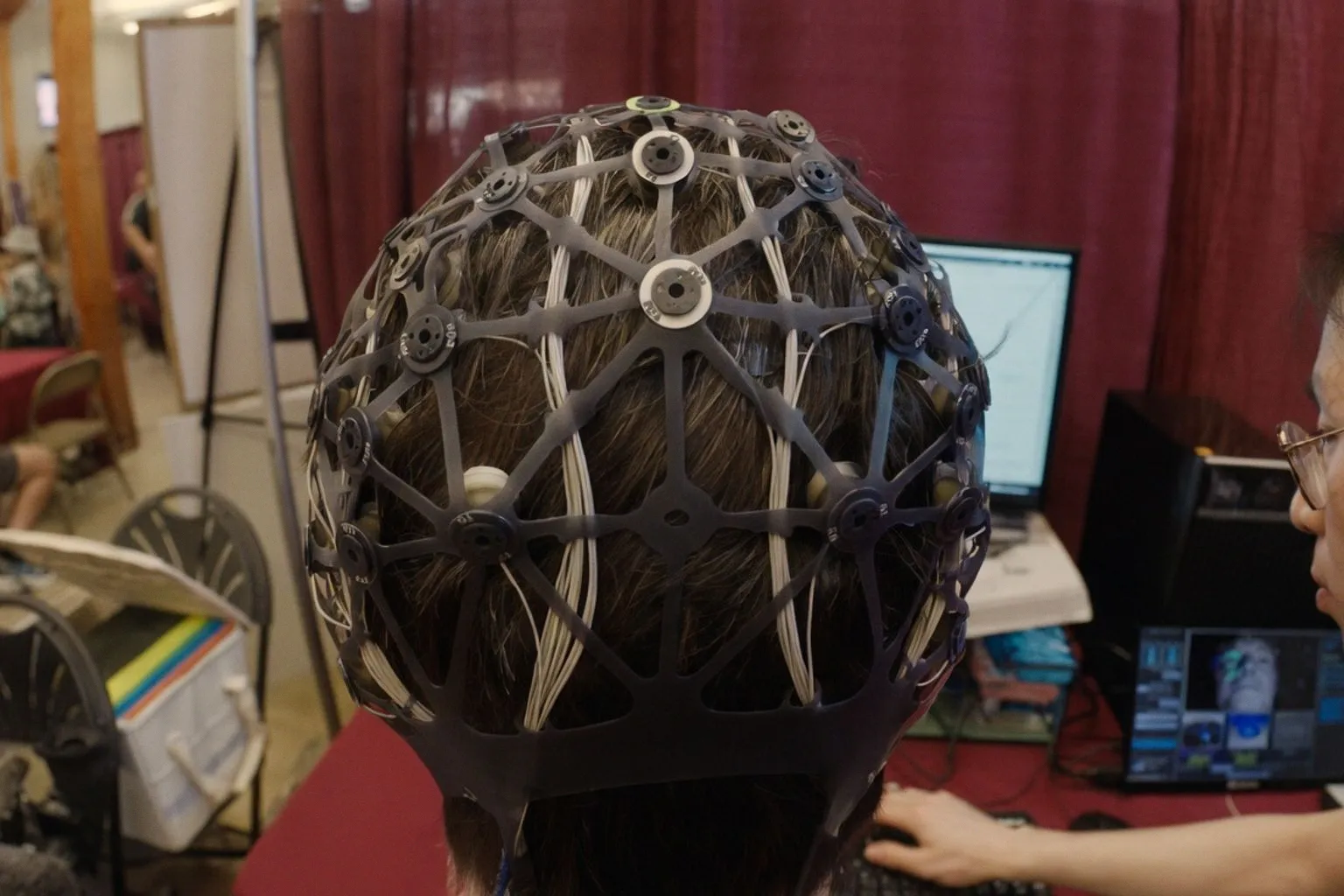
Carnegie Mellon's Neuroscience Institute, under Maggie Henderson, is converting fMRI recordings into training data for deep neural networks that forecast human visual cortex activity. According to Quantum Zeitgeist, the work targets a long-standing bottleneck: moving from passive observation of brain responses to predictive modeling of how specific cortical regions react to defined visual inputs.
The Modeling Pipeline
Henderson's group collects fMRI data while subjects view images, then feeds those responses into computational models designed to predict neural activation patterns. Deep neural networks originally built for computer vision now serve as the core architecture. Their internal representations closely mirror activity observed in the human brain during image processing, which is what makes the prediction tractable.
The result is a reciprocal exchange: neuroscience supplies biological constraints, AI supplies the fitting machinery. Researchers in the emerging NeuroAI field treat this as standard practice rather than novelty. The aim is no longer to describe what the brain does after the fact, but to specify the input and compute the response in advance.
The Infrastructure Behind the Push
Large-scale collaborative programs provide the data substrate. The Simons Collaboration on Ecological Neuroscience (SCENE), a ten-year, $80 million initiative, develops mathematical theories linking perception to action. CMU professor Xaq Pitkow contributes through neural recording combined with computational modeling. Separately, the Machine Intelligence from Cortical Networks (MICrONS) project has reconstructed a cubic millimeter of mouse cortex, capturing roughly 200,000 cells and over 500 million synaptic connections.
That volume of structural data is what makes AI training feasible. Without it, models lack the biological ground truth to validate against. SCENE and MICrONS together set the scale: comprehensive measurements of structure and function are now available in volumes that support serious model fitting rather than toy demonstrations.
Calibration Parameters for Practitioners
For labs working on circuit-level questions, the work signals three calibration points worth tracking:
- Data volume requirements are climbing. Half a billion connections mapped in a cubic millimeter sets a new floor for what counts as a detailed connectome.
- Prediction accuracy is the new benchmark. Outputs that merely classify stimuli no longer satisfy; models must forecast response magnitudes across cortical layers, not just category labels.
- Funding priorities favor hybrid teams. Federal interest in AI and neurotechnology, as NI director David Badre notes, rewards groups that integrate measurement with computation rather than running either in isolation.
Watch how prediction error shrinks as dataset scale grows. That ratio is where the next methodological gains will surface, and where circuit-level labs can position their own contributions before the benchmarks shift again.