How Early Lab Exposure Accelerates Undergraduate Neuroscience Careers
According to UToledo News, neuroscience senior Sampriti Senapati traces her path from a first-semester course on neuropsychiatric patients to a bench studying Calcium/Calmodulin-Dependent Protein…
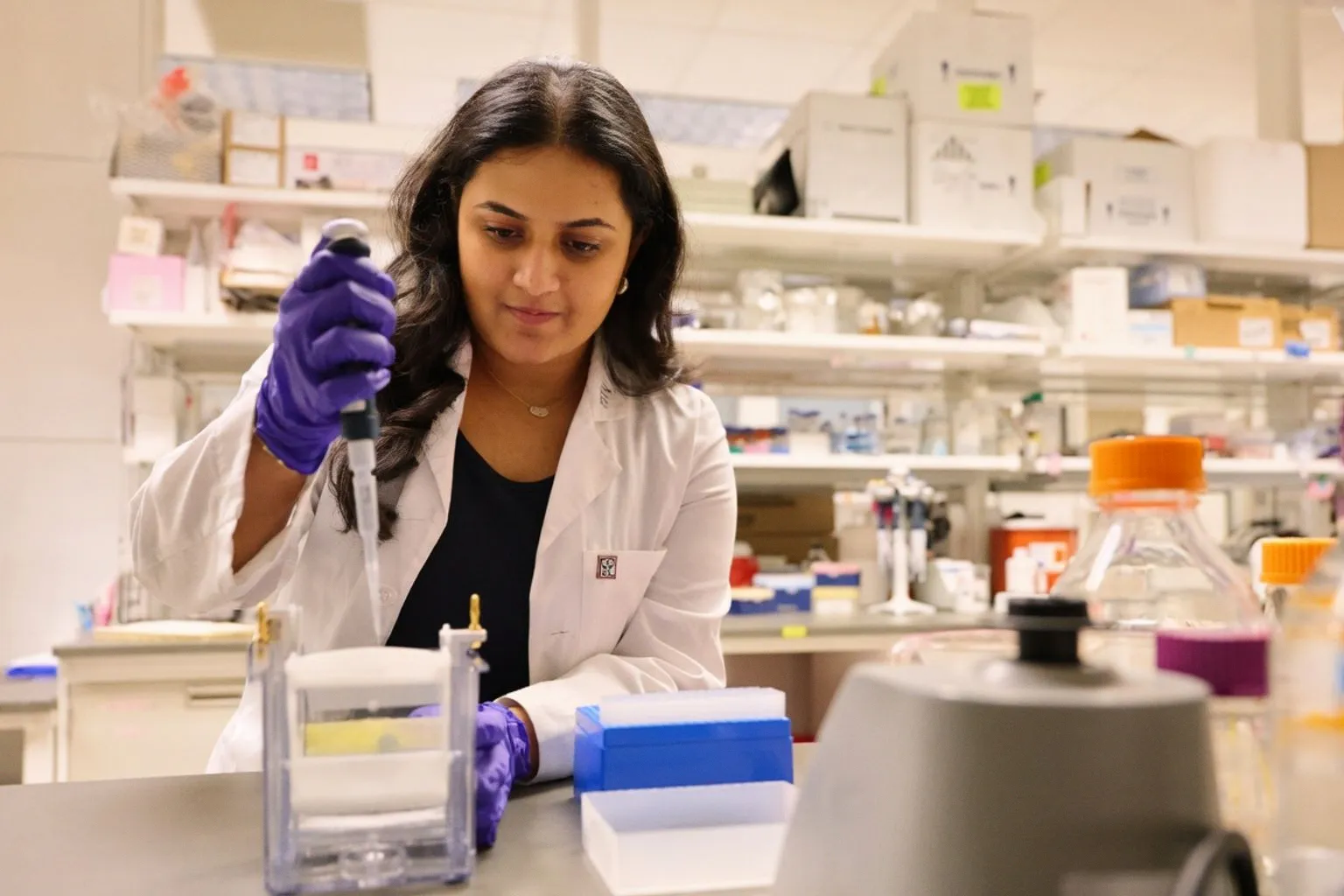
According to UToledo News, neuroscience senior Sampriti Senapati traces her path from a first-semester course on neuropsychiatric patients to a bench studying Calcium/Calmodulin-Dependent Protein Kinase II (CAMK2) in Alzheimer's disease — a trajectory that compresses years of typical pre-clinical training into the undergraduate years and offers a useful lens on how early hands-on experience reshapes a research career.
From First-Semester Patient Interviews to a Wet Bench
The pivot began in The Neuropsychiatric Patient, a UToledo course that introduces undergraduates to nervous system and psychiatric disorders largely through in-class interviews with patients navigating their symptoms. Office-hour conversations with Dr. Robert Smith, professor and chair of the Department of Neurosciences and Psychiatry in UToledo's College of Medicine and Life Sciences, drew Senapati into his lab. She now contributes foundational data to federally funded Alzheimer's research — investigating the same neurodegenerative condition introduced in her opening semester. As she puts it, having arrived at UToledo from Plano, Texas with no prior wet-lab experience, she found that opportunities arrived early rather than late.
How the Undergraduate Pipeline Is Built
Senapati is one of 43 students currently supported by UToledo's Office of Undergraduate Research Summer Research and Creative Activities Program. The university, a Carnegie R1 institution, is rolling out ASCEND (Applied Skills for Career Experience, Networking and Development), which will require experiential learning for all incoming undergraduates starting this fall. The neuroscience degree program, launched in 2023, draws on both the College of Natural Sciences and Mathematics and the College of Medicine and Life Sciences — students build foundational science on Main Campus, then transition to Health Science Campus for advanced subjects like neuropharmacology and medical neuroanatomy, with access to tools such as the Anatomage Table for digitized cadaver exploration. For anyone designing or evaluating a neuroscience curriculum, the structural takeaway is clear: pair classroom exposure to patients or model systems with a direct, named pathway into a working lab.
Funding Currents Worth Tracking
Two funding streams opened this month deserve attention from early-career brain researchers. The American Brain Foundation has opened applications for its Next Generation Research Grants — up to $150,000 over two years (roughly $75,000 per year) for clinician-investigators holding an MD, PhD or equivalent degree who completed residency or PhD in 2022 or later. Applications are open to researchers at accredited institutions worldwide with no citizenship requirement, and must be submitted through ProposalCentral by 8 October 2026 at 5:00 PM Central Time; the grant covers 70% protected research time and does not support indirect costs. Separately, One Mind has announced $1.5M in awards to rising-star mental health researchers. In parallel, ScienceDaily reports that early-life stress physically alters how DNA is packaged in the brain, leaving stress-related genes primed to activate more easily years later — and that, in mice, this effect was blocked, preventing heightened anxiety in adulthood. For readers working on neural circuit formation and developmental neurobiology, that epigenetic finding sharpens the question of how transient environmental inputs become durable features of cellular identity.