How Estrogen Shifts Neural Architecture and Impacts Experimental Data
News-Medical is flagging a new study this week with a headline that should make every bench scientist sit up straight: estrogen fluctuations physically reshape brain connections.
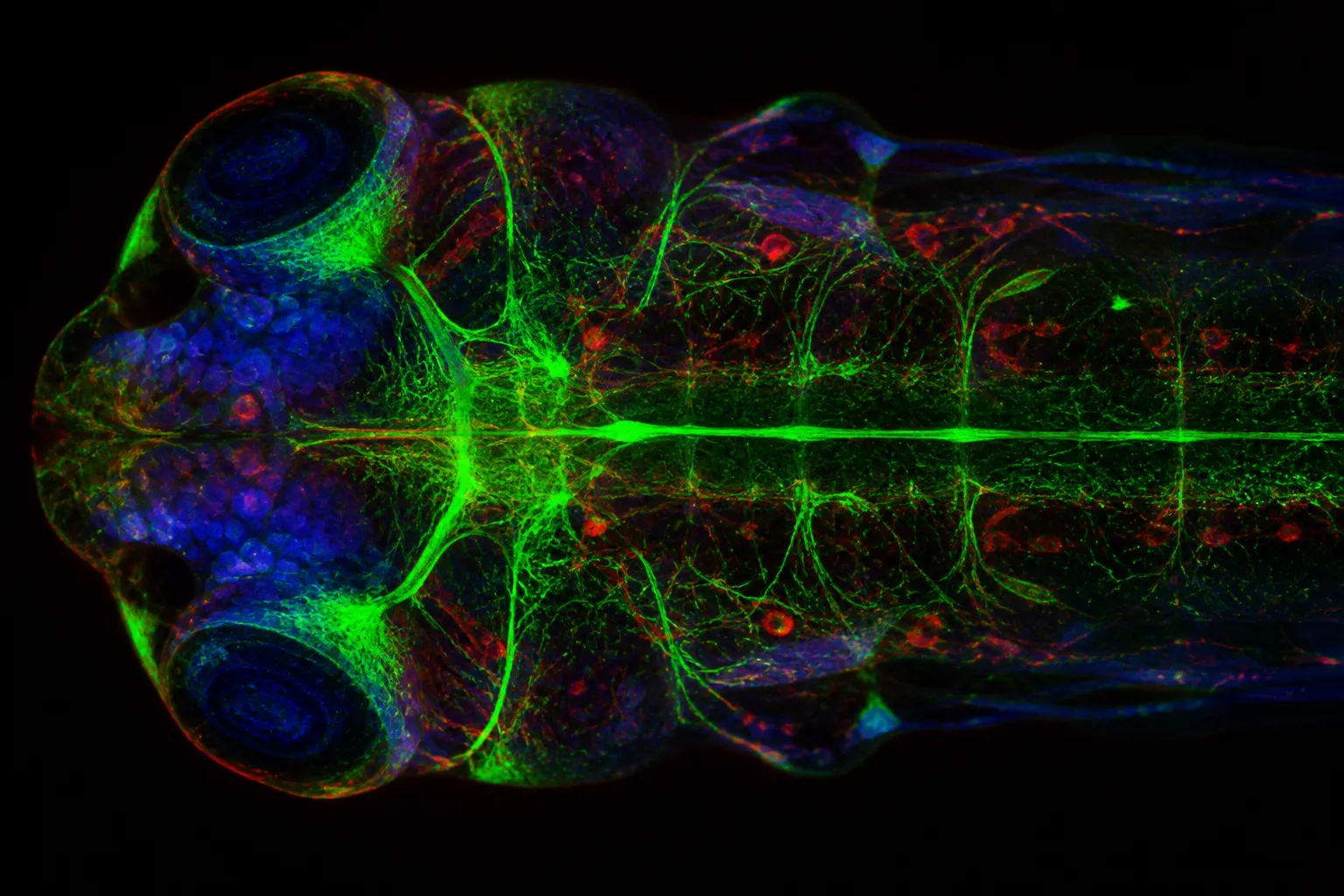
Estrogen on the brain: a quiet reshuffling worth watching
If you've been waiting for a reason to care about circulating hormone levels in your in vivo work — zebrafish, mouse, whatever cycling model lives in your fish room — this is your nudge.
Because here's the thing, and you know it because you've debugged it a hundred times: hormone-driven plasticity is noise we usually blame on the prep, the time of day, or that one weird animal in cohort four. If estrogen is genuinely rewiring synapses on a fast timescale, half your "outlier" data points might be biology trying to tell you something you refused to listen for.
What the week actually gave us to work with
The full estrogen study text isn't in front of us yet — we're working off the headline, so treat the claim as a strong signal, not a settled conclusion. The cleaner companion piece this week is the University of Oxford study published in Neuron and announced via EurekAlert!, led by Dr. Yanhe Liu. They combined ultra-high-field fMRI with transcranial magnetic stimulation in human participants and traced two prefrontal–subcortical circuits that distinguish self-caused outcomes from external ones. The dorsomedial prefrontal cortex linked up with the dorsal raphe nucleus to track how confident a person felt in a decision — and that confidence signal, not just the outcome itself, drove whether they blamed themselves or blamed the world.
That isn't estrogen, but it is the same conceptual territory you wrestle with in your fish rigs: internal state versus external cause, trial by trial, decision by decision. When your zebrafish commits to a turn versus wobbles through it, you are almost certainly looking at two different neural states, not one noisy one.
On the sleep side, a new bioRxiv preprint has mapped distributed neural population dynamics across sleep stages by monitoring more than forty brain regions in mice — a cell-resolved atlas at multiple temporal scales. If you run any sleep-state imaging in your larval prep, that sampling strategy is worth borrowing the moment your scope schedule opens up.
What to actually do on Monday
Let's translate all of this into bench moves before the chatter cycle buries it:
- Audit your staging logs. If you're not recording cycle stage or a hormone proxy for every animal in a behavioral cohort, start today. A circuit-level estrogen effect means cycle stage should sit beside genotype and age in your metadata schema, not buried in a lab notebook.
- Re-bin your behavioral data by commitment. The Oxford work treats confidence as a tracked variable, not noise. In your fish, that is the difference between a clean turn and a wobble. Same file, two populations, very different downstream analysis.
- Skim the sleep atlas preprint before your next group meeting. Multi-region population dynamics during rest is increasingly the right framing for any "baseline" state you record.
And the bigger ask: if the estrogen work holds up at the circuit level, sex is going to stop being a footnote in connectomics papers. Let's be the lab that gets ahead of it now, not the one scrambling to retroactively stratify six months of imaging data.
We don't have the full study in hand, so don't quote numbers we haven't seen. But prep like the finding is real — because the next time someone waves off a hormone-driven result as noise, you'll want the protocol to prove them wrong.