New $10 Million Duke Initiative Bridges the Gap Between Neural Research and Clinical Care
Per Duke Today, the initiative targets a recurring bottleneck in modern neuroscience: mechanisms accumulate in peer-reviewed journals while clinical traction lags behind.
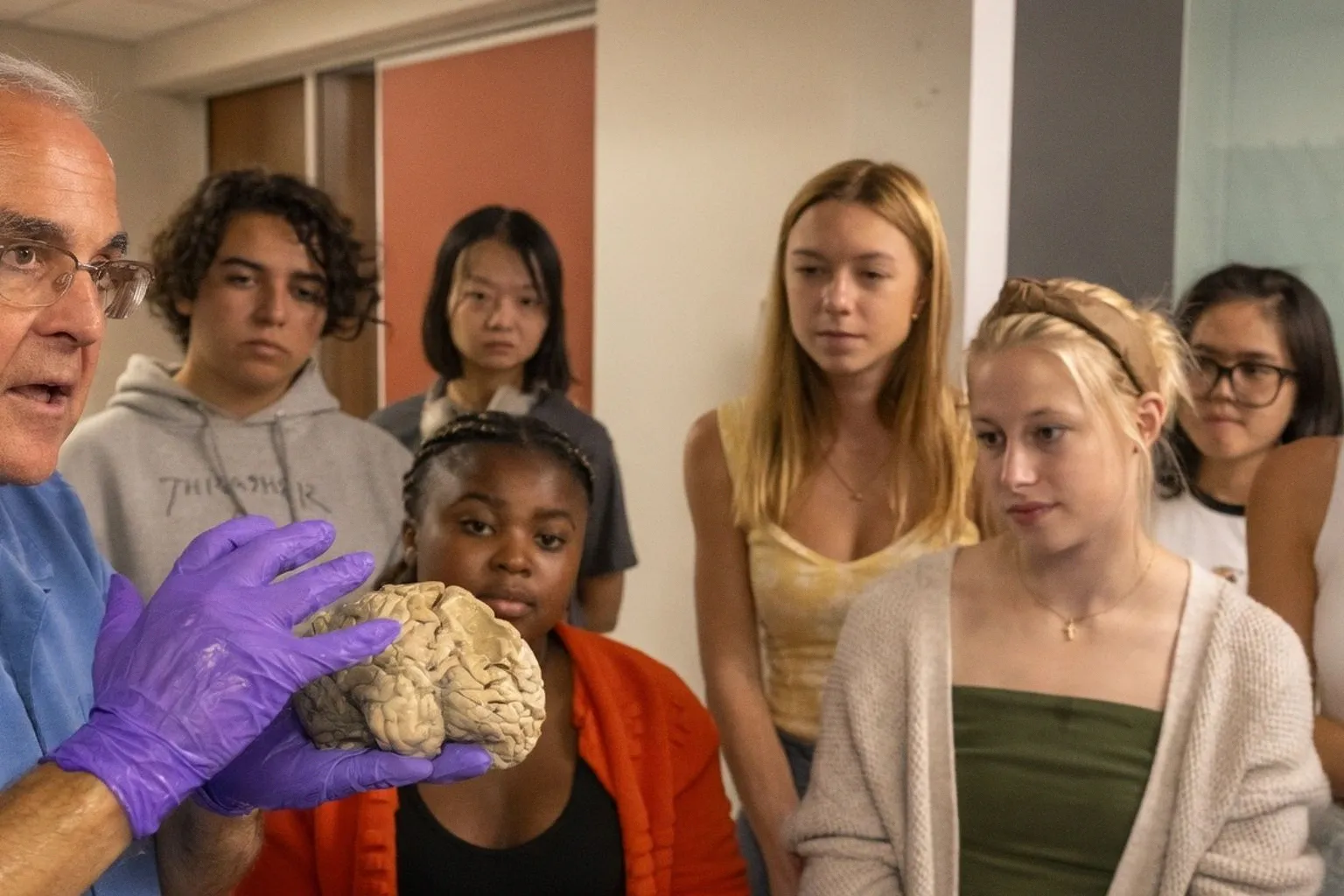
A $10 million gift from Duke trustee Sharon Marcil and her husband Tom Monahan now funds the Marcil-Monahan Family Initiative on Translational Brain Science. Per Duke Today, the initiative targets a recurring bottleneck in modern neuroscience: mechanisms accumulate in peer-reviewed journals while clinical traction lags behind.
The structural fix
One senior faculty member anchors the new hub. Two junior professors extend research capacity. Funding flows into laboratories, research infrastructure, graduate students, and postdoctoral positions. A permanent hub inside Duke's Department of Psychology and Neuroscience — not an ad hoc grant cycle, but fixed infrastructure with predictable staffing.
Duke President Vincent Price called the gift "an accelerator for breakthroughs." The framing matters less than the staffing logic: a fixed faculty cluster reduces friction between mechanism discovery and intervention design.
Why circuit neuroscientists should track this
Translational neuroscience depends on a reliable bridge layer. Basic researchers working on synaptic development, circuit wiring, or behavioral architecture often generate mechanistic insight without downstream clinical application. The Marcil-Monahan initiative compresses that gap by funding the bridge itself.
Dean Gary Bennett emphasized that the initiative targets real-world applications, particularly for mental health. That signal prioritizes projects with measurable clinical endpoints — circuit-level biomarkers, behavioral assays that map onto diagnostic categories, intervention protocols with quantifiable outcomes.
Adjacent capacity
Cross-disciplinary ties to engineering and business are built into the mandate. A planned master's program in psychology and neuroscience slots in as a training pipeline. For practitioners tracking where translational hiring concentrates, the initiative adds Duke to the short list of US institutions funding a fixed bench-to-bedside pipeline rather than scattered project grants.
Marcil's stated aim — a seamless bridge between laboratory science and patient care — aligns with the design parameters: senior anchor, junior extension, infrastructure budget, training pipeline.
Parameters to watch
- Senior faculty hire: defines the methodological direction of the hub.
- Two junior positions: capacity for parallel projects and method diversity.
- Mental health prioritization: expected focus on circuit biomarkers or behavioral assays with clinical mapping.
- Engineering collaboration: signal for computational modeling capacity within the hub.
- Master's program timeline: affects future postdoc and graduate supply.
The initiative's success metric sits in clinical throughput, not publication output. That is the parameter worth calibrating against over the next hiring cycle.