Complete Connectome of the Male Fruit Fly Brain Maps 166,000 Neurons
As reported by Live Science, researchers have completed the first connectome of an entire male fruit fly central nervous system, charting all 166,000 neurons across the brain, both optic lobes, and…
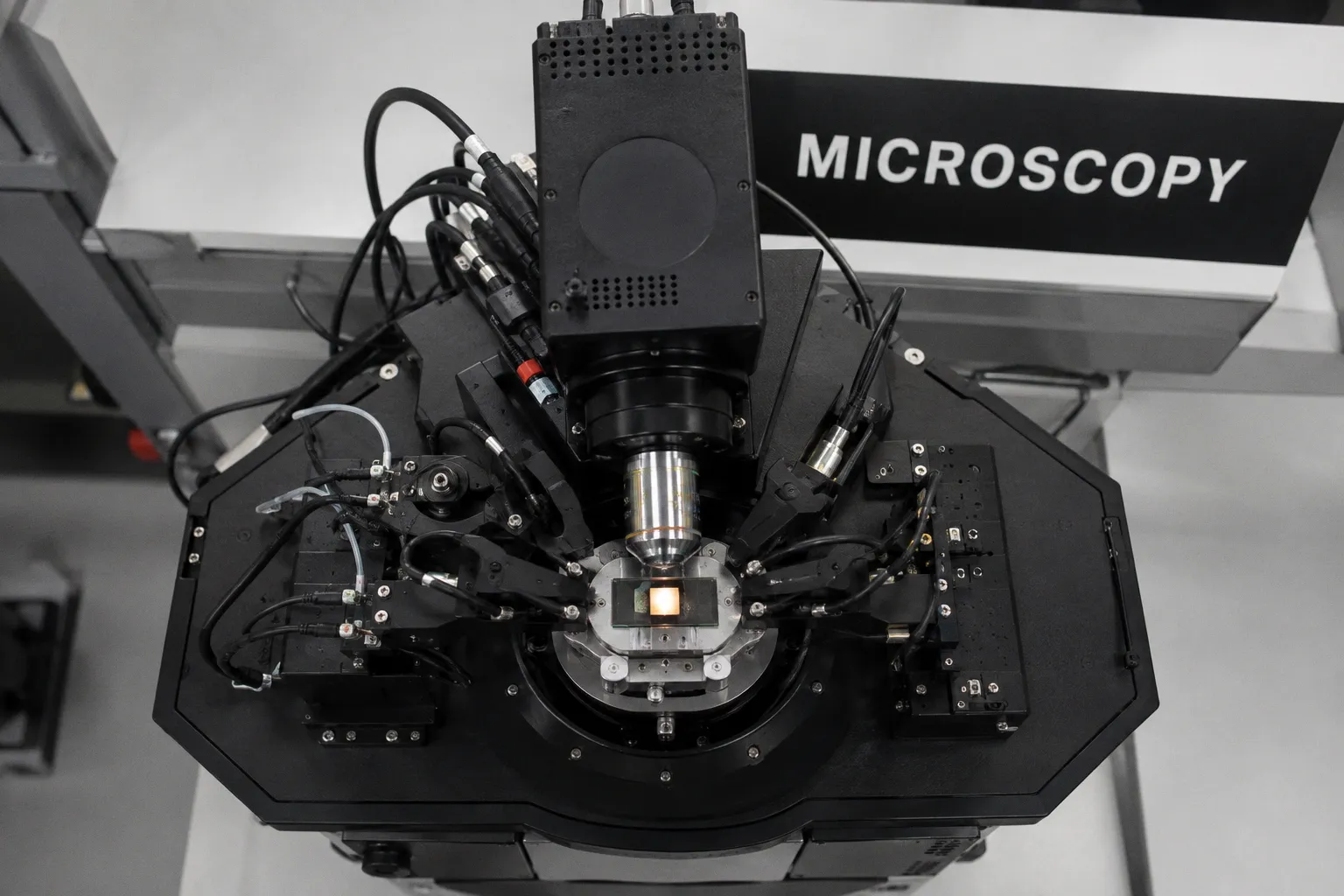
The nervous system of a fruit fly—packed into a volume roughly the size of a poppy seed—just became the most thoroughly mapped brain in any complex social animal. As reported by Live Science, researchers have completed the first connectome of an entire male fruit fly central nervous system, charting all 166,000 neurons across the brain, both optic lobes, and the ventral nerve cord. Published September 3 in Cell and Current Biology, this male map joins a female fly connectome unveiled in 2024 that covered about 140,000 neurons—making direct sex-based comparison possible for the first time in a species with intricate social behavior.
Wiring Diagrams, Side by Side
The significance lies not just in the raw neuron count but in the comparative geometry it now permits. Male and female fruit flies exhibit distinctly different patterns of mating, aggression, and even sex-specific fighting moves. With both connectomes available, neuroscientists can trace which neural pathways diverge between the sexes and where they converge—layer by layer, circuit by circuit.
Gerry Rubin, co-author and head of biology at the Howard Hughes Medical Institute's Janelia Research Campus, described the advance as opening a direct route to "home in on the neurons that are causing those differences" between male and female behavior. Three companion papers, also published September 3, use the new dataset to investigate specific circuits—including the distributed taste-processing network, which in flies extends from legs and wings to mouthparts and the interior of the throat.
Efficient Architectures, Fewer Neurons
One of the more striking observations from the research concerns computational economy. As Carlos Ribeiro, principal investigator at the Champalimaud Foundation in Lisbon, noted, the fly nervous system "performs remarkably sophisticated computations with relatively few neurons and little energy." That architectural efficiency carries direct implications for anyone thinking about how neural circuits generate complex behavior with minimal wiring—a question at the heart of network design in both biology and synthetic systems.
For readers studying neural network formation in zebrafish, this efficiency principle resonates. The vertebrate nervous system is orders of magnitude larger, yet the foundational logic of circuit organization may share deeper structural motifs across phyla. The fly connectome offers a high-resolution reference layer against which vertebrate patterns can be tested and contrasted.
From Flies to Fish: A Technical Roadmap
The connection to zebrafish neuroscience is not incidental—it is explicitly part of the team's stated plan. Near-term targets include mapping the brains of larval zebrafish (Danio rerio) and adult danionin fish (Danionella). The fly work, Ribeiro suggested, provides "a technical roadmap for more ambitious connectomics projects in the future."
For a laboratory focused on neural network formation in zebrafish, the male fly connectome is less a distant curiosity and more a calibration point. It establishes a precedent for whole-CNS mapping at cellular resolution, and the sex-comparison framework offers a template for examining how genetic and hormonal differences sculpt circuit architecture across development. As vertebrate connectomics accelerates, the humble fruit fly will remain the species against which we measure both our methods and our questions—setting the bar for what a complete wiring diagram should reveal.