Mapping the Complete Neural Circuitry Behind Fruit Fly Feeding Decisions
Researchers at the MRC Laboratory of Molecular Biology, working with an international consortium, have mapped the complete neural circuitry governing taste evaluation and feeding decisions in fruit…
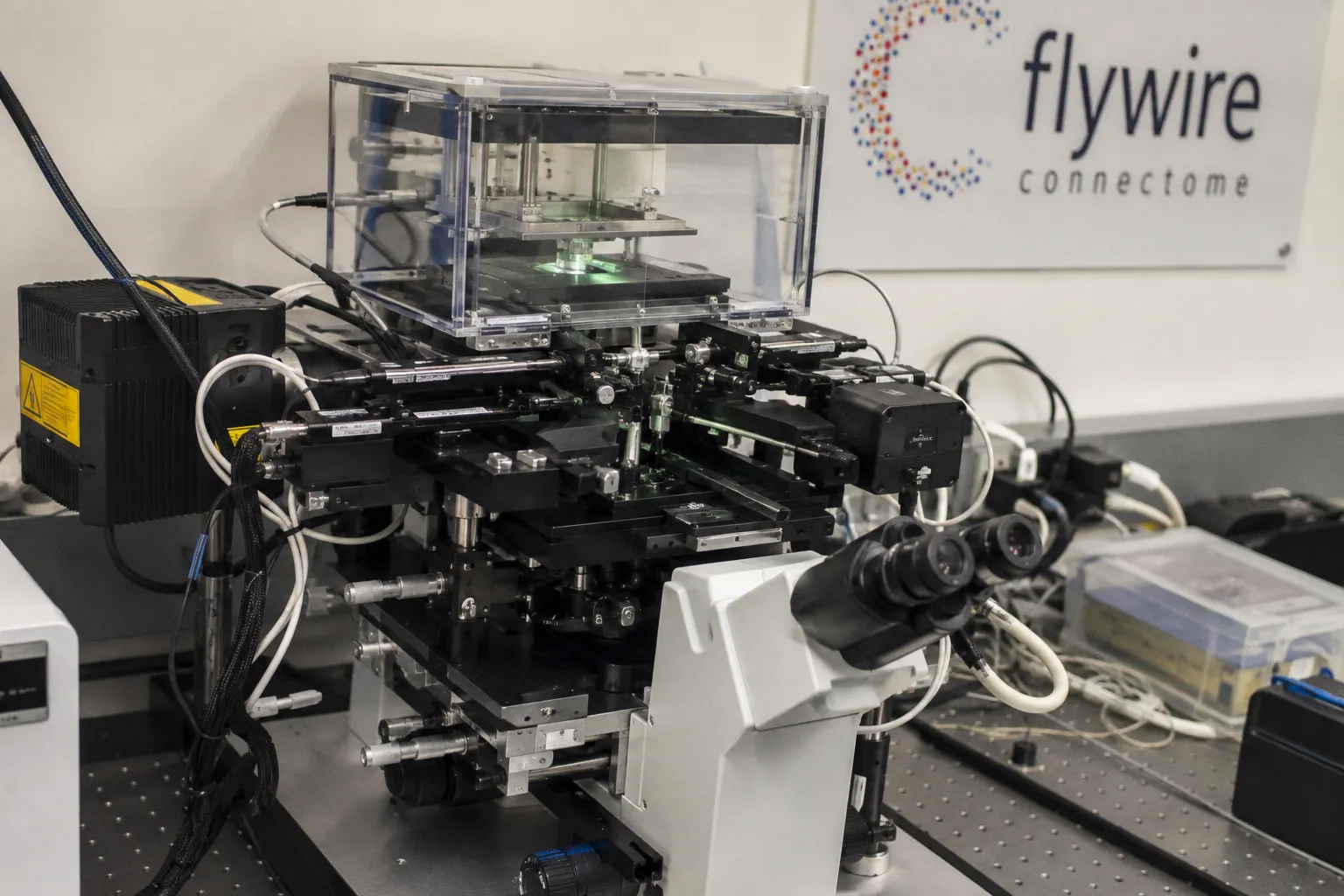
Researchers at the MRC Laboratory of Molecular Biology, working with an international consortium, have mapped the complete neural circuitry governing taste evaluation and feeding decisions in fruit flies, according to a report carried by Medical Xpress and EurekAlert. The circuit runs from sensory receptors all the way to motor neurons — a full sensorimotor pipeline, not a fragment. For anyone tracking how neural networks translate perception into action, this is the cleanest anatomical blueprint of a feeding decision to date.
The wiring, end to end
The team reconstructed the pathway from gustatory input to motor output. Every relay sits in the diagram. That matters: most prior work isolated single nodes or partial loops. Here the full chain is resolved. Researchers can now trace how a taste signal propagates, which interneurons gate the decision, and which motor neurons execute the behavior. The map exposes direct pathways that trigger anticipatory physiological responses — including digestive priming — before ingestion. The body prepares for food before the fly commits to eating.
Place it in the connectome landscape
This feeding circuit sits inside a broader push to resolve whole-brain architecture. A separate Nature paper details connectome analysis of a cerebellum-like circuit for sensory prediction. And the same consortium has now produced the first complete synaptic connectome of the male Drosophila central nervous system, spanning brain to nerve cord. Comparative analysis shows sexually dimorphic neurons clustering in higher-order integrative hubs, where sensory input is rerouted into sex-specific motor circuits. Translation: the same sensory channel can feed into different behavioral outputs, depending on which hub owns the relay.
What to monitor
Three checkpoints for follow-up. First, how the feeding circuit interfaces with the sex-specific hubs — that cross-talk determines whether male and female flies execute the same bite. Second, whether the anticipatory digestive priming pathway is conserved in vertebrates; the circuitry logic often travels even when the anatomy does not. Third, the cerebellum-like sensory prediction circuit. If it shares motifs with mammalian cerebellar microcircuits, the fly brain becomes a calibration tool for larger systems, not just a curiosity.
The takeaway for practitioners: stop treating feeding as a reflex. The data says it is a wired decision pipeline, measurable node by node, with predictive branches already firing before the animal eats.