Securing NIH Funding for Integrative Neural Circuit Research: The iBCP Mechanism
You've mapped your cells, you've nailed your calcium signals at sub-second resolution, and your behavioral assay is finally reproducing — and yet somehow the three datasets don't talk to each other.
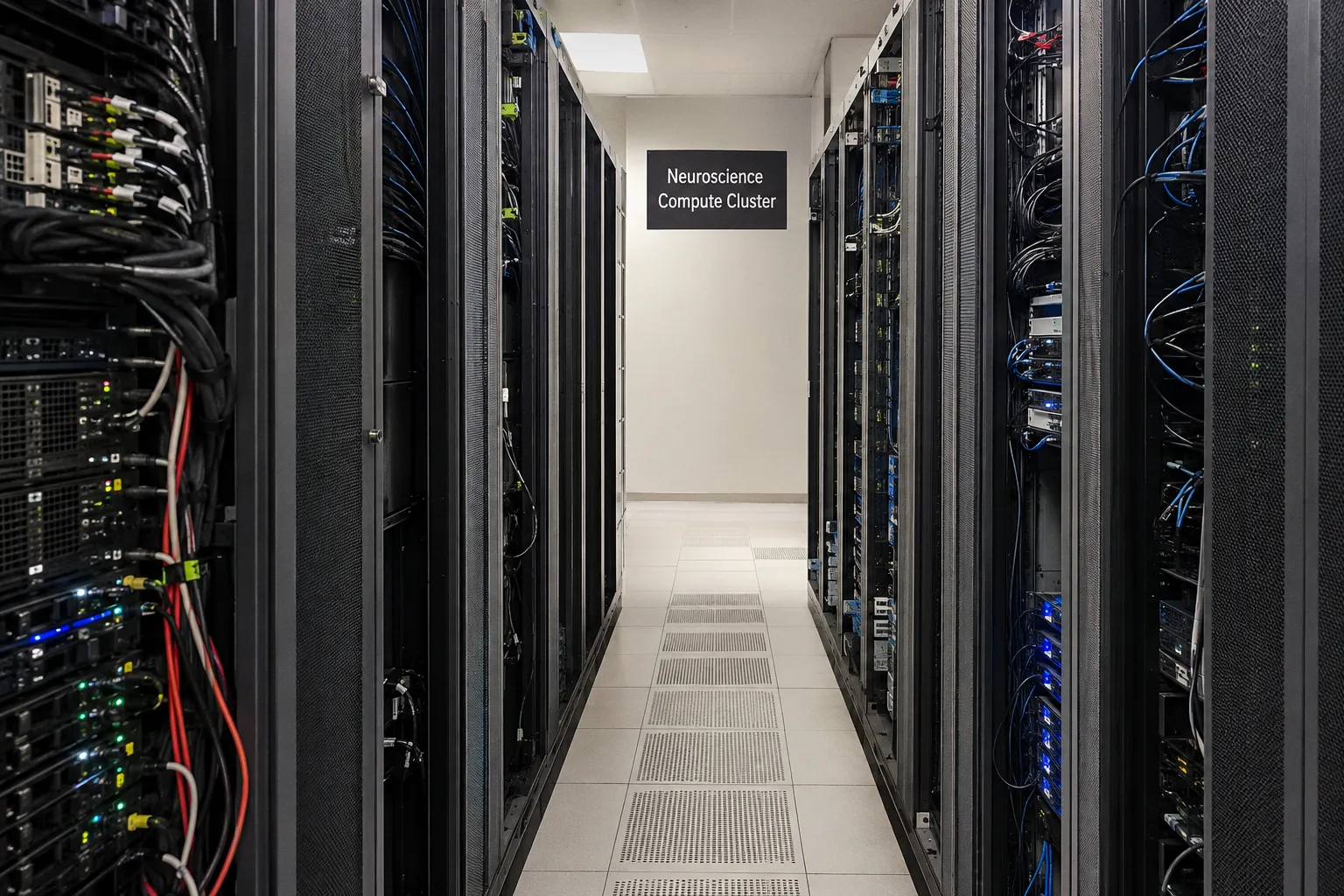
Every PI in circuit neuroscience has lived inside this version of the headache. Per the NOFO posted on Grants.gov, NIH just released a funding mechanism built specifically to drag us out of it.
What the iBCP actually wants on the table
The new Integrative Team-Research BRAIN Circuits Program — iBCP, RM1 mechanism — is asking for transdisciplinary teams that explicitly connect three core elements: a clear characterization of circuit components (cell types, connectivity), measurements of dynamic circuit activity at cellular and sub-second temporal resolution in vivo, and analyses of a tractable behavior or functional output. That's not a wishlist — it's the architecture of the application. If your team can't already sketch a unified framework linking those three layers with experimental and computational arms on both ends, you're not ready to write.
The science scope is the usual BRAIN Initiative fare — map, monitor, and modulate circuits in model systems and humans — but the team-science requirement is the new part. Expect cross-pollination between molecular and cellular and systems neuroscience, real predictive modeling, and active engagement with BRAIN consortia on standards of practice. Awards can land across NINDS, NEI, NIAAA, NIBIB, NICHD, NIDCD, and NCCIH, so there's more than one home for your proposal depending on the disease framing.
Where in vivo models — zebrafish included — slot in
The NOFO explicitly calls out in vivo CNS recordings at cellular and sub-second resolution. For anyone running zebrafish, this is your lane. Whole-brain functional imaging at single-cell resolution during behavior, paired with cell-type atlases and connectomics work, is exactly the multi-level integration iBCP is built around. The same logic applies to mouse, to fly — the Cambridge connectome work hitting news right now is a clean proof-of-principle — or any prep where you can simultaneously read cells and behavior. The catch is right there in the language: computational modeling isn't a footnote. Your theorist belongs at the bench with you, not reviewing the paper six months later.
Before you open the submission portal
A few practical notes from one PI who's read too many of these NOFOs:
- The deadline is 5 PM local time of the applicant organization. No late applications, period — build backwards from the due date or you'll bleed on administrative corrections.
- Follow the program-specific instructions in Section IV over the general Application Guide wherever they conflict. Strict conformance is enforced.
- Don't undersell the behavior. "Tractable" is doing a lot of work in the language, but reviewers will want a behavior you can manipulate, not just observe.
- If your team spans institutions, sort out subcontracts and effort certification early. Multi-PI management under RM1 is administrative, not just scientific.
- Get your computationalist to read the NOFO before you lock the aims. iBCP wants predictive models baked into the framework, not bolted on as Aim 4.
The dream of cells-to-circuit-to-behavior in one grant cycle used to be a stretch. The mechanism is here, the language is clear, and the appetite for genuine team science has never been higher. Pull your best three-way story off the back burner and write the thing.