Garrett Neske Secures $2.18M NIH Grant to Map Visual Brain Circuitry
The project, announced by the Jacobs School of Medicine and Biomedical Sciences, targets a precise bottleneck in visual circuit analysis: the relay mechanisms that calibrate information flow between…
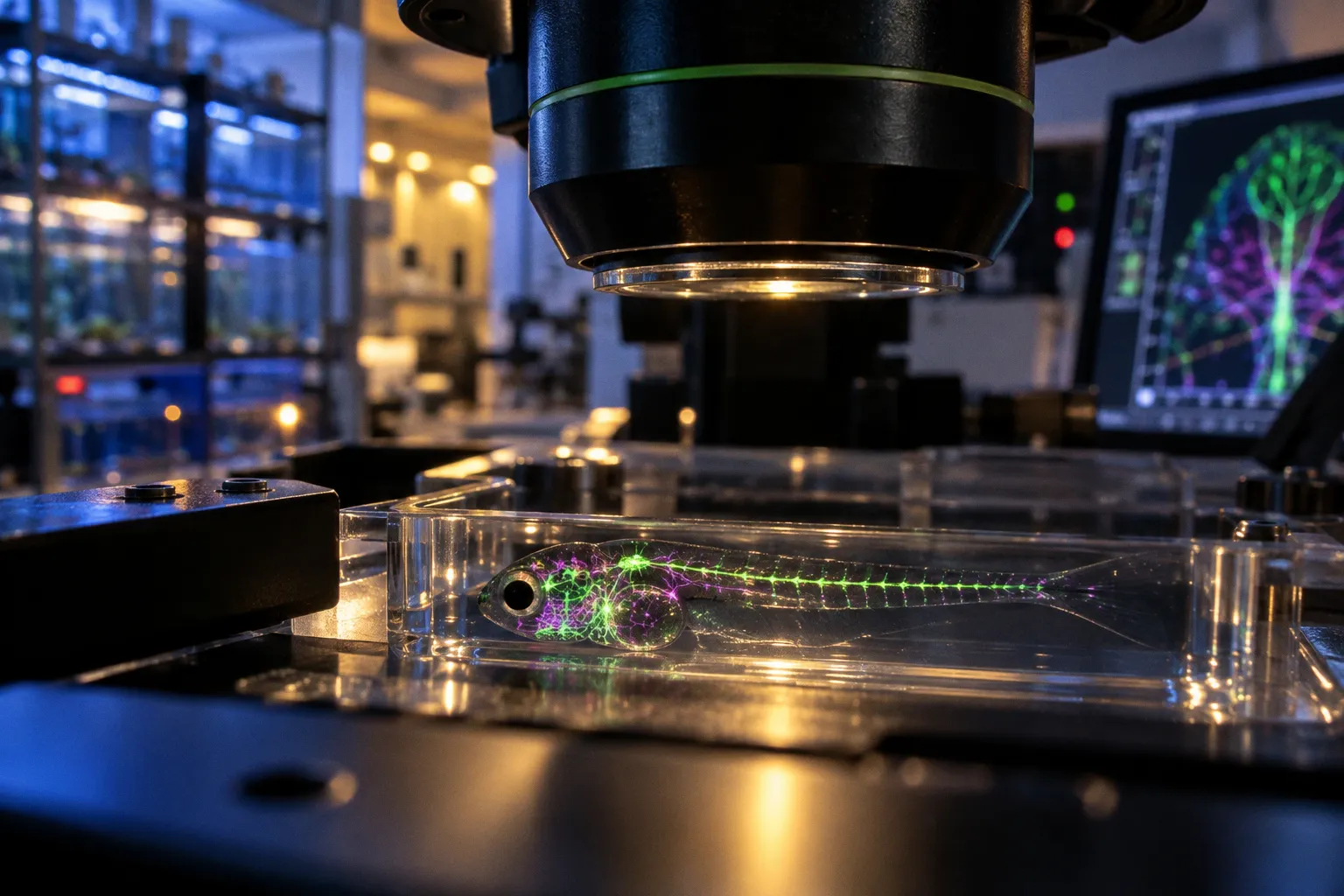
Garrett Neske has secured a $2.18 million NIH grant to dissect how transthalamic pathways wire cortical regions together — and how that wiring sculpts sensory perception. The project, announced by the Jacobs School of Medicine and Biomedical Sciences, targets a precise bottleneck in visual circuit analysis: the relay mechanisms that calibrate information flow between subcortical and cortical layers. For researchers building connectomes or running sensory mapping experiments, the work offers a tractable entry point into a relay pathway that keeps surfacing across species and sensory modalities.
The Target: Transthalamic Wiring
The grant isolates one structural question: how do transthalamic pathways interconnect cortical brain regions, and how does their synaptic connectivity shape sensory perception? That framing matters more than the dollar figure. It shifts the experimental unit from behavioral observation to circuit-level measurement. Instead of inferring connectivity from downstream perceptual readouts, researchers can now quantify which synapses activate, in what sequence, and how reliably they transmit signal across the thalamic relay. The relay itself becomes the measurable object — and perception becomes the dependent variable that gets calibrated against it.
What the Funding Buys
The $2.18 million supports work aimed at understanding fundamental synaptic communication and information flow across cortical networks. In operational terms, the project targets two measurable outputs: a structural map of how transthalamic pathways interconnect cortical regions, and a functional read on how that connectivity translates into sensory perception. Holding those two outputs as separate measurements is what makes the design tractable. Researchers can calibrate one against the other without confounding the readout — and that is a methodological move worth noting.
Why Practitioners Should Track This
The study sits at a junction the field has been probing for years: how does a sensory stimulus get converted into a patterned cortical response? Neske's approach — pinning transthalamic connectivity as the variable under measurement — mirrors the kind of reductionist experimental design required to move from correlation to mechanism. It also lines up with work on sensory relay pathways that has surfaced repeatedly in zebrafish and other model organism studies. Watch for the first publications describing the synaptic mapping methodology. Those outputs will signal whether the framework transfers across sensory modalities, or stays locked to vision. Either outcome reshapes how sensory circuits get modeled going forward. Three checkpoints worth tracking: methodology paper drop, structural-to-functional correlation strength, and any cross-modal extension attempts.