Mapping the Male Fruit Fly Brain: A Complete Connectome of 166,000 Neurons
Google Research, working with HHMI Janelia Research Campus, has released a complete map of the adult male fruit fly brain and central nervous system.
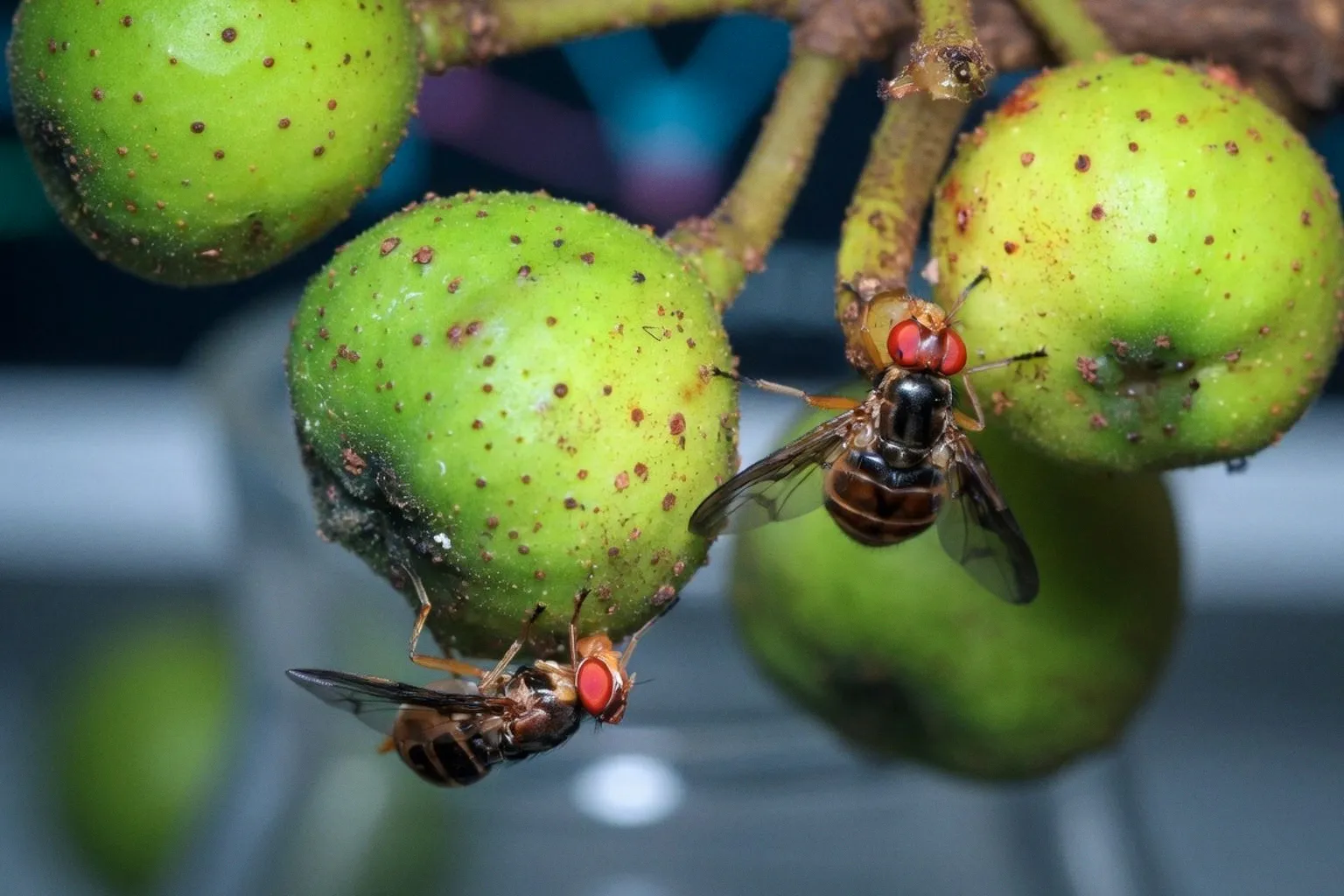
The MaleCNS v1.0 dataset spans over 166,000 neurons, assembled from millions of 2D electron microscopy images and processed into 3D reconstructions through AI-assisted segmentation. For circuit researchers, the value is structural: every connection, not just every cell, is now queryable.
What the resource actually contains
The map covers the full adult male central nervous system. Previous fly connectome efforts focused on the female brain or partial regions; this release targets the male CNS in its entirety. Cambridge scientists are listed among the contributing teams, according to reporting in the Cambridge Independent.
For lab workflows, the input changes. Researchers no longer need to assemble circuit models from sparse, scattered literature. They can pull a known, mapped network and test hypotheses against it. The shift is structural: a shared reference replaces private approximations. Behavioral experiments can now reference the exact same wiring diagram that simulation work uses. For groups working on other model systems, the fly connectome sets a benchmark for what a complete nervous-system atlas looks like in practice.
From neuroscience to a game loop
Software engineer Alex Wormuth connected the fly connectome to Doom. Each frame stimulates sensory neurons; the resulting activity maps to game controls. Damage triggers a stimulus to two PPL101 dopamine cells, acting as reinforcement. Wormuth has published the code as open source and maintains a live page tracking training across the full roughly 166,700-neuron model.
Jessica Paquette is running a parallel experiment with Super Mario 64. Early footage shows Mario flying into a wall repeatedly, consistent with a system still calibrating. Paquette described the project as "literally 100% vibe coded with GPT Astra... just for fun." Neither setup places a real fly in front of a screen. Both feed mapped biological circuits into software and read out the behavior that follows.
The point is not gameplay. The point is that a detailed biological network, once public, becomes a substrate for arbitrary input-output experiments within days of release.
Parameters to calibrate
- Synapse resolution. Confirm the reconstruction resolves synapses, not just cell bodies, before drawing circuit-level conclusions.
- Stimulus mapping. Check how sensory input maps to neurons in the Doom setup. Reinforcement channels (PPL101) will distort learning signals if mislabeled.
- Scale vs. cell-type depth. 166,000 neurons delivers breadth. It does not replace cell-type-specific atlases for targeted developmental questions.
- Reproducibility window. Open code and live training pages make this testable in days, not months. Use that window before the field normalizes the methodology.
The dataset is a tool. Treat it like one.