Could Brain Vascular Integrity Be the Missing Link in Alzheimer’s Disease?
A study using zebrafish and mouse models, reported via EurekAlert!, points to an underappreciated suspect in Alzheimer's progression: not the neuron itself, but the blood-brain barrier that guards it.
The APOE ε4 variant, long associated with elevated disease risk, appears to drive excess fibronectin accumulation along brain vasculature, producing leakage that accelerates neurodegeneration.
Fibronectin as a structural misstep
Fibronectin is a glycoprotein scaffold — the molecular mortar between endothelial cells. Under ε4-driven pressure, that scaffold thickens at the barrier interface, compromising the seal between blood and neural tissue. According to the EurekAlert! summary, the result is measurable vascular leakage in both zebrafish and mouse models, with downstream neuronal loss. The implication is that the barrier's integrity may matter as much as any single toxic protein drifting beyond it.
Why zebrafish carry the weight
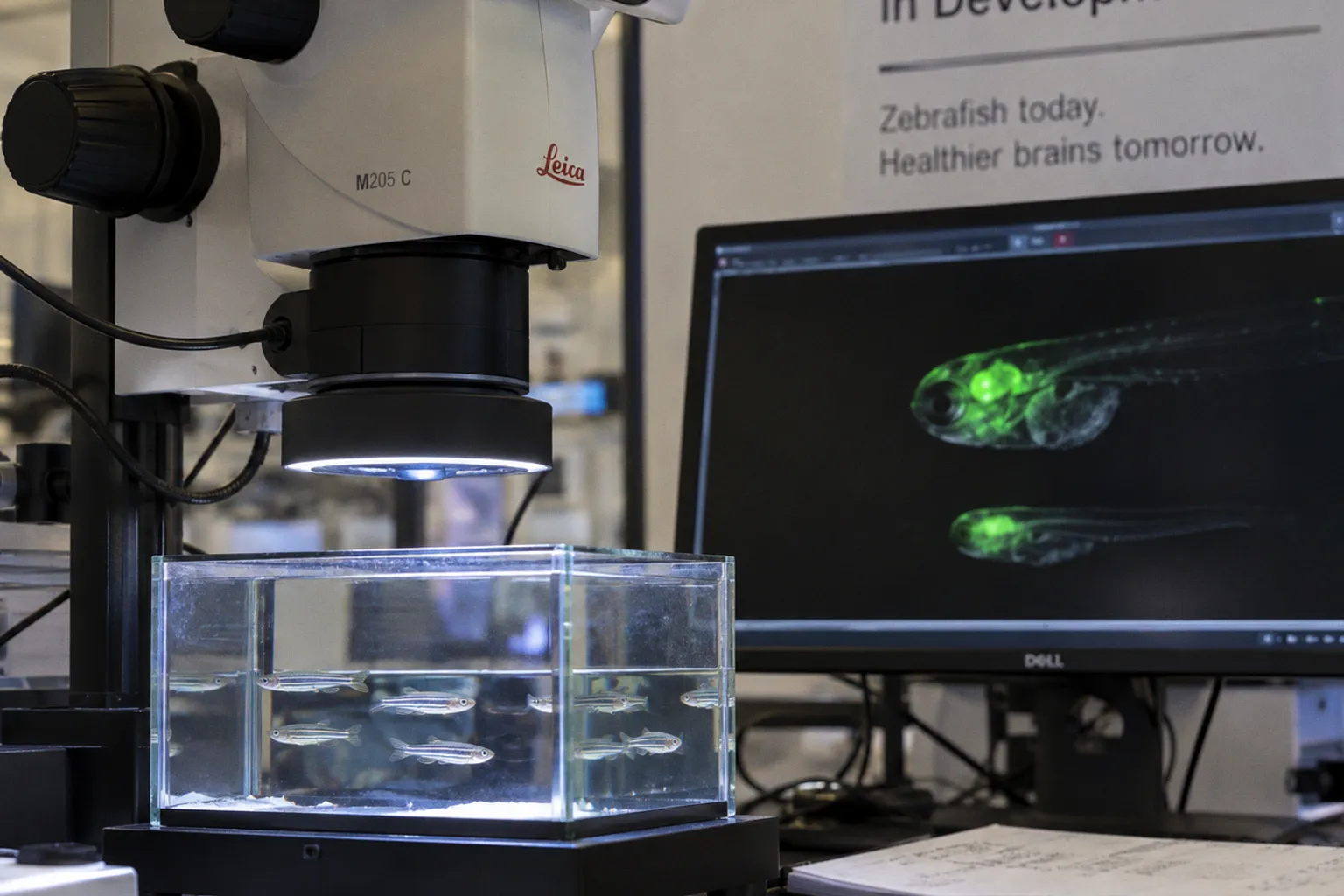
For a neurobiology audience, the choice of zebrafish is deliberate. Larvae are optically transparent, letting researchers image single vessels in living brains. Humanized alleles can be introduced quickly, and the blood-brain barrier assembles within days of fertilization — compressing months of mouse work into a week of imaging. When zebrafish and mouse phenotypes converge on the same fibronectin signature, the signal stops being species-specific and starts looking like a property of the disease itself.
A different trajectory from Nature
Separately, Nature reports on drug-delivering particles engineered to breach the blood-brain barrier directly. The contrast is instructive: one line of research tries to seal the barrier against leakage, another tries to pry it open long enough for therapeutics to pass. Both treat brain vasculature as a manipulable interface rather than a fixed wall — and both make the next generation of zebrafish vascular screens worth watching closely.