Mapping the Fruit Fly Connectome: How Neural Circuits Shape Sex-Specific Behavior
According to the BBC, a Cambridge-led team has finished mapping all 124 million synaptic connections in a male fruit fly brain, then stacked it against the female map completed two years ago.
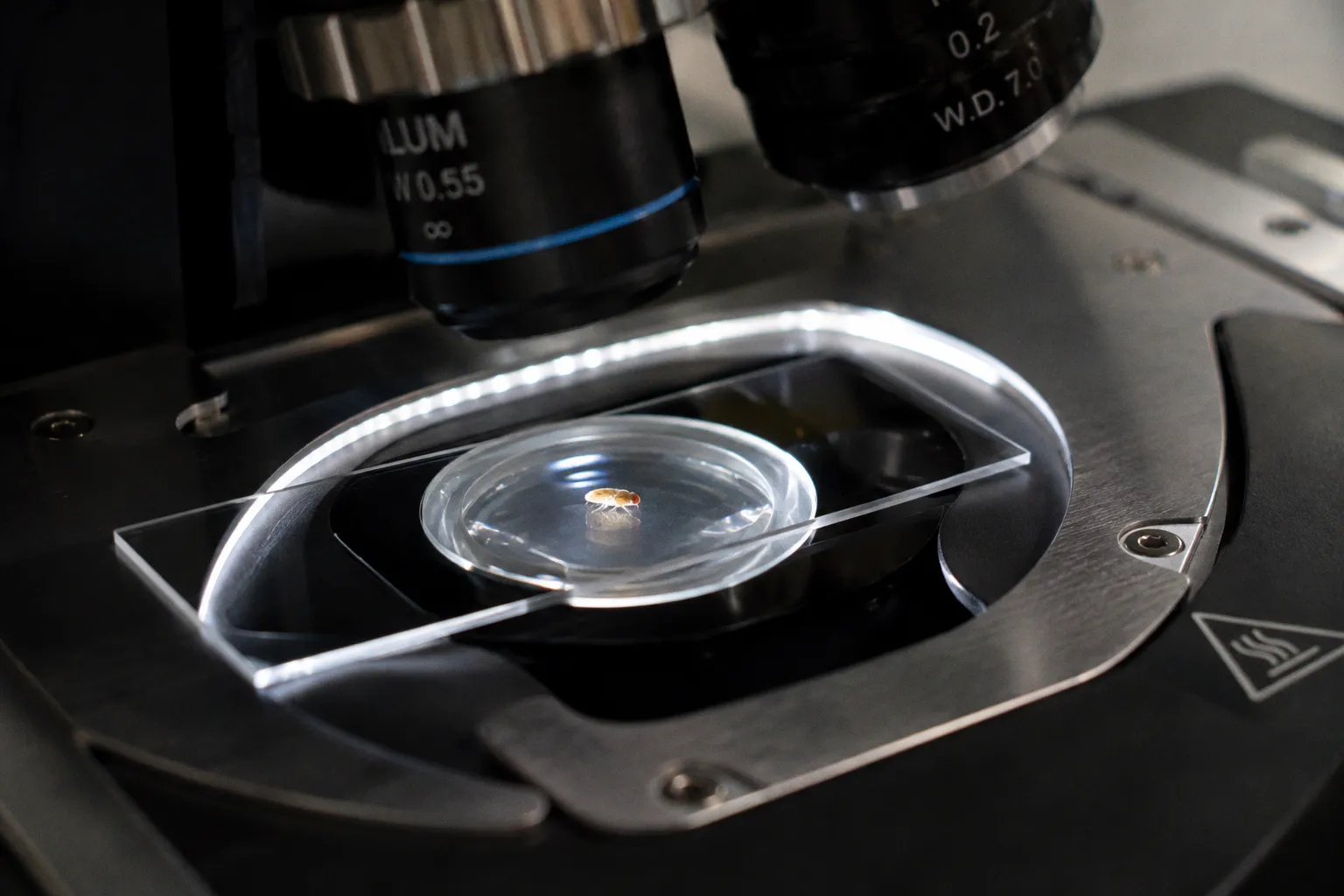
The overlap sits near 95% of cells, but the remaining 5% of circuits isolate three male-typical behaviors — visual courtship pursuit, aggression, and the wing vibration that produces courtship song. For practitioners working on connectomes or sex-dimorphic circuitry, this is the first sex-paired, whole-brain wiring comparison in any animal.
What the wiring actually shows
The male carries extra visual-tracking machinery on top of the shared core — additional nodes that should sharpen pursuit of a moving female. The aggression circuit is far denser in males, consistent with the species' higher fight rate. Song production is the cleanest sex-specific circuit: males alone carry the wiring that drives wing vibration into the right pulse pattern. Per the BBC, co-author Philipp Schlegel notes that if the song pattern misses, the female rejects — which could be, in his words, "a kick to the face." The circuit must hit precise parameters, not approximate ones. Two known genes sit at the top of this cascade; what was missing until now was the middle layer, the actual wiring those genes specify.
Method and scale, placed on the timeline
EL PAÍS places the male brain map inside a roughly two-decade arc of connectome work. The full fruit fly central nervous system holds 166,000 neurons — against the roughly 86 billion in a human brain, the tractability ratio is what keeps the animal in the lab. The map stack: 2020, half a female brain at 25,000 neurons; 2023, a complete brain at 3,016 neurons and 548,000 connections; 2024, an adult brain at 140,000 neurons and around 55 million connections. The current release, published across four papers in Cell and incorporating work from Jefferis's Cambridge group and Janelia's Stuart Berg, delivers the full CNS — brain, nerve cord, optic lobes. The imaging toolchain, built largely at Janelia, is the technical foundation the current map rests on.
What to track going forward
The team's framing is conservative: human behavior is too multilayered for direct translation, and they say so. The leverage is mechanistic. Per the BBC, the work could sharpen understanding of conditions where genetic differences alter brain wiring, including autism and schizophrenia — a plausible link, not a proven one. What practitioners can use today is a verified circuit-level reference map. Parameters worth flagging: one male specimen, one female, so the comparison is anatomical, not population statistics; circuit-behavior links are inferred from known gene-behavior mappings, with the wiring as the newly resolved middle layer.