Emerging Neural Circuit Tools: Brain Anatomy Models and Multiplexed Implants
Stanford Daily's latest research roundup pulls together three threads that bear directly on neural-circuit analysis: a reframing of brain anatomy, a multi-function thin implant, and applied sensor work for cooling and wildfire monitoring.
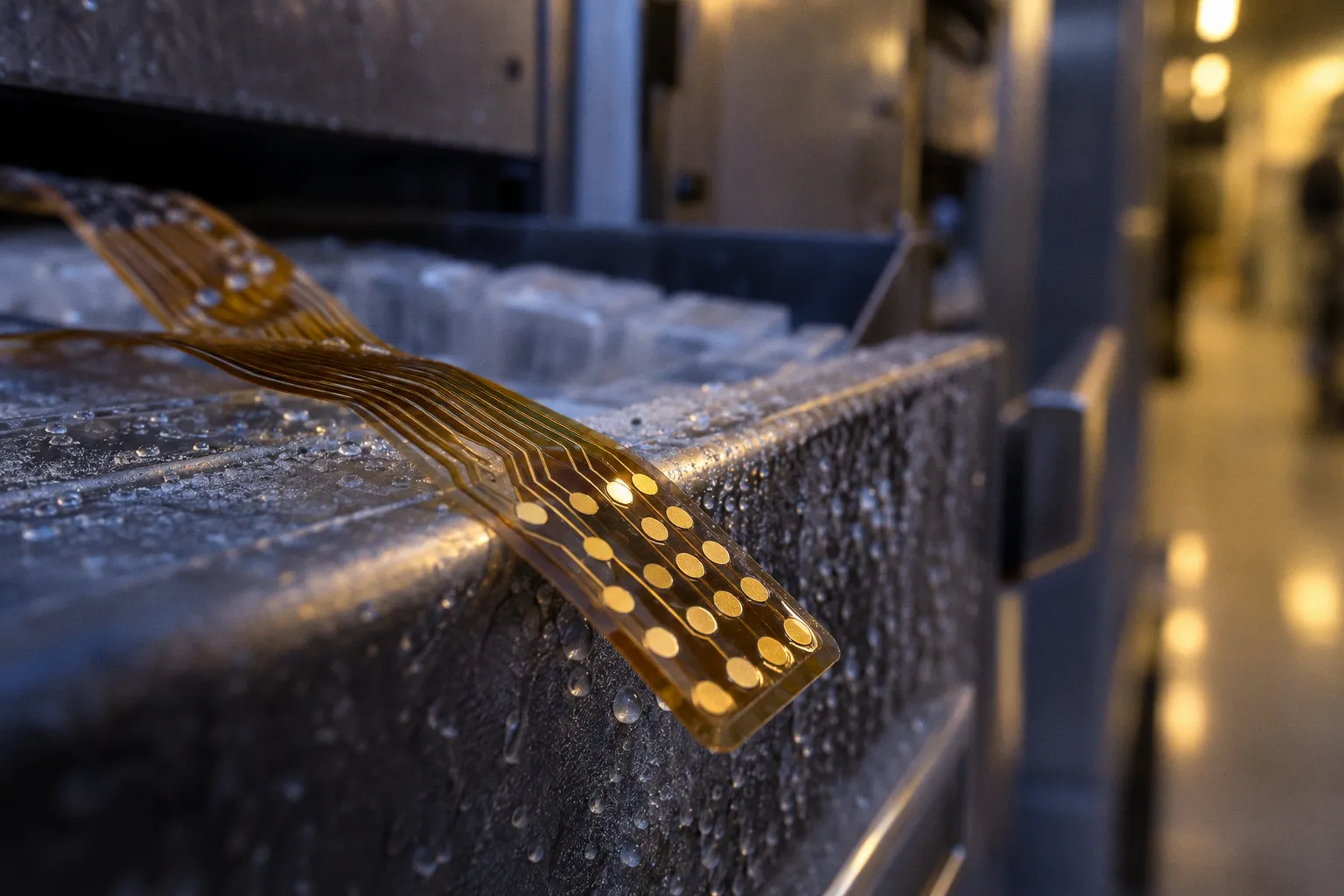
Read as a set, they map where measurement tools, anatomical models, and hardware interfaces are converging in late 2026.
The "Two-Organs" Reframe
Both moorenews.com and The Laconia Daily Sun carried an identical headline: scientists report the brain may operate as two separate organs rather than one unified structure. Two regional outlets running the same wording points to syndicated press-release pickup rather than independent verification. For circuit analysts, the framing matters regardless of provenance — it changes the default unit of partition when modeling connectivity between regions.
A "two-organs" model, if substantiated, would recalibrate how downstream tools interpret regional data. Connectivity matrices, lesion studies, and pharmacological mapping all assume a specific anatomical scaffold. Changing that scaffold ripples through every interpretation layer built on top of it. The headline reads as a hypothesis until the underlying study text confirms the partition criterion: anatomical boundary, functional gradient, developmental origin, or computational cluster.
A Needle-Thin, Three-Function Implant
ScienceDaily describes a needle-thin brain implant capable of performing three tasks at once. Thin profile reduces tissue displacement during insertion — a hard constraint for longitudinal recording in small model organisms like zebrafish, where brain dimensions cap electrode footprint. Three integrated functions on a single shank mark a move from single-mode probes toward multiplexed interfaces.
The unresolved variable: which three modalities does the implant combine — electrophysiology, optogenetic stimulation, pharmacological infusion, optical imaging? Each combination carries a different implication for circuit-mapping pipelines. A recording-plus-stimulation-plus-delivery package transfers directly to closed-loop experiments. A recording-plus-imaging-plus-thermal-monitoring package fits more naturally into chronic imaging rigs.
Adjacent Threads and Parameters to Calibrate
The roundup also surfaces work on cooling solutions and wildfire tracking, though specific methodology remains behind the headline. For the neural-circuitry audience, these threads register as adjacent engineering problems rather than core neurobiology. Thermal management of recording rigs and field-deployed sensor arrays shares design constraints with chronic neural implants — heat dissipation, miniaturization, long-baseline stability, power budget. Watch for transferable design rules rather than direct applications.
Three checkpoints for practitioners monitoring all three threads:
- Source the primary publication behind the "two organs" claim. Identify the partition method before adopting the model in any downstream analysis.
- Resolve the implant's three modalities from the ScienceDaily write-up. Benchmark each mode against existing single-function designs on signal-to-noise, spatial resolution, and tissue response.
- Track cooling and wildfire threads for thermal-management rules applicable to implant housing and recording-stage electronics. Map each rule to an existing bottleneck in chronic-implant workflows.