Rare Genetic Variants in Neurodevelopment: A New Target for Zebrafish Modeling
So when News-Medical reports that researchers have identified a rare genetic change linked to a neurodevelopmental disorder, our ears should perk up — not because this single finding will rewrite…
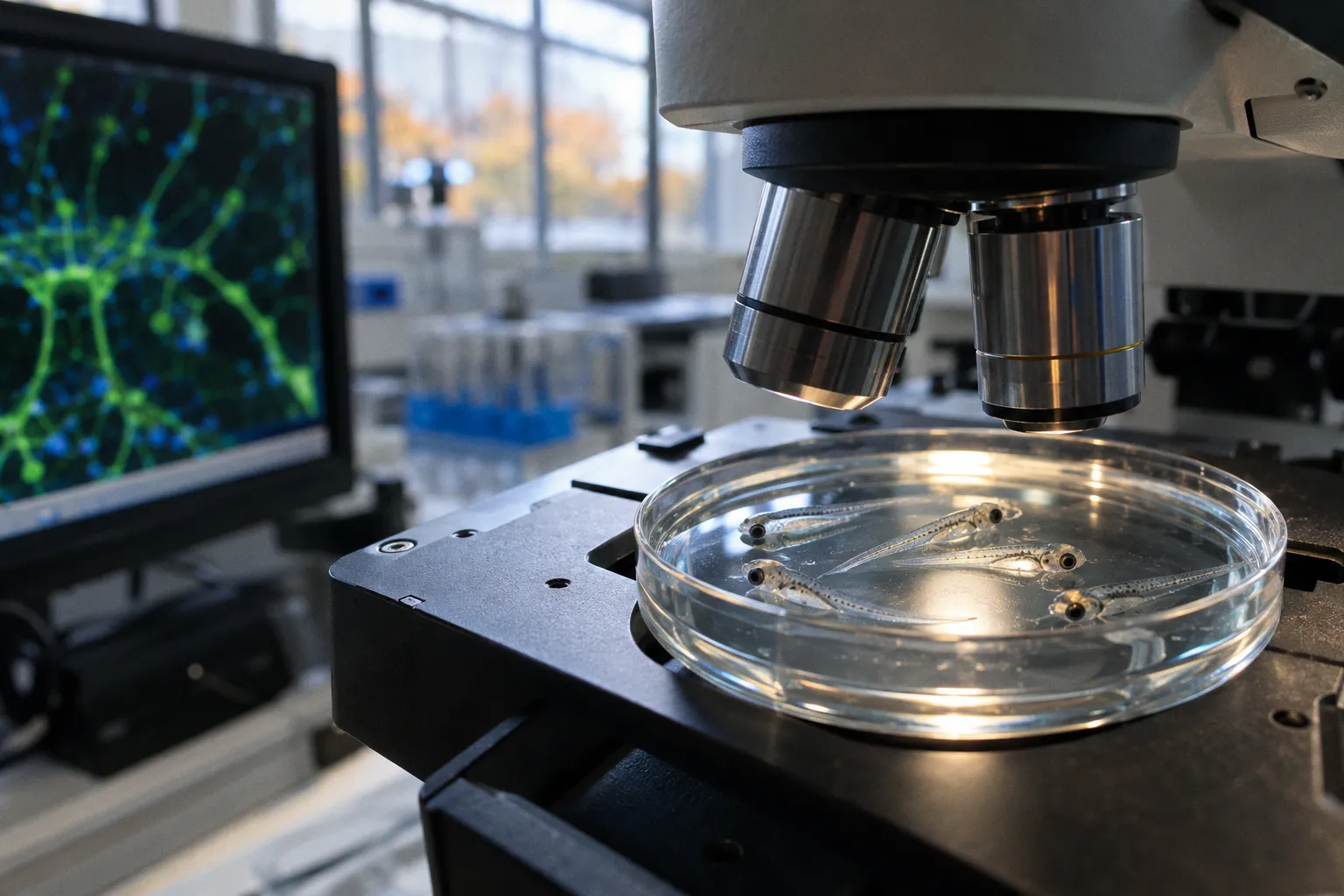
A rare variant worth watching — what a new neurodevelopmental hit could mean for your zebrafish bench
By the time you've finished your fifth genotyping gel of the week, you start to recognize the pattern: most "candidate" variants wash out under closer scrutiny, and only a handful hold up as real players in neural development. So when News-Medical reports that researchers have identified a rare genetic change linked to a neurodevelopmental disorder, our ears should perk up — not because this single finding will rewrite anyone's thesis overnight, but because rare variants are exactly where zebrafish screens earn their keep.
What the early reporting actually says
According to the headline circulating on News-Medical, a research team has flagged a rare genetic change associated with a neurodevelopmental disorder. That's the extent of what we can verify from the wire right now — the full methods, the specific gene, and the patient cohort details are not yet in our hands. So let's resist the urge to over-interpret. The useful move, as any PI will tell you, is to note it, file it under "to watch," and wait for the preprint or paper to land.
In a zebrafish lab, this is the moment where you pull up your CRISPOR tab and start asking the obvious questions: is this gene expressed in the regions we care about during the windows we image? Does our existing mutant or morpholino line already touch this pathway? Could a crispant line give us a faster read on phenotype than waiting for a stable germline?
Why this story matters for circuit-builders
Rare-variant papers can be maddening because the human phenotype is often described in broad strokes — developmental delay, behavioral differences — without the cellular resolution we crave. That's precisely the gap our model fills. Zebrafish let you go from "this gene is implicated" to "here's what the hindbrain looks like at 3 dpf, and here's what the optomotor response does at 5 dpf" in a matter of weeks. If this variant involves a gene with conserved function, you have a real shot at being the lab that connects a human clinical finding to a circuit-level mechanism.
Keep an eye out for the full publication. When it drops, check whether the authors share variant frequency data, predicted protein impact, and any cell-line or organoid work — that will tell you whether a zebrafish follow-up is worth proposing or whether the field is already saturated with model systems on this one. Until then, it's a promising lead, not a protocol change.