How Traveling Electrical Waves Transform Sensory Chaos Into Visual Perception
Neuroscientists at the Salk Institute and MIT have converged on a striking idea: the brain's traveling electrical waves are not background noise but a computational engine that shapes how you perceive, remember, and anticipate the world around you.
The Wave Beneath the Surface
Published within days of each other, two independent frameworks argue that these rhythmic patterns of neural activity—moving like ripples across the visual cortex and beyond—serve as an analog processing system that organizes the chaos of incoming sensory data into coherent experience. For anyone tracking how neural circuits develop and adapt, this reframing carries practical weight: it suggests the architecture of perception is far more dynamic, and far more wave-dependent, than the static wiring diagrams we often default to.
How the Visual Cortex Rides a Wave
John Reynolds and his colleagues at Salk spent years cataloging what traveling brain waves actually do in awake, behaving animals. Their findings point to four distinct roles. The waves adjust perception on a moment-to-moment basis—explaining, for instance, why you can stare directly at a pair of keys and still not see them. They transform recent sensory input into an internal model of what just happened. They generate short-term predictions about what's likely to come next. And they preserve and replay patterns tied to memories of events that unfold over time.
The mechanism is elegant. The synaptic connections responsible for generating these waves can modify their own strength—a property known as synaptic weighting—based on what an animal has experienced. Every sight, every sound recalibrates the circuitry. Over time, this process sculpts the brain's internal representation of its surroundings. Reynolds drew a comparison to how large language models operate: they learn statistical structure from vast input and use that structure to generate coherent output. The brain, it seems, does something analogous with the patterns of the physical world.
Beyond Circuits: The Case for Analog Computation
At MIT, Earl Miller and his co-authors pushed the argument further in a review published in The Journal of Neuroscience. The standard metaphor of the brain as a network of discrete circuits, they contend, misses something essential. Synaptic rewiring is relatively slow—too slow to explain how millions of neurons coordinate in fractions of a second to produce fluid, improvisational thought. Waves offer the missing control layer.
Unlike digital computation, which processes one step at a time through sequential gates, analog computation via wave interference handles multiple calculations in parallel. This is not a minor efficiency gain. Miller's team describes it as the brain exploiting its own physics—using the rhythmic synchronization of large neuron populations to bind together what they call "mixed selectivity," the phenomenon where individual neurons respond to multiple cues and contexts simultaneously. The result is immense computational flexibility, but only if something organizes those overlapping networks in real time. Waves appear to be that organizing principle.
What This Means for Neural Circuit Research
The convergence of these two frameworks—one grounded in visual processing experiments, the other in a broader theory of cognition—creates a practical signal for anyone studying how neural networks form and function. If traveling waves are a core computational mechanism, then understanding circuit development means understanding not just which neurons connect, but how rhythmic activity shapes those connections over time.
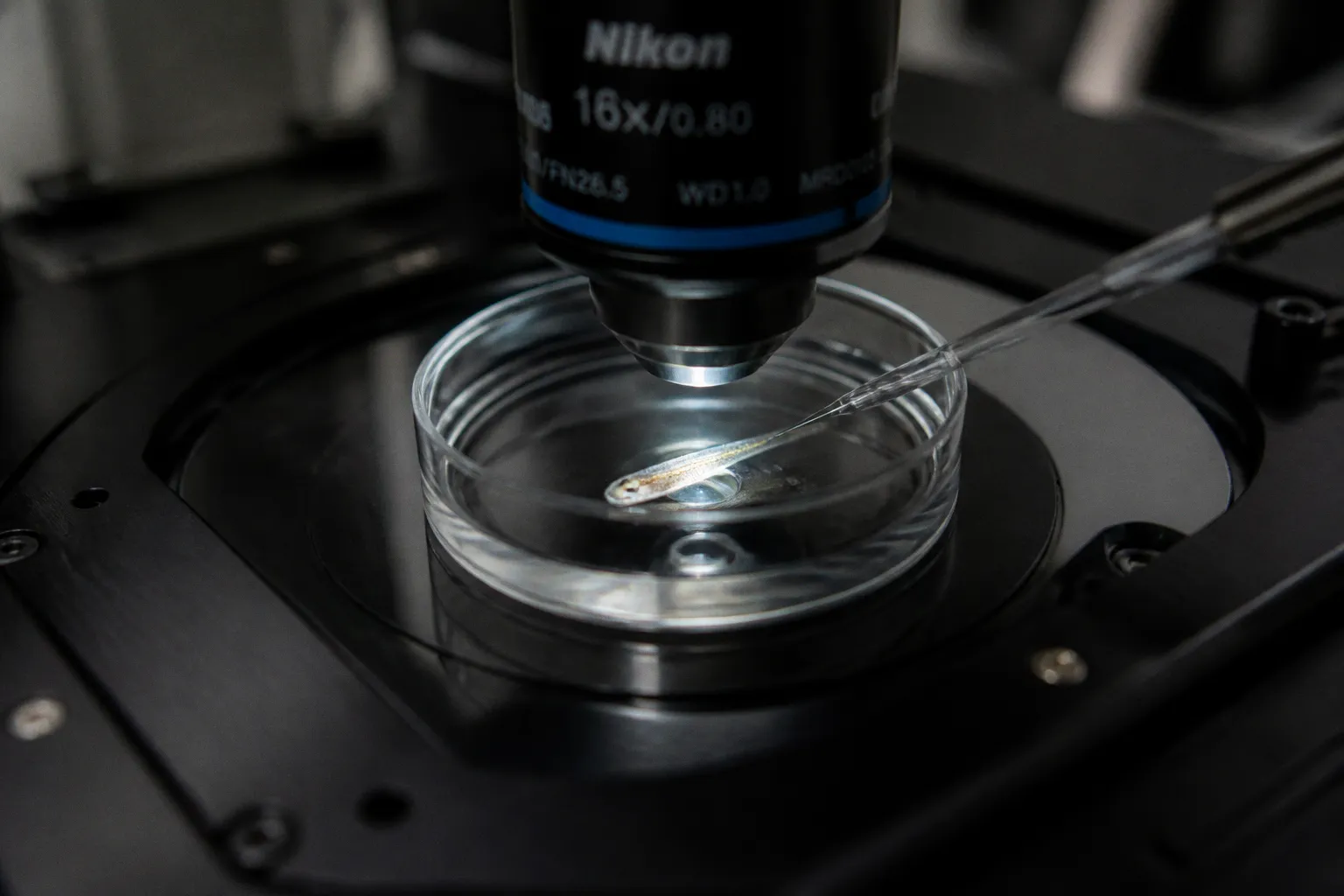
Miller's group also flags a clinical dimension worth noting. Brain waves can be manipulated non-invasively, making them a plausible target for interventions. His lab is already part of a collaboration investigating wave dynamics in autism. For researchers working with model organisms like zebrafish, where optical access to neural activity is routine, the question becomes sharper: are the developmental trajectories we track in circuit formation also trajectories of wave emergence? The data now suggests they almost certainly are.
The actionable takeaway is this: when you're analyzing neural activity, treat wave patterns as a primary signal, not a secondary artifact. The visual cortex does not passively receive input—it rides a wave of its own making, and that wave carries the computational logic of perception itself.