New Insights into VTA Dopamine Neurons Challenge Traditional Neural Circuit Models
The Colorado Clinical and Translational Sciences Institute pulled together a conference at the Anschutz campus this week, and if the early program is any indication, zebrafish folks have a lot to…
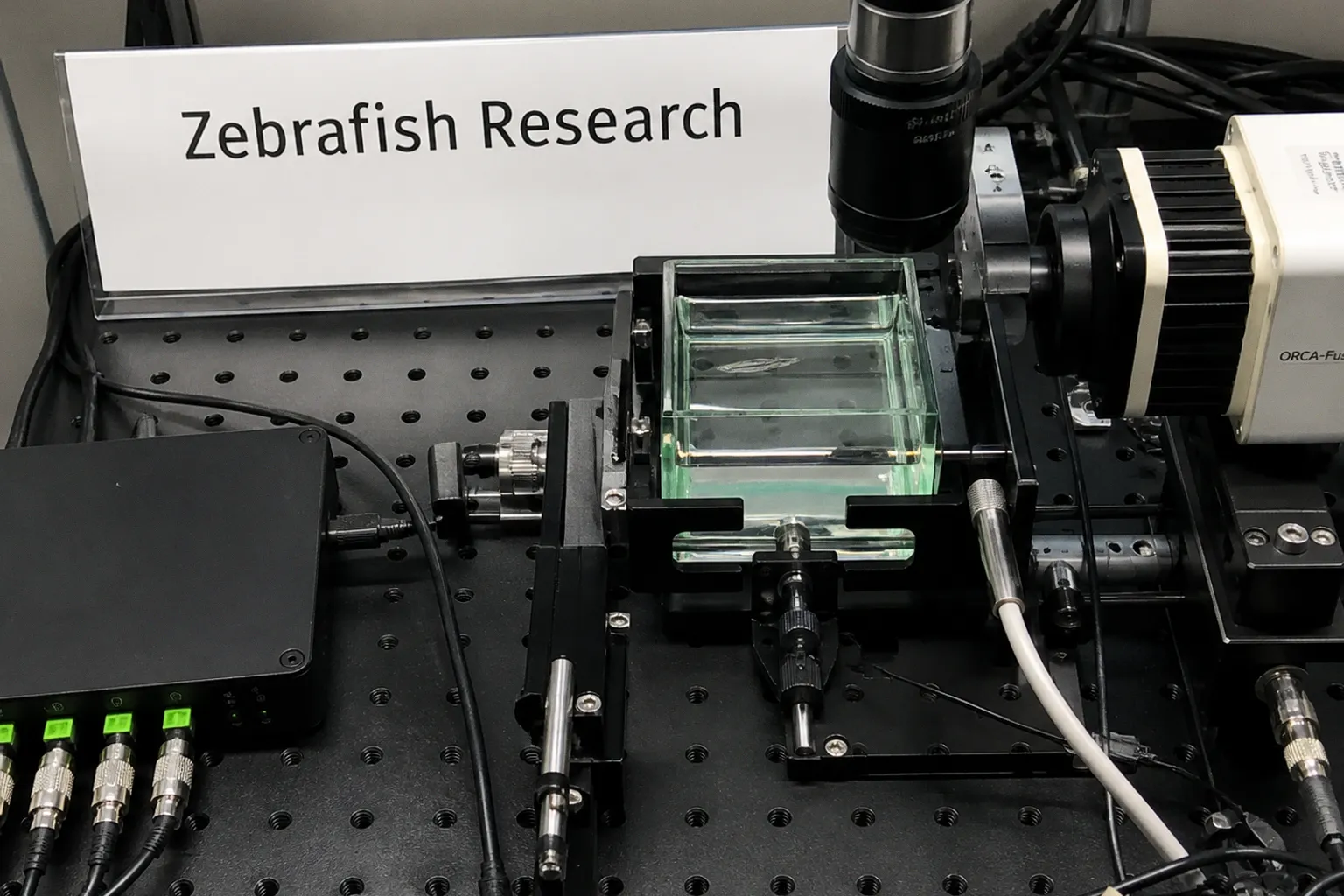
The Colorado Clinical and Translational Sciences Institute pulled together a conference at the Anschutz campus this week, and if the early program is any indication, zebrafish folks have a lot to borrow from mammalian circuit work — starting with a cleaner story about midbrain dopamine neurons that landed on the cover of Science Signaling last month.
What's actually new in the VTA
Researchers at the University of Colorado Boulder's Root Lab report that dopamine-producing cells in the ventral tegmental area which also release glutamate aren't a uniform crowd — they split into functionally distinct subtypes. The work, led by principal investigator David Root with first author Emily Prévost (a Spring 2026 behavioral neuroscience PhD graduate), made the cover of the August 18, 2026 issue of Science Signaling. If you've been building transgenic lines to isolate VTA dopaminergic populations for reward or aversion assays, this is your reminder that your "DA neurons" are probably doing at least two different jobs depending on which co-transmitter profile you actually catch. Worth a read before you lock in your next behavior cohort.
The wider conference pulse
The CCTSI program is showcasing neuroscience across the Anschutz and broader Colorado ecosystem, and a couple of adjacent announcements are worth flagging for the bench. Separately, Carnegie Mellon announced that an Oxford professor has been named the winner of this year's Andrew Carnegie Prize in Mind and Brain Sciences. And for those of you thinking about aging models or late-onset phenotypes, a University of Oslo group tracking longitudinal neuroimaging for nearly two decades reports that brain alterations linked to Alzheimer's disease were picked up up to seven years before amyloid plaques showed on PET scans — an early-detection window that matters when you're scaling older cohorts in the fish facility and wondering what subtle behavioral shifts you might catch before gross degeneration kicks in.
What to bring back to the tank
For our prep: the dopamine/glutamate co-release story is exactly the kind of paper that makes you re-check your sorting gates. If your transgenic isn't cleanly separating those VTA populations, your "clean signal" may be averaging across two distinct circuit roles, and you'll never see the difference until the assay breaks. Let's revisit our reporter line validation before the next imaging session — and keep an eye on the CCTSI session notes when they go up, because the translational pipeline from rodent VTA work into zebrafish circuit dissection tends to flow in both directions. Plenty of room here for a quick fish-side follow-up if anyone's itching for a new project.