Rethinking Carbohydrate Metabolism in Early Neural Network Assembly
According to News-Medical, new research is putting carbohydrates back on the table as a meaningful player in early human brain development — and even from a zebrafish bench, that's the kind of…
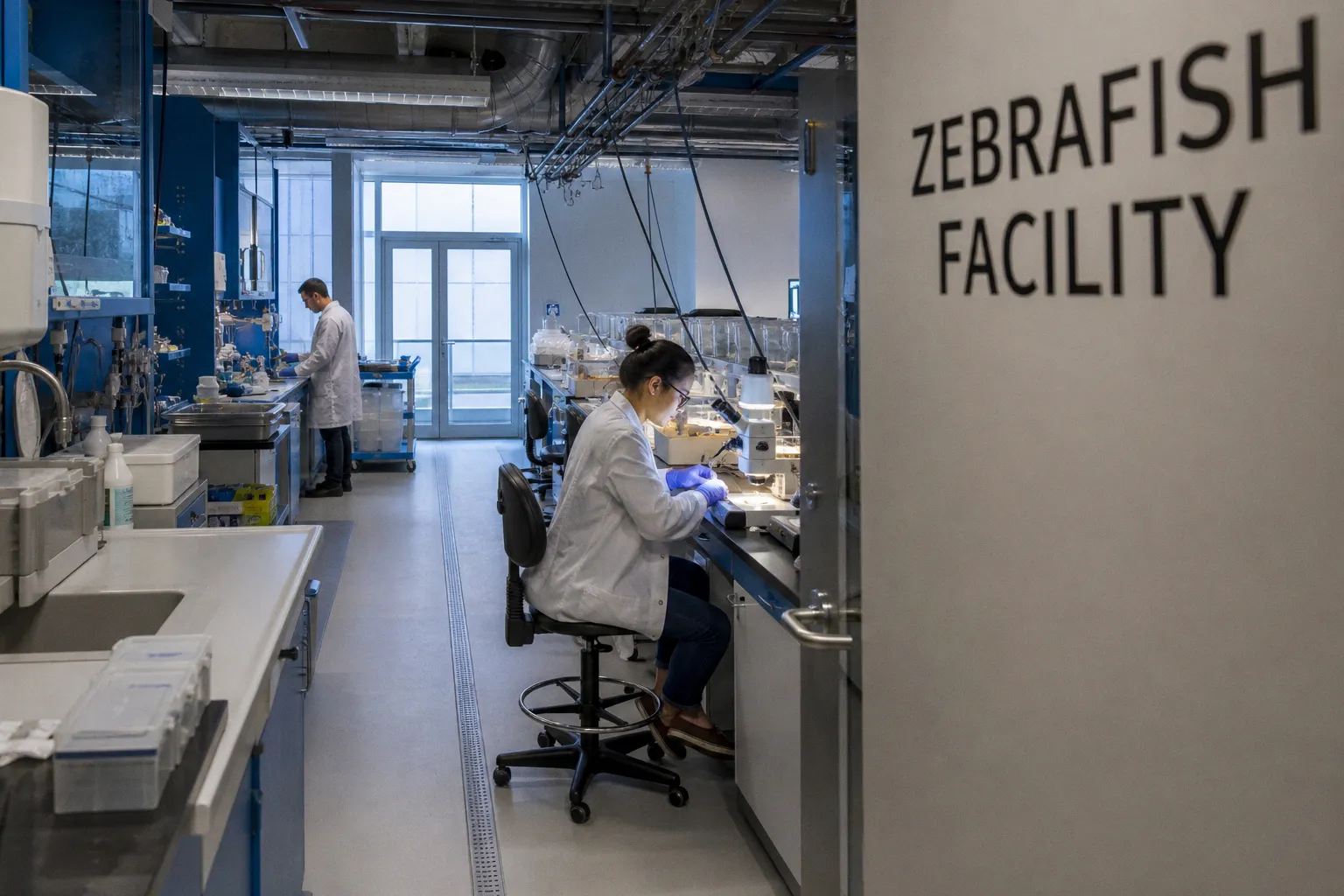
According to News-Medical, new research is putting carbohydrates back on the table as a meaningful player in early human brain development — and even from a zebrafish bench, that's the kind of headline that makes you stop pipetting for a second. As a community that leans on in vivo models to pick apart how neural networks form, we read this as a quiet nudge: metabolism isn't background noise to circuit wiring, it's part of the prep.
What the report points to
The full study sits behind the News-Medical headline, and the coverage so far doesn't give us the molecular cast yet — only the framing that carbohydrates deserve a louder voice in how we think about the earliest stages of brain assembly. That alone is worth sitting with, because for years the developmental neuro conversation has leaned heavily on growth factors, transcription programs, and activity-dependent refinement, with glucose metabolism often treated like housekeeping. If the new work pushes carbohydrate handling into the spotlight as a developmental sculptor rather than a fuel line, it changes which controls we consider "clean" at the bench.
Why this touches the fish room
Here's where your zebrafish prep gets interesting. Zebrafish larvae are transparent, they develop fast, and they let us watch neural circuits come online in real time — but they also live in an egg and yolk environment that is, by design, a carbohydrate-rich metabolic world. If early human neural development is more sensitive to the carbohydrate context than we assumed, then the question follows naturally for us: are our standard embryo media and feeding regimes accidentally normalizing a variable we should be varying? That's not a reason to overhaul your protocol on a Tuesday, but it is a reason to log the sugar content of your egg water next to your imaging session, and to flag any reagent lot that suddenly changes behavior in a way you can't blame on genotype.
What to keep on your radar
A few threads worth tracking without overcommitting. News-Medical is running the story as of early August, so the underlying paper and dataset should follow — that's when we'll know whether the carbohydrate signal lands as a structural player in neural assembly or as a permissive energy story. Two related items also landed in our feed: ScienceDaily has detailed coverage of Tametara mirim, an 80-million-year-old snake fossil from Brazil whose CT-reconstructed brain endocast shows early snakes were already experimenting with very different sensory and ecological strategies — a reminder that "conserved" brain wiring has always been a movable feast; and Devdiscourse flags work linking weight regain after dieting to brain biology, which we're watching as a metabolic-circuit story even if the specifics aren't ours to claim.
None of this is a protocol change yet. But if you've ever watched a perfectly timed imaging session produce noise you couldn't trace to your transgene, your antibodies, or your lights — start by asking what your fish ate, and what was in the water. That's usually where the clean signal lives.