Salk researchers isolate specific neurons controlling complex social behaviors
According to News-Medical, Salk Institute researchers have built a genetic toolkit that finally lets you pull apart the subtypes of neurons that release the same neuromodulator — and the early…
According to News-Medical, Salk Institute researchers have built a genetic toolkit that finally lets you pull apart the subtypes of neurons that release the same neuromodulator — and the early behavioral readout is the kind of uncomfortable-but-good news that should reshape how a lot of us design our next experiment. We've all been there: you lesion a region, you knock down a gene, you get a behavior change, and then you spend three months squinting at the data wondering whether you've actually hit "the" aggression neurons or just some noisy mixed population. The Salk result turns that guesswork into something testable.
What the toolkit actually does
According to the coverage, the strategy isolates specific subtypes of neurons that share a single neuromodulator. The punchline isn't the isolation itself — it's what happens once you separate them. Those subtypes can drive different, even opposing behavioral outputs, including suppression of aggression. In other words, "neurons using neuromodulator X" is not a behavioral category. Push into the subtype, or you are perturbing a mixed bag and pretending it isn't.
If you have ever pooled two Cre lines because they looked interchangeable on paper, this is a very gentle nudge to revisit that assumption before you commit a whole cohort and a whole behavior battery to it.
A bonus for anyone in larval zebrafish
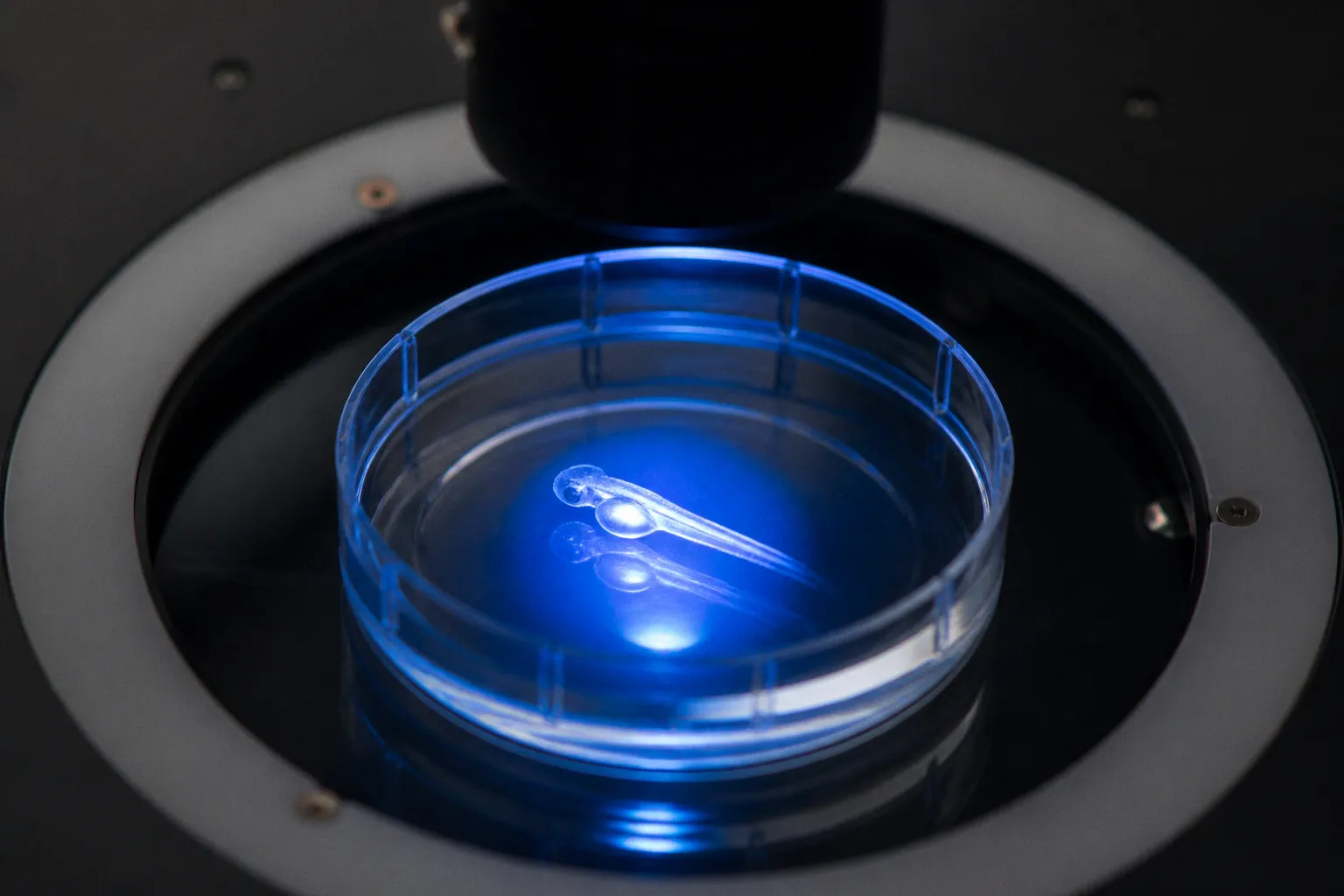
And on an adjacent front — Bioengineer.org is carrying a separate report of a new imaging method that records rapid voltage activity across the entire brain of a living larval zebrafish, so you can finally watch the nervous system as a connected, dynamic organ in real time. Layer that capability on top of a subtype-resolved genetic toolkit and the next round of circuit work gets genuinely exciting: behavior-locked, brain-wide, and clean enough to settle arguments instead of starting new ones.
What to try on Monday
A few practical moves before the shiny distracts you:
- Audit your current neuromodulator-X claims. If you have been treating a pooled population as one thing, flag those figures for re-analysis with subtype in mind.
- If you work in larval zebrafish, keep an eye out for the voltage-imaging protocol when it preprint-hits. Whole-brain coverage at speed is the kind of capability that changes which questions are even worth designing.
- Set aside a small validation cohort. Subtypes opposing each other is the kind of result you do not want to discover mid-grant-renewal, so beat your reviewer to it.
Clean signal beats clever framing. Go run those controls — your future self, and reviewer two, will thank you.