Scientists identify new role for tau protein in brain diseases
The announcement, distributed through NIH's official channel, adds a working data point to the ongoing effort to isolate how tau operates inside neural circuits — beyond its established role as a…
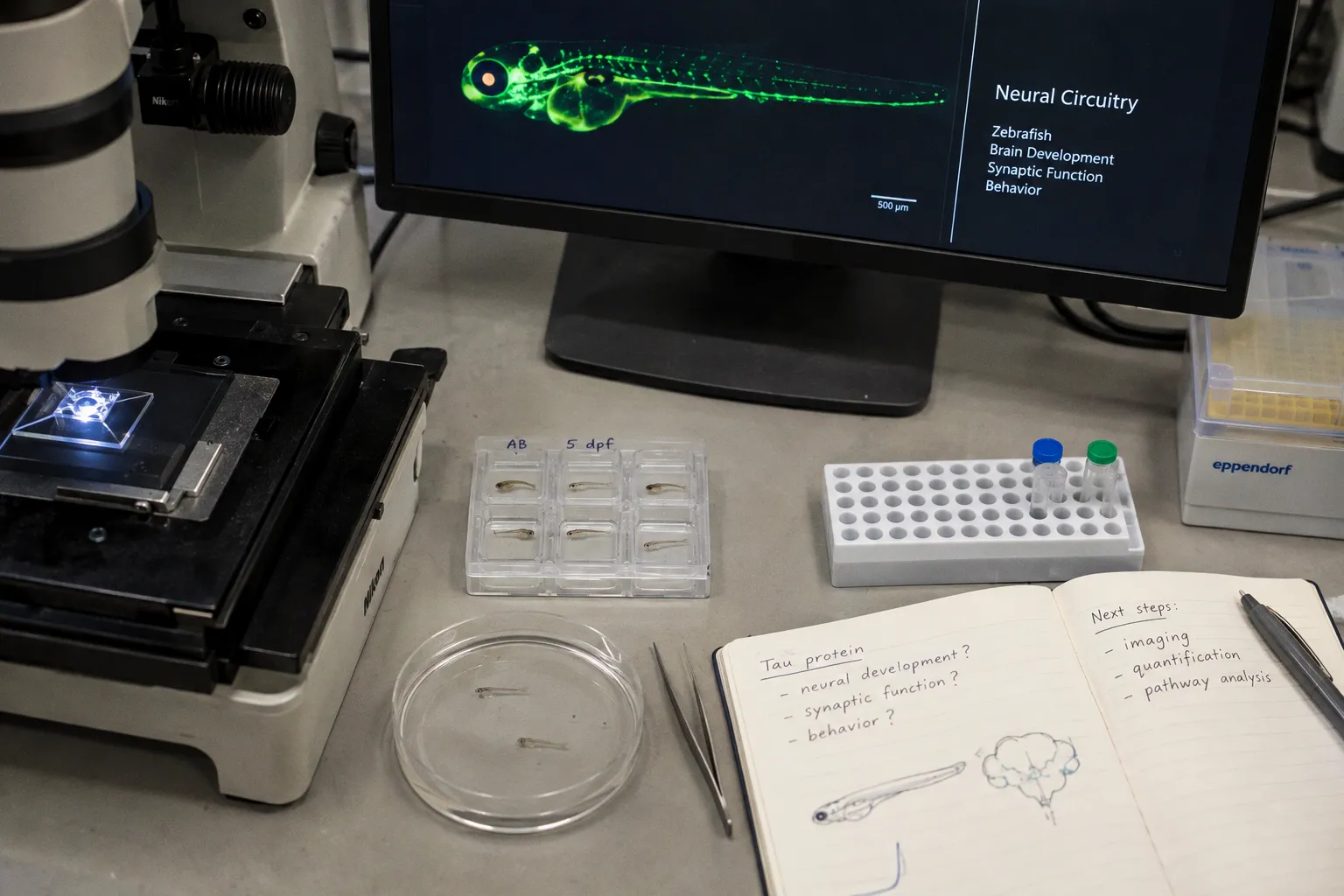
Per the National Institutes of Health, researchers have mapped a new functional role for the tau protein in the pathology of brain diseases. The announcement, distributed through NIH's official channel, adds a working data point to the ongoing effort to isolate how tau operates inside neural circuits — beyond its established role as a passive aggregation marker.
For a zebrafish neurobiology audience, the immediate question is mechanical: which cellular process does tau now touch, and through what molecular pathway? Public reporting on the announcement so far reproduces the headline without accompanying mechanistic detail. Treat this as a calibrated signal, not yet a resolved variable. Watch for the primary publication, then map the reported pathway against existing zebrafish tau models. Transparent vertebrate brains offer one of the cleanest systems for isolating protein function in a living circuit — any new tau mechanism should be testable within weeks, not months.
Parallel Circuit Mapping in the Same Window
The same news cluster produced three separate circuit-mapping announcements, each calibrating a different node in the behavioral network.
Per NPR, researchers mapped key protein interactions linked with profound autism — another case of isolating molecular partners inside a defined neural population. Per ScienceAlert, a separate group identified a nose-to-brain circuit linking anxiety states to breathing rhythm, charting a previously uncharacterized sensory-to-behavioral pathway. Per PsyPost, scientists traced a brain pathway connecting social isolation to increased alcohol consumption, quantifying how an environmental input reshapes a reward circuit.
These three reports are not about tau. They matter to a circuit analyst because they share the same working method: isolate a protein or pathway, quantify its role in a specific behavioral output, then publish a tractable model. The tau announcement slots into that same workflow.
What to Track
Three parameters deserve attention before the next planning meeting.
1. Mechanism type. Does the new tau role involve aggregation, axonal transport, synaptic scaffolding, or something else? Each implies a different zebrafish assay.
2. Disease scope. The headline references "brain diseases" without naming a specific tauopathy. The disease frame changes which model lines apply.
3. Reproducibility route. Look for whether the group provides reagents, antibodies, or transgenic lines — the practical handoff that lets a zebrafish lab replicate the finding.
Until the full paper lands, hold the announcement as a working hypothesis and resist overfitting existing models to an underspecified claim.