Decoding Interoception: How Brain Organoids Reveal Internal Sensory Circuits
Nature has run a study framing interoception — the brain's sensing of its own internal state — inside brain organoids.
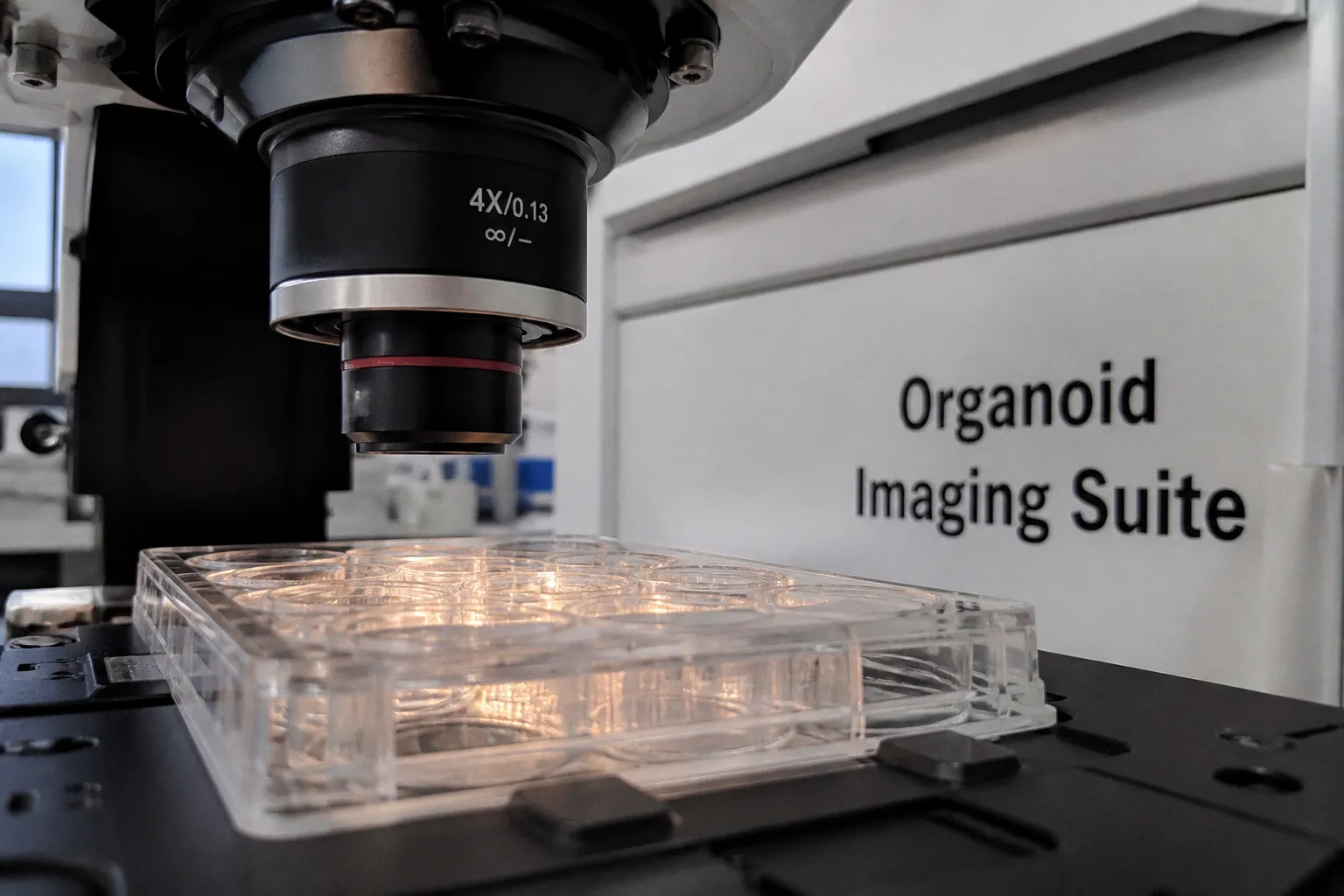
The sixth sense of the brain: interoception in organoid study
The work treats visceral signals as a circuit variable to isolate in developing tissue. For neural wiring researchers, it opens a tractable model for the least-charted sensory lane.
Mapping the internal lane
Interoception covers the inputs that arrive from inside the body: heart rate, blood chemistry, gut stretch, visceral tone. The brain uses these to regulate breathing, hunger, and stress responses. The Nature piece, per its listing, places this problem inside an organoid — lab-grown neural tissue that self-organizes into circuit-like structures. Strip out the periphery and you can calibrate a defined stimulus (chemical, mechanical, thermal) and quantify how a developing network responds, without the noise of a full body in a full environment.
The gain for circuit work is direct. You get a closed system with measurable inputs and outputs: apply an interoceptive cue, record calcium activity or network bursts, compare against control batches. It moves interoception from a black-box phenomenon to a parameter you can adjust.
The parallel readout at the other end
A separate study this cycle, from USC's Neuroimaging and Informatics Institute, maps environmental inputs to cortical structure in adults. The team pulled residential air-pollution estimates and MRI scans from 1,484 adults without dementia — 387 men from the Vietnam Era Twin Study of Aging (average 62 years) and 1,097 women from the Women's Health Initiative Memory Study (average 78). They estimated each participant's exposure to PM2.5 and NO2 across the three years before scan, then measured cortical thickness across four Alzheimer's-vulnerable temporal regions and 34 broader regions covering all four lobes.
In women, higher exposure to both pollutants tracked with a thinner cortex in the four vulnerable regions. Per additional microgram per cubic meter of PM2.5, the thickness shift was comparable to roughly 13 months of aging. Per additional part per billion of NO2, the shift was comparable to about three months. Higher PM2.5 also tracked with a thinner cortex in 23 of the 34 broader regions. In men, the pattern reversed: greater exposure associated with a thicker cortex in the same vulnerable areas, then flipped after age 65 — a shift weak enough that the researchers noted they couldn't rule out chance as an explanation.
For circuit analysts, the methodological read is what matters. The study gives a population-scale readout of how chronic environmental inputs reshape cortical wiring trajectories over decades. Where the organoid paper asks how a network learns to listen to its own state over weeks, this work shows what years of continuous input does to a mature circuit.
Parameters to track
For organoid interoception work, the concrete variables are these:
- Stimulus layer: a defined chemical or mechanical cue, calibrated to a known interoceptive receptor set, applied at a consistent developmental time point.
- Readout stack: calcium imaging plus multi-electrode array, aligned to organoid age in days, with transcriptomic sampling at matched intervals.
- Control batch: sister organoids receiving matched exteroceptive (visual, tactile) stimuli in parallel, to isolate interoceptive-specific response patterns.
- Validation: cross-check network burst structure and connectivity metrics against published rodent interoceptive pathway maps.
For the cortical work, the open parameters are exposure duration, age window at scan, and whether the thickness shifts track amyloid, tau, or inflammatory markers — none of which the USC team measured. Until those gaps close, treat the male under-65 cortical reversal as a signal to watch, not a finding to act on.