How Event-Driven Telemetry Chips Are Transforming Neural Circuit Mapping
According to CORDIS, the European Commission’s IoN project has developed a minimally invasive telemetry chip for recording and transmitting neural spikes.
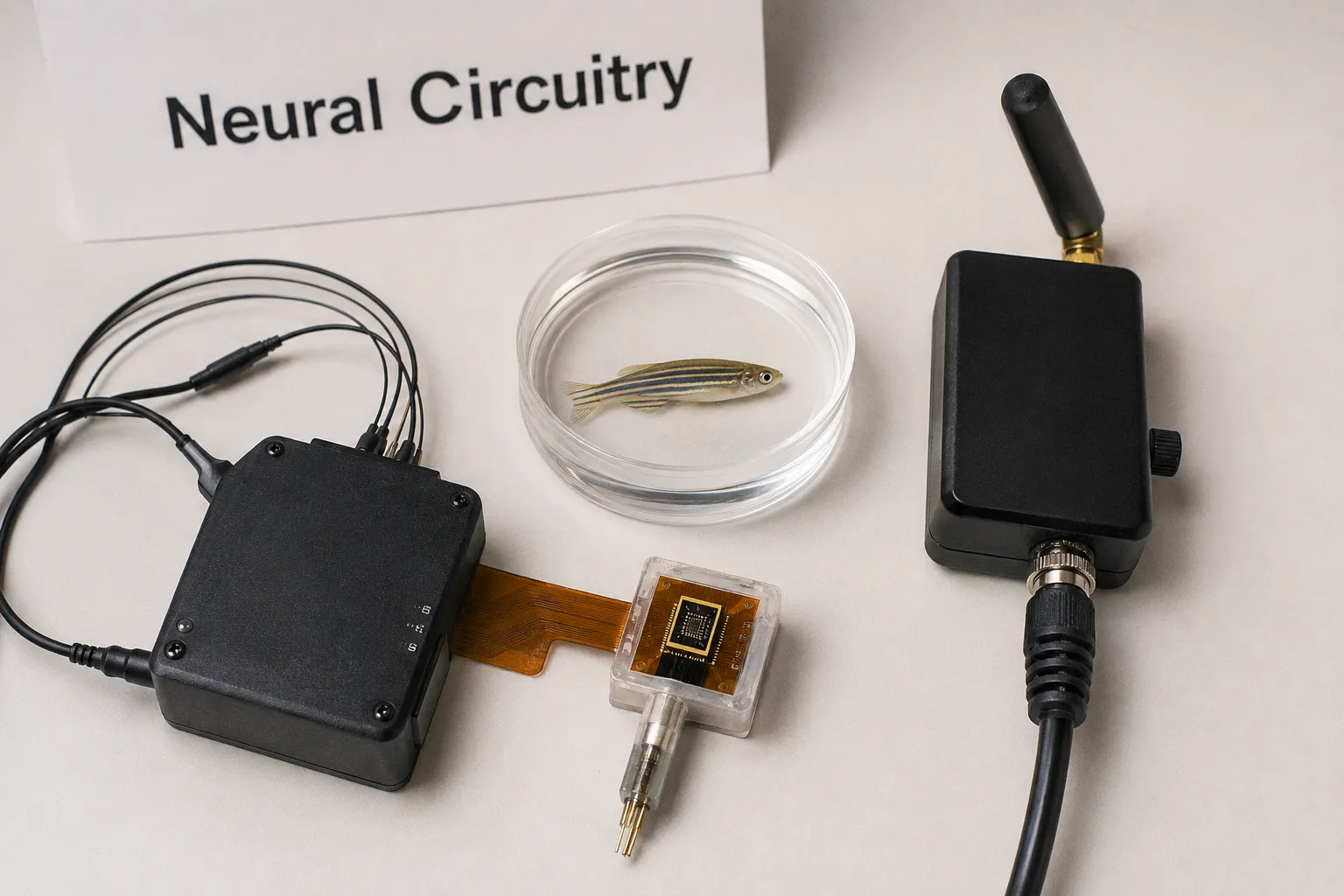
Its key design choice is event-driven data compression: the chip sends information when neural events occur instead of treating the recording stream as a continuous bulk-data problem. That could make long-term, high-density recording of neural circuits more manageable by reducing bandwidth demand and thermal dissipation.
The bottleneck is data movement
Neural recording systems do not only need sensitive electrodes. They also need a way to move the resulting data out of the implant. Every recorded spike adds to the communication workload. That workload affects bandwidth and heat, two constraints that become harder to manage as recording density increases.
The IoN chip addresses this at the telemetry layer. It records neural spikes, compresses the data in an event-driven way, and transmits the result. CORDIS describes the outcome as a drastic reduction in data bandwidth and thermal dissipation.
The engineering logic is direct: isolate the meaningful neural events, reduce unnecessary data movement, and preserve the ability to record many circuits over longer periods. The advance is therefore not simply a smaller implant component. It is a change in how the recording pipeline handles information before transmission.
Why this matters for neural-circuit work
For researchers mapping neural circuits, recording density is only useful if the system can sustain it. A device that captures more activity but creates an unmanageable data stream does not solve the full measurement problem.
The IoN approach targets that mismatch. By compressing data around neural events, the chip is designed to support high-density recording while lowering the bandwidth and thermal load associated with telemetry. That is relevant to circuit-level studies, where the objective is to track activity across neural populations rather than rely on a narrow signal from a single site.
The project’s description supports a specific claim: the technology is intended to enable long-term, high-density recording of neural circuits. It does not, on the available evidence, establish performance in a particular animal model, a clinical implant, or a completed therapeutic system. Those distinctions matter. A telemetry architecture can improve the measurement chain without, by itself, proving that the full implant is ready for biological or medical deployment.
For zebrafish neurobiology, the useful question is similarly structural. Does the system preserve the neural events needed to map circuit activity while reducing the hardware burden created by continuous data transmission? The current report identifies the mechanism and intended benefit, but not the experimental performance details needed to answer that question.
What to verify before treating it as a platform
The available report is strong on architecture and limited on implementation detail. Before comparing this chip with other neural-recording systems, isolate four parameters:
- Signal handling: confirm which neural spikes are detected and how event-driven compression represents them.
- Telemetry load: quantify the reported reduction in data bandwidth against the original recording stream.
- Thermal behaviour: check how the reduction in thermal dissipation was measured and under what operating conditions.
- Recording duration and density: look for evidence that long-term, high-density circuit recording was demonstrated, rather than presented only as the project’s intended capability.
The practical takeaway is narrow but important. The IoN project moves the pressure point from electrode capture to information transport. That is a credible systems-level strategy for neural implants. The next assessment should not ask whether the chip sounds “smart.” It should map the full chain: spikes in, compressed events through, stable recordings out.