Dolmabahçe Palace: A strategic plan to book tickets and visit
The main mistake visitors make at Dolmabahçe Palace is treating it like a standard Istanbul museum. It is not.
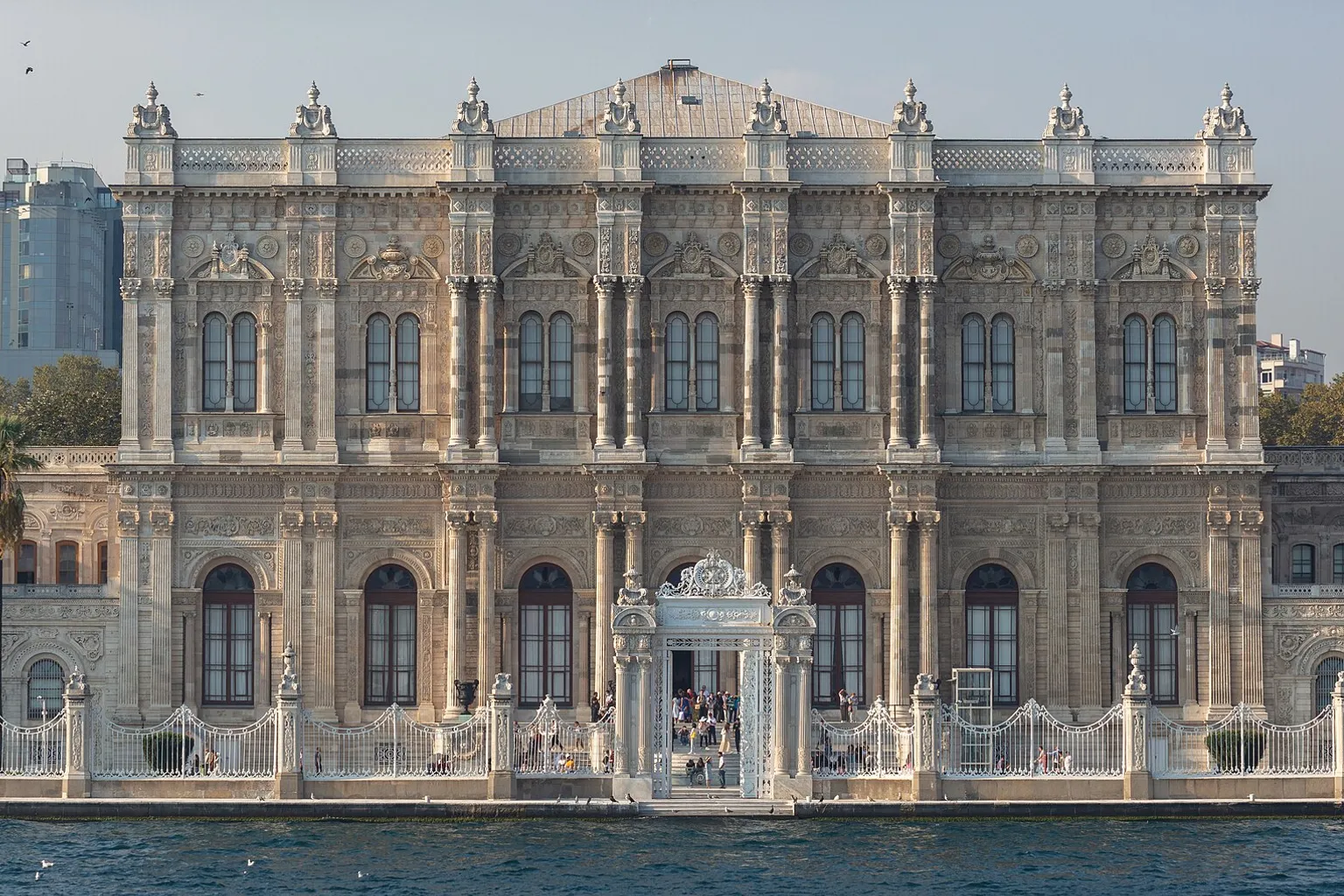
The palace is managed by the Presidency of National Palaces, or Milli Saraylar Başkanlığı, and the standard Istanbul Museum Pass generally does not cover entry to the principal Selamlık and Harem sections.
Tickets and prices
Dolmabahçe Palace
| Option | Type | Duration | Rating | From | |
|---|---|---|---|---|---|
| Skip-the-line ticket · 2 daysGetYourGuide | skip-the-line | 2 days | ★ 4.72,420 reviews | fromTRY2481.14 | Book tickets |
| Skip-the-line ticket · Audio guideGetYourGuide | skip-the-line | — | ★ 4.71,271 reviews | fromTRY2481.14 | Book tickets |
| Combo ticket · Skip-the-line entryGetYourGuide | combo ticket | — | ★ 4.639 reviews | fromTRY5469.79 | Book tickets |
| Official ticket · Foreign visitorsOfficial | official ticket | — | — | fromTRY2000 | Book tickets |
At the box officeAdultTRY2000Official website — millisaraylar.gov.tr
That changes the booking sequence. You need to identify the correct ticket channel first, select the areas you want to visit, and then plan around the palace’s fixed operating schedule. A casual arrival can still work, but it gives you less control over timing and package availability.
This is the practical route to book tickets for Dolmabahçe Palace, avoid the pass-related mistake, and move through the visit without wasting the useful part of your day.
Start with the official Dolmabahçe Palace ticket portal
The official ticket system is operated through the National Palaces administration. Search for the Milli Saraylar e-ticket portal rather than relying on a generic Istanbul attraction platform as your first source.
The portal is the control point for:
- Current entry availability.
- Official palace sections and ticket combinations.
- Visitor dates and time-related availability where offered.
- The current admission structure.
- Information for the main palace and related National Palaces sites.
The exact interface can change. The logic does not. Confirm that the page is connected to the Presidency of National Palaces before entering payment details or selecting a product.
A useful booking sequence is:
1. Open the National Palaces ticket portal.
Do not begin with the assumption that an Istanbul-wide museum pass will solve the entry problem.
2. Select Dolmabahçe Palace rather than a similarly named tour.
Third-party listings may combine the palace with a guide, audio service, or fast-track arrangement. Those can be useful, but they are not the same as buying a direct palace admission ticket.
3. Check which sections the ticket includes.
The principal visitor areas are commonly described through the Selamlık, Harem, and Painting Museum sections. A lower-cost or shorter visit may not include all of them.
4. Enter visitor information exactly as shown on the identification document.
Keep the booking confirmation accessible. If the on-site process requires a ticket or passport for an audio guide, you want the document trail to be clean and easy to retrieve.
5. Review the date and package before payment.
Do not assume that a ticket for one palace section automatically covers the entire complex.
6. Save the confirmation offline.
A screenshot or downloaded file is more reliable than searching an inbox at the entrance.
The official portal should be your reference even if you eventually choose a guided tour. It establishes the current operating conditions and shows which parts of the palace are actually available for the selected date.
The ticket problem at Dolmabahçe is usually not payment. It is selecting the wrong authority, the wrong section, or the wrong pass.
What the ticket usually needs to cover
Dolmabahçe Palace is not one undifferentiated room sequence. The visitor experience is divided into areas with different historical and spatial functions. Your booking decision should reflect that structure.
Selamlık
The Selamlık is the formal and administrative part of the palace. It contains the ceremonial spaces associated with the public and official functions of the Ottoman court.
This is where the major state rooms and formal interiors sit. The Ceremonial Hall, known as Muayede Salonu, is the operational center of the visit for many people. The scale changes here. The room is designed to be read as a complete composition: volume, ornament, furniture, lighting, and axial movement work together.
If your priority is architecture and ceremonial interiors, the Selamlık is the section that should anchor the booking.
Imperial Harem
The Imperial Harem exposes a different layer of the palace plan. It is less about state ceremony and more about the domestic organization of the imperial household.
The Harem section also prevents a common planning error: assuming that a ticket for the main palace automatically includes every interior zone. Check the ticket wording. Look for explicit mention of the Harem or a combined Selamlık-and-Harem admission.
The two sections require different attention. In the Selamlık, track ceremonial sequence and spatial hierarchy. In the Harem, track privacy, circulation, and the separation between formal and domestic use.
Painting Museum
The Painting Museum is a separate component in the broader visitor package. It may be relevant if you want a longer, more complete National Palaces visit rather than a focused palace interior tour.
Do not add it automatically. First establish how much time you have and what you want to measure from the visit. If the goal is to understand Dolmabahçe’s architecture, the core palace sections should take priority. If you have room in the schedule, the museum can extend the visit without requiring a second major attraction across the city.
A combined ticket can be efficient, but only when you are prepared to use every included section. Otherwise, the broader package adds scope without improving the actual visit.
Why the Istanbul Museum Pass does not solve the main entry problem
The standard Istanbul Museum Pass is designed for a network of museums and archaeological sites administered through the Ministry of Culture and Tourism. Dolmabahçe Palace operates under a different authority: the Presidency of National Palaces.
That institutional split has a direct result. The standard Ministry of Culture Istanbul Museum Pass is not generally valid for admission to the main Dolmabahçe Palace sections, including the Selamlık and Harem.
This is the point to isolate before building a multi-day Istanbul museum schedule.
| Booking option | What it solves | What to confirm |
|---|---|---|
| Official National Palaces ticket | Direct access through the palace’s own administration | Included sections, date, and current availability |
| Standard Istanbul Museum Pass | Entry to participating Ministry of Culture sites | It does not normally cover the main Dolmabahçe sections |
| Guided palace tour | Adds a guide and may simplify entry logistics | Whether the listed ticket includes Selamlık, Harem, or both |
| Audio-guided visit | Adds structured interpretation without a live guide | Whether the audio device is supplied on-site or included in the booked product |
| On-site box office purchase | Provides a direct fallback if online booking is unsuitable | Queue conditions and remaining availability |
The practical rule is simple: treat Dolmabahçe as a separate ticket operation.
You can still use an Istanbul Museum Pass elsewhere. Just do not build your Dolmabahçe plan around it. Arriving with the pass and expecting automatic admission creates an avoidable decision point at the entrance.
There is also no reason to complicate the issue with assumptions about refunds, exchanges, or changing a foreign visitor ticket into a domestic category. Select the correct visitor type and package before completing the booking.
Choosing between a direct ticket, audio visit, and guided tour
The right product depends on how much interpretation you need and how tightly you are managing time.
Direct official admission
Choose the direct official ticket when you already understand the palace’s historical framework and want control over your movement.
This format works well if you:
- Want to set your own pace.
- Prefer to inspect rooms without following a group.
- Have already mapped the Selamlık and Harem sections.
- Need to fit the palace between other Bosphorus-side plans.
- Want the cleanest route through the official ticket system.
The trade-off is that you must do more of the interpretive work yourself. The building supplies the evidence. You need to organize it.
Audio-guided entry
A free audio guide device is provided in exchange for visitor tickets or passports at the palace entrance. This gives you a structured layer of explanation without the timing constraints of a live group.
Use it as an information filter, not as background noise. Keep the sequence aligned with the building. Listen before entering a major room, then look at the room without staring at the device while the space is in front of you.
An audio guide is particularly useful for separating:
- The ceremonial role of the Selamlık.
- The domestic organization of the Harem.
- The function of the palace’s major rooms.
- The relationship between the building and the late Ottoman court.
- The historical significance of Mustafa Kemal Atatürk’s connection to the palace.
The device does not replace a ticket. It is attached to the entry process. Keep the required document available and return the equipment according to the palace’s instructions.
Guided tour booking
A guided tour can reduce planning effort, especially if you want the Selamlık and Harem covered in one organized route. Some products also advertise fast-track entry or an audio component.
The term “fast-track” needs to be read precisely. It may refer to a host meeting point, assistance with ticket collection, or a dedicated entry arrangement. It does not automatically mean that every queue disappears under every operating condition.
Before booking a guided palace tour, isolate five parameters:
1. Does the product include official admission or only a guide service?
2. Does it cover the Selamlık, Harem, or both?
3. Is the guide live, recorded, or simply an escort to the entrance?
4. Where is the meeting point?
5. What happens if the palace changes its visitor flow or schedule?
A guided option is strongest when it matches your desired scope. It is weaker when the description is broad but the included palace areas are not explicit.
Opening hours set the first constraint
Dolmabahçe Palace opens to visitors at 09:00 and is closed on Mondays. The published closing time is 17:30 or 18:00 depending on the seasonal schedule.
That variation matters because a full visit has more than one component. If you want the Selamlık, Harem, and Painting Museum, you are not planning a quick stop. You are allocating a block of the day to a controlled interior route.
Before selecting a date, check:
- Whether the date is a Monday.
- The current published closing time.
- The exact sections included in the selected ticket.
- Whether the ticket portal shows a date-specific restriction.
- Whether another timed activity follows the palace visit.
Do not use the latest nominal closing time as your arrival target. It leaves no buffer for entry processing, audio-guide collection, movement through the complex, or an unexpectedly slower route.
The best time to visit Dolmabahçe depends on the system you are optimizing.
For the lowest scheduling risk
Arrive near the opening period. The day has more remaining capacity for a delayed entry, a slower room sequence, or an expanded ticket package.
For a quieter interior experience
An earlier arrival usually gives you better control before the visitor flow builds. The palace is a high-demand site on the Bosphorus waterfront, and the most visually important rooms are easier to inspect when you are not continuously adjusting around another group.
For combining the palace with nearby plans
Place Dolmabahçe at the center of the schedule rather than treating it as a small gap between unrelated stops. The palace sits in a location that invites additional waterfront movement, but the interior visit should be completed first. Build the rest of the day around the confirmed palace entry.
The useful measure is not the number of attractions you can name. It is the number of fixed constraints you can satisfy without creating a collision.
Book the palace around its operating window, not around a vague plan to see it whenever you reach the waterfront.
Entry requirements: keep the document chain intact
The main entry requirement is a valid ticket obtained through the official portal or the physical box office. Identification may also be needed, especially where a ticket or passport is exchanged for the audio-guide device.
Children aged six and under are admitted free of charge with valid identification. Carry the document required to establish age. Do not rely on appearance or verbal explanation at the entrance.
For every visitor, keep the following ready:
- The ticket confirmation or physical ticket.
- The identification document used for the booking, if applicable.
- The selected date and package details.
- The payment confirmation if you purchased online.
- Any tour voucher if you booked through a third-party provider.
Avoid splitting these items between several phones or bags. Entry friction is often created by retrieval, not by the ticket itself.
If you buy at the box office, accept that availability and waiting time are less predictable than with a completed online booking. The physical counter remains a valid route, but it gives you less control over the day.
What to inspect inside the palace
Dolmabahçe contains 285 rooms, but the number is not the useful organizing principle. Map the visit by spatial roles.
The Ceremonial Hall
The Ceremonial Hall, or Muayede Salonu, is the critical calibration point for the palace’s public scale. Observe the vertical volume first. Then isolate the alignment of doors, openings, furnishings, and lighting.
The Bohemian crystal chandelier is one of the room’s most recognizable elements, but do not reduce the space to a single object. The chandelier works within a larger system of proportion and display. Measure the room as a composition: what draws the eye upward, what controls movement, and how the decorative load changes your sense of distance.
The Crystal Staircase
The Crystal Staircase is another high-attention point. It is easy to photograph mentally as an isolated detail, but the better reading is structural. Track how the staircase controls movement between levels and how materials alter the perception of the route.
Look for the transition from circulation element to display object. That change explains why the palace can feel less like a simple residence and more like an engineered sequence of ceremonial impressions.
The Bosphorus-facing position
The palace’s position on the Bosphorus waterfront is not incidental. The water-facing edge affects orientation, access, and the relationship between interior rooms and the wider city.
When the route allows, connect the interior sequence to the site. The palace was not placed in isolation from Istanbul’s movement network. Its waterfront position reinforces its role as a controlled point of arrival, representation, and visibility.
The late Ottoman and republican layers
The building also carries historical layers associated with Sultan Abdülmecid I and, later, Mustafa Kemal Atatürk. Track these layers without collapsing them into a single narrative.
The useful question is not simply who used the palace. It is how the building’s function changed as political authority changed. The rooms remain physical evidence. The interpretive frame should follow that evidence.
Photography restrictions are operational, not optional
Photography and video recording without permission are strictly prohibited inside the interior rooms of Dolmabahçe Palace.
Plan for a device-free interior experience. Do not assume that a phone camera is acceptable because it is small, silent, or set to a low-light mode. Do not record video while moving through the rooms.
This rule affects how you prepare. If you are using a phone for the ticket, audio guide, or navigation, finish the necessary digital tasks before entering the restricted interiors. Then keep the device available only for the functions permitted by the palace.
The restriction also improves the inspection sequence. Without stopping to frame every room, you can compare scale, materials, and circulation directly. If you need a visual record, use the permitted exterior areas and official interpretive material rather than improvising inside.
A working plan for the visit
Use this sequence when you need a reliable, low-friction visit.
Before booking
- Confirm that the date is not Monday.
- Open the official Milli Saraylar e-ticket portal.
- Decide whether you need Selamlık only, Selamlık and Harem, or a broader package.
- Check the current published closing time for your date.
- Compare direct admission with a guided palace tour only after defining the sections you need.
- Do not count on the standard Istanbul Museum Pass for the main palace entry.
After booking
- Save the ticket confirmation offline.
- Keep identification available.
- Record the selected date and package in your itinerary.
- Check the meeting point if you booked a third-party guide.
- Leave enough daylight and schedule margin for the full interior route.
- Read the photography rules before arrival, not at the first restricted room.
At the entrance
- Present the ticket in the format requested.
- Keep your passport or identification ready if required for the audio guide.
- Confirm whether the audio device covers the route you purchased.
- Ask staff to clarify the included sections before passing through the entry point.
- Do not assume that a visible palace area is included in your ticket.
Inside
- Start with the route, not the camera.
- Use the audio guide to establish context, then inspect the room directly.
- Separate ceremonial, domestic, and museum functions.
- Calibrate your pace against the closing time.
- Follow all instructions on photography, video, and movement through the interiors.
The cleanest booking decision
For most independent visitors, the most robust setup is straightforward: use the official National Palaces portal, select the palace sections you actually intend to visit, arrive near the opening period, and keep your identification and confirmation accessible.
Choose a guided tour when you want the logistics handled or need a structured explanation of the Selamlık and Harem. Choose direct admission when you already have a route and want control over the pace. Use the audio guide when you need interpretation without committing to a live group.
Do not substitute the standard Istanbul Museum Pass for a Dolmabahçe ticket. Do not treat the palace as a flexible walk-in stop after the rest of the city has been scheduled. And do not spend the visit trying to document interiors where photography is restricted.
The final troubleshooting parameters are strict:
- Monday: closed.
- Opening: 09:00.
- Closing: 17:30 or 18:00, depending on the published seasonal schedule.
- Authority: Milli Saraylar Başkanlığı.
- Pass assumption: the standard Istanbul Museum Pass does not normally cover the main Selamlık and Harem entry.
- Child policy: free admission for children aged six and under with valid identification.
- Interior recording: photography and video require permission.
- Audio guide: available through the entrance process with a ticket or passport.
Calibrate those eight points before you leave for the palace. The rest of the visit becomes a matter of reading the building in the correct order.
Practical info
Currency: TRY
Driving: on the right
Emergency number: 112
FAQ
Does the Istanbul Museum Pass cover Dolmabahçe Palace?
How do I book official tickets for Dolmabahçe Palace?
What are the opening hours for Dolmabahçe Palace?
Can I take photos inside Dolmabahçe Palace?
Are children allowed into the palace for free?
How can I get an audio guide for my visit?
Photo: Diego Delso / CC BY-SA 4.0 — Wikimedia Commons