Olfactory Organoids: A New Human-Relevant Model for Neural Research
A new review in Frontiers in Cellular Neuroscience lays out why olfactory organoids — grown from the olfactory epithelium (OE) — are quietly becoming one of the most useful human neural models in the…
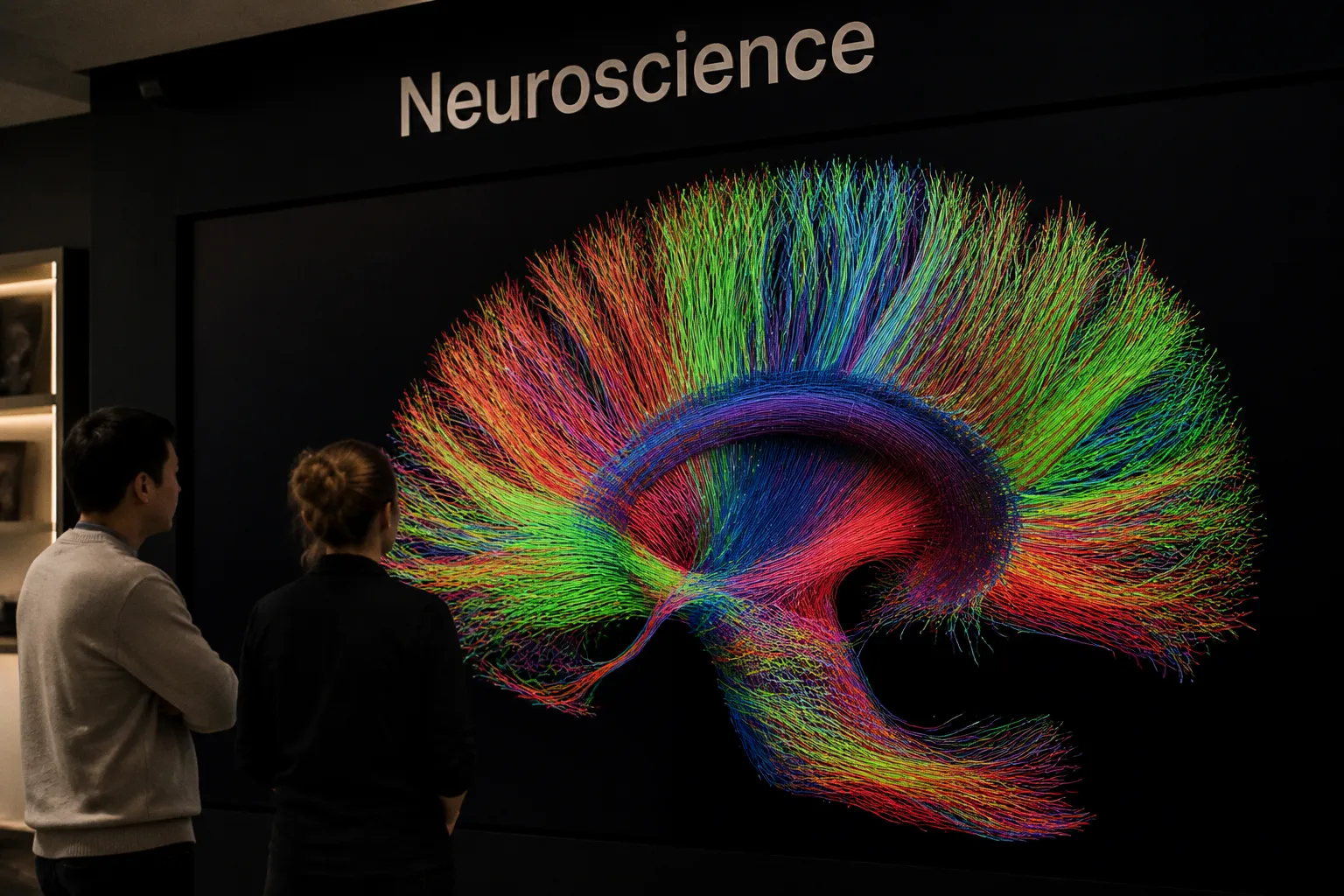
A new review in Frontiers in Cellular Neuroscience lays out why olfactory organoids — grown from the olfactory epithelium (OE) — are quietly becoming one of the most useful human neural models in the toolkit, and if you've been grinding on a zebrafish olfactory prep, this is the human-relevance companion we've been waiting for.
You know the wall we've all hit: conventional brain organoids model embryonic or fetal neurodevelopment, so they can't give you adult neurogenesis. The OE-derived systems do, because the olfactory epithelium is the only accessible adult neural stem cell niche you can repeatedly sample from living patients without reprogramming. That's a fundamentally different window into human neural biology, and the review is essentially making the case that we've been sleeping on it.
What's actually in the model
The review walks through the lineage from early neurosphere cultures to modern 3D organoids, and what jumps off the page is what's preserved: donor genetic, epigenetic, transcriptomic, and proteomic signatures stick around in these systems. That's the part that should make you stop and reread. You're not getting a generic "human neuron" — you're getting something that still reflects the patient it came from. Nasal swab sampling at the input, neural progenitors through the middle, and a readout that's actually tuned to that donor's biology.
Practically, this matters because the biology you lose when you reprogram iPSCs is exactly the biology that matters in adult-onset olfactory and neurodegenerative conditions. Keeping the donor signature intact means disease modeling and "nose-to-brain" therapeutic discovery can actually start from a relevant adult baseline instead of a fetal-stage proxy.
Where this fits your bench
If you're running zebrafish olfactory circuits and asking how that maps to human regeneration, this is the human-side hook you've been waiting for. Nothing replaces a clean in vivo fish prep for circuit-level questions — let's not pretend otherwise — but it gives you a parallel human platform to ask the adult neurogenesis and regeneration questions your fish can't fully answer.
The honest caveat before anyone gets too excited: organoid systems carry their own noise. Donor variability, culture drift, and the usual "is this readout real or artifact" questions all apply. The review itself is careful to note that any therapeutic translation from these models still needs careful validation in vivo — which, in our world, is exactly where your fish come back in.
Worth bookmarking the review and, if you've been stuck on the human side of an olfactory regeneration question, sketching out how a nasal swab → organoid pipeline could sit alongside your existing fish work.