Sensory Systems: a practical guide
The Big Fun Museum is not a conventional collection of objects behind glass. It is a 2,500-square-metre environment built around forced perspective, scale changes, optical effects, and staged interaction. The visitor is not only looking at an exhibit.
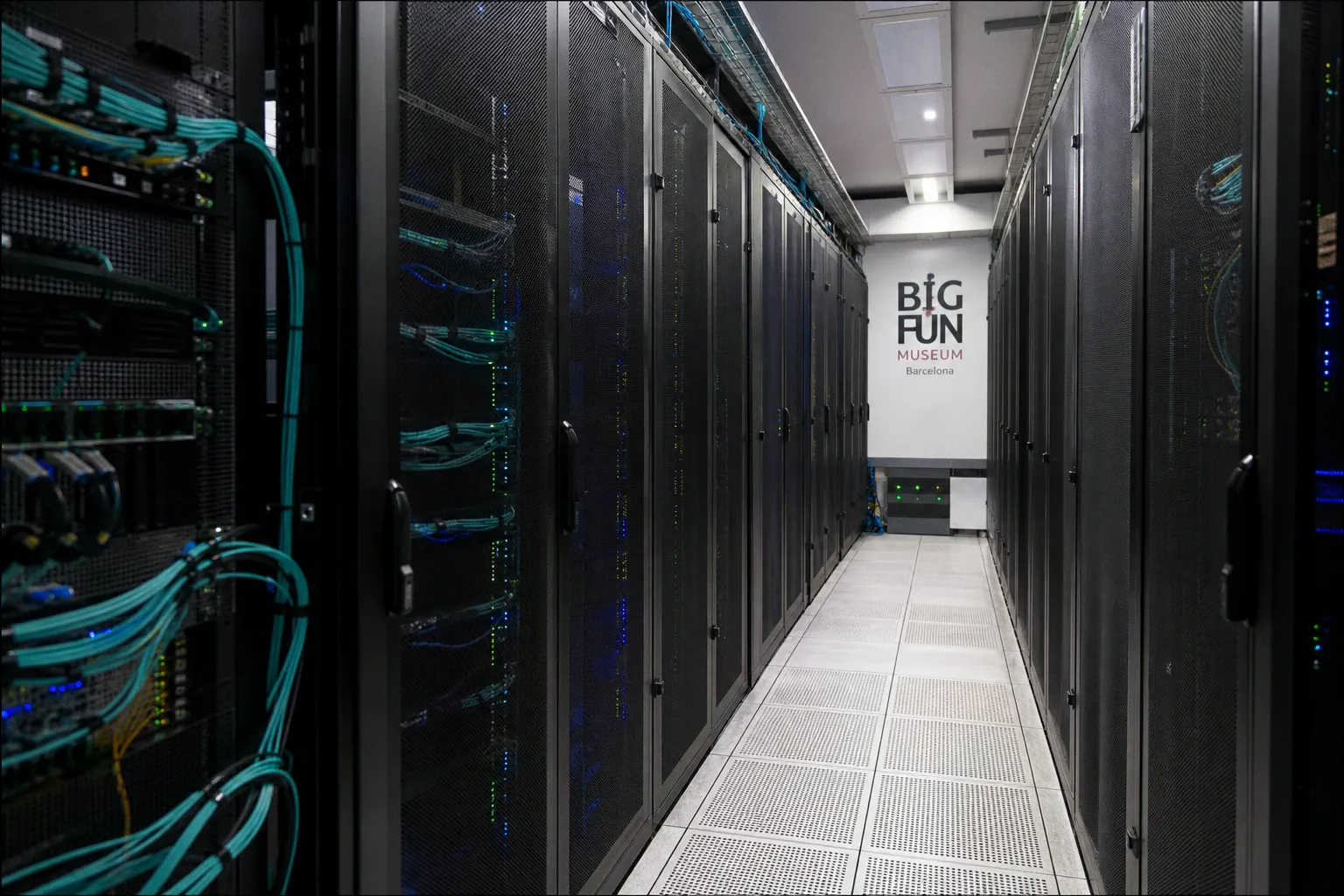
Sensory Systems: a practical guide to the Big Fun Museum in Barcelona
The visitor is part of the frame.
Tickets and prices
Big Fun Museum
| Option | Type | Rating | From | |
|---|---|---|---|---|
| Entry ticket — thematic rooms and upside-down houseGetYourGuide | other | ★ 4.2215 reviews | from€28 | Book tickets |
| Combo ticket — access to two museumsGetYourGuide | combo ticket | ★ 4.3782 reviews | from€32 | Book tickets |
| Official ticket — online bookingOfficial | official ticket | — | from€14.50 | Book tickets |
At the box officeAdult€14.50Reduced€10Official website — bigfunmuseum.com
That changes the planning problem. The relevant questions are not limited to where the museum is or when it opens. You need to map the building, isolate the ticket options, account for the separate Museum of Illusions location, and leave enough time for the rooms that depend on photographs and physical participation. If you book tickets Big Fun Museum online, you can also avoid the higher box-office rate attached to standard admission.
Map the building before you arrive
The Big Fun Museum occupies three floors on La Rambla, at Rambla de Sant Josep 88–94 in central Barcelona. The nearest metro stop is Liceu on Line 3. This is the primary site. It is not the same building as the Museum of Illusions, even though the two attractions are commonly sold together.
The museum opened on La Rambla in 2018. Its operating model is straightforward: move through a sequence of themed rooms, test the visual setup, and take photographs from the intended position. The rooms are designed to produce a result. If you stand in the wrong place, the perspective effect weakens. If you rush, you lose the logic of the installation.
The current attraction list includes:
- The Giant’s House, which uses exaggerated scale to reverse the expected relationship between visitor and room.
- The Upside-Down House, where orientation becomes the main visual mechanism.
- Sweet Museum, a high-colour environment structured for staged photographs.
- Guinness World Records Museum, focused on record-related displays.
- Food Art Room, where familiar food forms are converted into large visual objects.
- Alice Through the Looking Glass, built around distorted scale and reflective references.
- Museum of Madness, which applies a darker and more irregular visual language.
- Magic Room, centred on visual tricks and perspective shifts.
- House of Mirrors and Labyrinth of Fear, which may be unavailable if maintenance or temporary closure affects the route.
The exact operating condition of individual rooms matters. A museum can remain open while one installation is closed. Treat the facility as a system with variable modules, not as a fixed sequence guaranteed to operate identically every day.
The building is large enough to reward a route plan, but the exhibits work only when you give each one time to calibrate your position.
The practical consequence is simple: do not schedule the visit as a ten-minute stop between two fixed appointments. The experience depends on movement, retakes, and waiting for the previous group to clear a photo position. Exact crowd times are not fixed, especially during holiday periods, so build in tolerance rather than relying on a tight timetable.
Book online when the route is already decided
The Big Fun Museum offers standard admission and combined ticket options. Online tickets are listed below the corresponding box-office rates, so purchasing before arrival is the more efficient default when your schedule is settled.
You do not need to overcomplicate the decision. Isolate the route you actually intend to use:
| Ticket approach | What it covers | When it makes sense |
|---|---|---|
| Big Fun Museum admission | The main interactive museum on La Rambla | You want the themed rooms and do not plan to visit the second attraction |
| Museum of Illusions admission | The separate Museum of Illusions site | You are targeting 3D optical effects rather than the full Big Fun route |
| DUO FUN combination | Both attractions in one combined option | You have enough time to walk between sites and process both experiences without rushing |
Online booking is especially useful for two reasons. First, it fixes the admission format before you reach the entrance. Second, it separates the ticket decision from the pressure of the box office. That matters when several people are travelling together and the group has different expectations about how much of the attraction to visit.
The official ticket structure includes free admission for children from 0 to 5 years old when they are accompanied by a paying adult. No separate child ticket is required for that age group. Do not extend that rule to older children. Visitors aged six and above follow the standard admission structure unless the current booking conditions state otherwise.
Ticket availability can change by date and product. The practical workflow is:
1. Set the date first. Avoid choosing a ticket category before you know how much time the Barcelona itinerary leaves for the visit.
2. Compare single and combined entry. The DUO FUN option only improves the route if you will actually reach both sites.
3. Check the active booking conditions. Opening schedules and room availability can vary around holidays or maintenance periods.
4. Keep the confirmation accessible. A mobile ticket is easier to manage than a last-minute box-office decision.
5. Recalculate the timing if your group includes young children. Free admission does not remove the need to move the group through the building at a realistic pace.
The core error is buying the combination automatically because it appears to offer more. More access is not automatically better access. If the second venue creates a compressed schedule, the combined ticket adds transit and coordination without improving the visit.
The Museum of Illusions is a separate stop
The Museum of Illusions is approximately a five-minute walk from the Big Fun Museum, at Carrer del Pintor Fortuny 17. That distance is short, but it is still a transfer between two buildings. The attractions should be treated as adjacent stops, not as rooms within one continuous museum.
The Museum of Illusions presents 70 3D-effect paintings. Its central mechanism is optical manipulation: a flat surface is arranged to produce depth, movement, or spatial contradiction when viewed from a controlled angle. This creates a different visitor task from the Big Fun Museum’s larger themed environments.
At the Big Fun Museum, the room often establishes the visual premise. At the Museum of Illusions, the effect is more dependent on the viewing point and the camera angle. In both cases, the visitor is part of the measurement. Position changes the output.
If you choose the DUO FUN combo, plan the two locations as a sequence. Start with the attraction that best matches the group’s energy and attention span. A group that wants large-scale rooms and quick visual variety may prefer the Big Fun Museum first. A group focused on optical effects may want to begin with the Museum of Illusions.
The five-minute walk is not the only timing variable. You also need to account for:
- The pace of the first venue.
- The time required to take photographs.
- The movement of the group through central La Rambla.
- Possible queues or entry controls at either site.
- The operating condition of individual rooms.
- The fixed commitments that follow the visit.
Do not label the combo a skip-the-line solution unless that wording is explicitly attached to the ticket you select. A combined ticket simplifies admission planning, but it does not prove that every queue is removed. Ticket access, timed entry, and queue handling are separate properties. Check each one in the live product conditions.
Calibrate the visit to the museum’s operating window
The standard daily operating hours are 11:00 to 21:00. Those hours give the visit a broad daytime and evening window, but they should not be treated as an unconditional guarantee for every date. Specific non-peak days and holidays may follow adjusted hours.
The first decision is therefore not simply whether the museum is open. It is whether the selected entry time leaves a usable working window.
A late arrival can still be practical for the Big Fun Museum alone, but it is less forgiving for the combined route. If you arrive near the end of the operating day, the five-minute walk between locations becomes a hard constraint. You also have less tolerance for a slow group, temporary closures, or a room that requires repeated photographs.
A morning visit offers the cleanest schedule. You can process the main museum, walk to the Museum of Illusions, and still retain the rest of the day for La Rambla and central Barcelona. An afternoon visit can work well if you are using only one ticket. The combined route demands tighter control.
Use this basic time logic:
- Single-site visit: choose a start time that allows the group to move through the rooms without treating every exhibit as a timed checkpoint.
- Combined visit: place both attractions inside the same open-hours window and allow for the external walk between them.
- Holiday visit: verify the date-specific schedule before travelling to the entrance.
- Late visit: confirm which venues and rooms remain available near closing rather than assuming the full route will operate unchanged.
The museum is on one of Barcelona’s busiest central pedestrian corridors. That improves access by public transport and puts the attraction inside an established sightseeing route. It also means the surrounding area can add friction: dense foot traffic, slower group movement, and less predictable travel time than a quiet residential street.
For practitioners planning a full day, the cleanest arrangement is to cluster nearby activities rather than cross the city immediately before the booking. La Rambla, Liceu, and the Gothic Quarter are already connected by a compact central route. Keep the museum visit inside that zone. The objective is not to maximise the number of destinations. It is to reduce unnecessary transfers before the first ticket scan.
A combination ticket is efficient only when the route remains physically and temporally coherent.
Treat the exhibits as active equipment
The Big Fun Museum is photo-focused. That affects what you should bring and how you should use the rooms.
A phone with a charged battery is more useful than additional luggage. The rooms produce their intended result from a specific viewpoint, so camera handling is part of the visit. If the group wants usable photographs rather than random snapshots, assign one person to manage framing while the others take the positions indicated by the exhibit.
This is not a formal laboratory protocol, but the underlying logic is familiar: hold the variables steady, then change one condition at a time. Stand on the marked position. Keep the camera level when the installation requires it. Test the first frame. Adjust distance or angle. Then take the final photograph.
That approach prevents a common failure mode. Visitors enter a room, take a single image from a convenient position, and conclude that the effect is weak. The installation may be functioning correctly. The input geometry was wrong.
The same applies to groups. Large groups create more interference because each person needs space to occupy the frame. If the room is busy, reduce the number of people in the first shot. Capture the core image, then rotate the group through the same position.
Wear clothing that allows easy movement. The museum includes rooms based on scale shifts, distorted orientation, mirrors, and maze-like layouts. Avoid carrying more than the route requires. A large bag reduces control in narrow or visually complex spaces and makes it harder to reproduce the intended position.
The House of Mirrors and Labyrinth of Fear deserve specific caution because their availability can change without advance notice. Do not build the entire value of the ticket around one room. The museum contains multiple themed environments, and individual modules may be closed for maintenance while the wider facility continues to operate.
The practical sequence inside each room is short:
1. Identify the intended viewpoint.
2. Place the subject or group inside the marked area.
3. Frame one test image.
4. Correct the angle, distance, or camera height.
5. Capture the final image.
6. Clear the position for the next visitor.
This keeps the route moving. It also makes the experience more usable for groups with different priorities. People who want photographs get a controlled attempt. People who want to inspect the installation are not trapped behind repeated trial-and-error.
Build the visit around the group, not the ticket label
The Big Fun Museum works best for visitors who want participation, visual effects, and a sequence of themed environments. It is less suitable for a group expecting a quiet, object-based museum with extended reading and conventional galleries.
That distinction should shape the booking decision. The attraction is not a substitute for Barcelona’s art museums. It serves a different purpose: immediate visual interaction, staged perspective, and shared photographs. The value lies in the active route through the rooms.
Families should isolate the age constraint early. Children aged 0 to 5 enter free with a paying adult, but the group still needs to manage movement through the building. A free ticket does not mean zero planning. Older children should be included in the standard admission calculation, and there is no basis for assuming a separate child discount.
For mixed groups, divide the visit into clear priorities:
- One person tracks the admission details and route.
- One person manages the camera and group framing.
- Everyone agrees in advance whether the priority is seeing every room or producing photographs from selected rooms.
- The group accepts that a room under maintenance is not a planning failure; it is a variable condition of the venue.
This is where a practical guide differs from a generic attraction description. The question is not whether the museum has many rooms. The question is whether your group can use those rooms without creating a queue inside the queue.
If the answer is no, choose the single-site ticket and keep the schedule open. If the group wants both attractions, verify the date, compare the active ticket options, and reserve enough time for the walk to Carrer del Pintor Fortuny. Do not allow the apparent proximity of the two venues to hide the need for a second entry process.
A strict pre-visit parameter set
Before you leave for La Rambla, lock the following variables:
- Location: Big Fun Museum, Rambla de Sant Josep 88–94, near Liceu station on Metro Line 3.
- Operating window: normally 11:00–21:00, with date-specific variations possible.
- Ticket format: single admission or the DUO FUN combination.
- Second venue: Museum of Illusions at Carrer del Pintor Fortuny 17, about five minutes away on foot.
- Age rule: children from 0 to 5 enter free with a paying adult; older children follow standard admission conditions.
- Room status: House of Mirrors and Labyrinth of Fear may be temporarily unavailable.
- Equipment: charged phone, enough storage, and minimal baggage.
- Schedule tolerance: additional time for photography, walking, and entry control.
- Route objective: decide whether the group wants complete coverage or selected rooms with better photographs.
Then book according to the route, not according to the largest ticket label. Online booking is the sensible default because it provides access to the available options and is listed below the gate rate for the main admission products. But the booking only solves entry. It does not solve timing, room maintenance, group pace, or camera position.
The Big Fun Museum is easy to use when its mechanics are understood. Map the building. Separate the two venues. Calibrate the time window. Keep the ticket choice proportional to the route. That is enough to turn a visually chaotic attraction into a controlled Barcelona stop with clear inputs and predictable decisions.
Practical info
Currency: EUR
Driving: on the right
Emergency number: 112