Three Neuro Investigators Inducted into the Canadian Academy of Health Sciences
The Neuro, the bilingual research and clinical arm of McGill University dedicated to brain science, has placed three of its principal investigators into the Canadian Academy of Health Sciences' 2026…
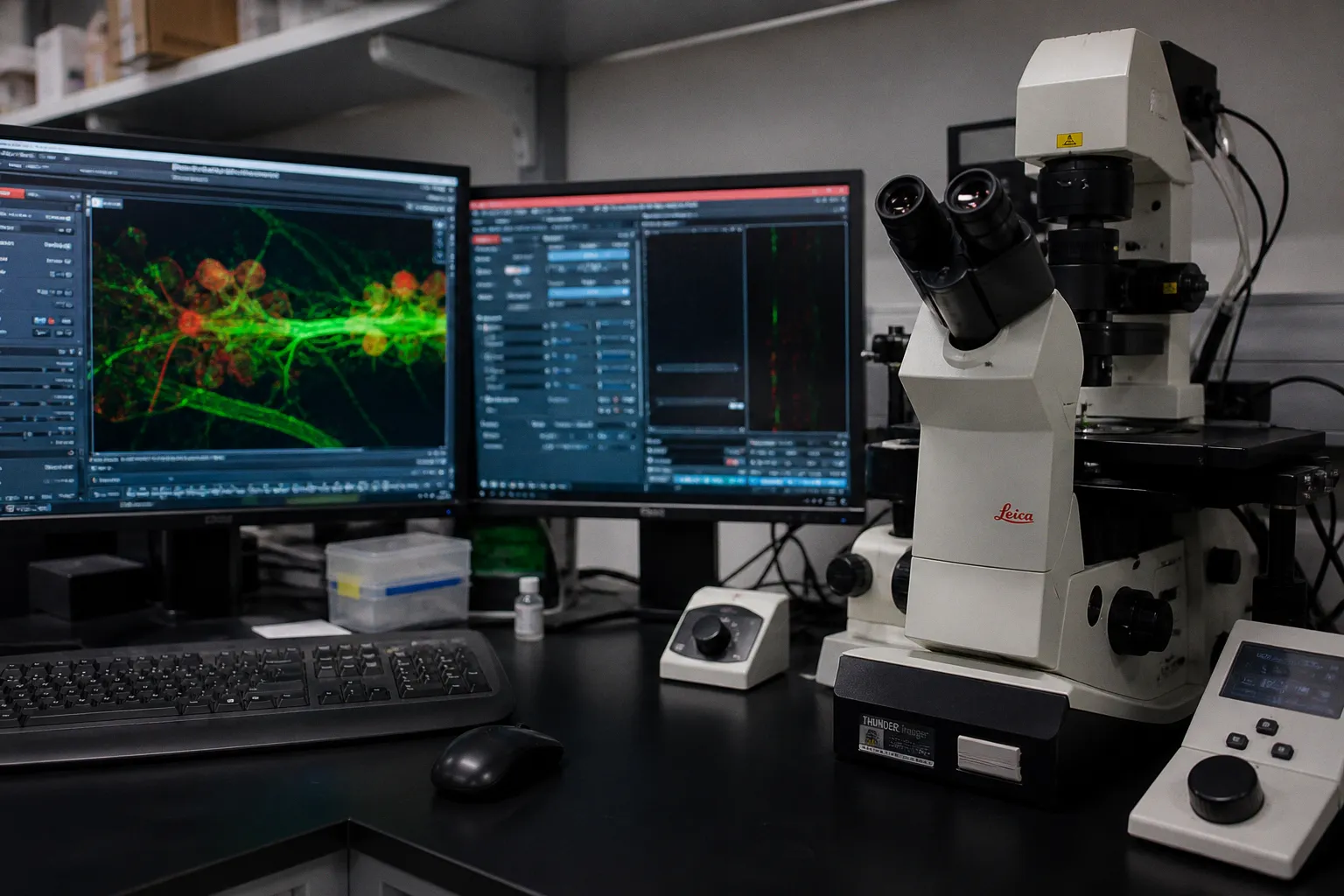
The Neuro, the bilingual research and clinical arm of McGill University dedicated to brain science, has placed three of its principal investigators into the Canadian Academy of Health Sciences' 2026 fellowship cohort — a recognition that speaks directly to the kind of sustained, circuit-level inquiry our lab community tracks closely.
The institute's standing in the cohort is unusual: electing three members from a single institution in the same year signals a depth of contribution that touches distinct layers of the brain, from molecular neurodegeneration to the cytoarchitectonic map of the prefrontal cortex. For readers who model neural network formation, that breadth is the actual story.
Three programs, one institution
Dr. Edward Fon, a clinician-scientist who has directed The Neuro since 2015, was recognized for two decades of work on Parkinson's disease. His group studies the molecular machinery that fails when dopaminergic neurons degenerate — work that maps directly onto the cellular vulnerability questions raised in zebrafish and rodent models of circuit formation. Named among the world's top 1% most-cited researchers, Fon framed his fellowship as belonging to a broader Canadian tradition: "It is an honour to receive such a prestigious recognition from the Canadian Academy of Health Sciences… I'm proud to join so many distinguished leaders of Canadian medicine as a Fellow of the Academy."
Professor Michael Petrides brings the most architecturally precise tradition to the trio. His laboratory is known for linking specific behavioral deficits after brain damage to defined cytoarchitectonic regions of the prefrontal cortex. The Self-Ordered Pointing task he developed isolates monitoring processes in working memory and ties them to the mid-dorsolateral prefrontal region — a circuit-mapping exercise that predates and parallels modern optogenetic dissection. For anyone drawing wiring diagrams of executive function, Petrides' lesion-behavior logic remains a reference standard.
Professor Robert Zatorre, who holds the Canada Research Chair in Auditory Cognitive Neuroscience at The Neuro, closes the trilogy with a program aimed at how auditory cortices, motor pathways, and reward circuits interact during perception. His 2024 monograph From Perception to Pleasure: The Neuroscience of Music and Why We Love It synthesizes decades of his group's findings into a predictive-coding model for how expectation and reward shape auditory experience. For those tracking how sensory networks encode prediction error, Zatorre's framework is one of the clearest experimental templates currently in circulation.
What this signals for circuit neuroscience
A fellowship cohort drawn this heavily from a single institute rarely reflects coincidence — it reflects sustained methodological commitment. The Neuro's three honorees each work at a different spatial scale: molecular pathology, regional cytoarchitecture, and systems-level auditory integration. Read together, they outline a research philosophy in which any claim about a network function must be anchored in a defined anatomical substrate and a reproducible behavioral readout.
For those of us building and reading neural network models, the lesson is unglamorous but durable: name the cell type, name the projection, name the task. The Canadian Academy's recognition, in effect, validates an institutional culture that treats anatomical precision as non-negotiable — and that posture is precisely what makes its findings portable into zebrafish, rodent, and human work alike.