Central Park Zoo tickets: 3 reliable ways to book your entry
A timed-entry calendar often decides the visit before the wallet does. Central Park Zoo assigns visitors to specific dates and entry windows, so a popular Saturday can disappear from the booking page while the rest of the itinerary is still taking shape.
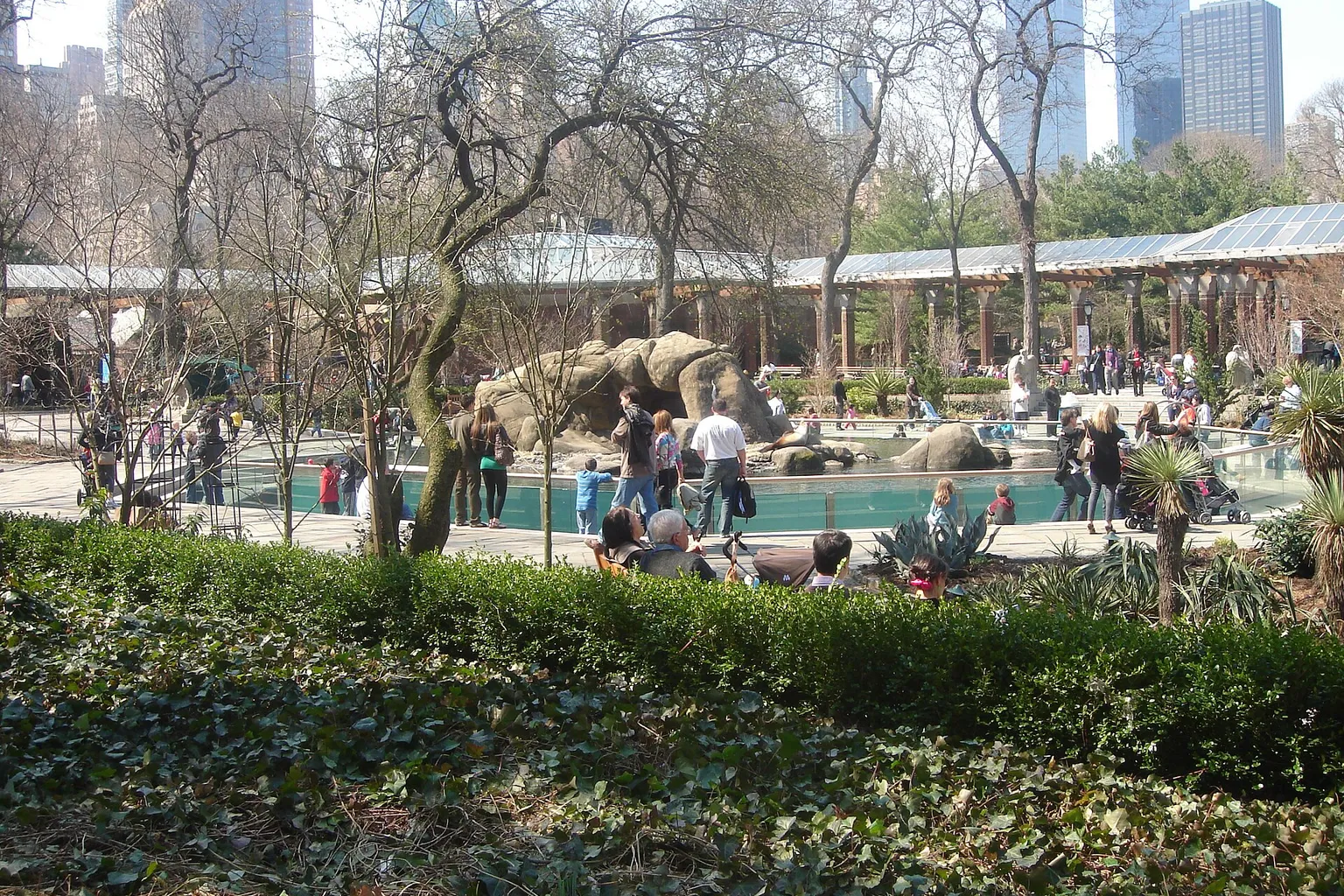
The practical answer is not faster clicking. It is choosing the right booking channel before the preferred date becomes difficult to secure.
Tickets and prices
Central Park Zoo
| Option | Type | Rating | From | |
|---|---|---|---|---|
| Entry ticket — Wildlife viewingGetYourGuide | entry ticket | ★ 4.2440 reviews | from€20 | Book tickets |
| Guided tour — Private pedicabGetYourGuide | guided tour | — | from€35 | Book tickets |
| Guided tour — PedicabGetYourGuide | guided tour | — | from€26 | Book tickets |
| Guided tour — Horse carriage rideGetYourGuide | guided tour | — | from€87 | Book tickets |
| Experience — Short horse carriage ride for up to 4 adultsGetYourGuide | other | — | from€100 | Book tickets |
At the box officeAdultUSD15.95ChildUSD9.95ReducedUSD12.95prices in box-office currencyOfficial website — centralparkzoo.com
There are three dependable routes to the gate: the official Wildlife Conservation Society website, an authorized third-party travel platform, and a WCS membership. The first two are dated ticket options; the third changes the access model altogether. They differ in price structure, cancellation terms, mobile convenience, and the amount of planning required. The best way to book Central Park Zoo tickets depends less on finding a universally superior platform than on matching the ticket to the kind of visit you are actually making.
The calendar is the real bottleneck for non-members. Once a date fills, the practical choice is the next available date or a different type of access.
1. Book through the official WCS website
The Wildlife Conservation Society operates Central Park Zoo and sells its regular admission through the WCS booking system. For most visitors, this is the most direct way to compare the available admission options and select a date and entry window.
Standard Zoo Admission is the fuller ticket. It covers the main zoo, the adjacent Tisch Children’s Zoo, and one admission to the 4-D Theater. The listed prices are:
- Adults aged 13 and over: $22.95
- Seniors aged 65 and over: $18.95
- Children aged 3–12: $16.95
- Children aged 2 and under: free
This is the sensible default for a first visit, particularly for families who want access to the 4-D Theater rather than deciding later whether to pay for or arrange that experience separately. It also keeps the booking decision simple: one dated admission covers the principal parts of the visit.
The official channel is especially useful when the date matters more than flexibility. A weekend morning, a school-holiday outing, or a tightly planned day in Manhattan is easier to manage when the admission is secured directly against the date you want. The WCS site is also the place to start when you need to understand the difference between the standard ticket and the lower-priced limited option.
Standard admission versus limited admission
Limited Admission is the cheaper, narrower ticket available online. It includes entry to the main zoo and Tisch Children’s Zoo but excludes the 4-D Theater. The listed prices are:
- Adults aged 13 and over: $15.95
- Seniors aged 65 and over: $12.95
- Children aged 3–12: $9.95
- Children aged 2 and under: free
The saving is meaningful when several people are visiting, but the reduced price reflects a real difference in what the ticket covers. Limited Admission makes sense for repeat visitors who have already seen the 4-D Theater, adults who are not planning to use it, or anyone deliberately keeping the visit focused on the animal exhibits.
| What you get | Standard Zoo Admission | Limited Admission |
|---|---|---|
| Main zoo access | Yes | Yes |
| Tisch Children’s Zoo | Yes | Yes |
| 4-D Theater | One admission included | Not included |
| Advance booking | Required | Required |
| Adult price, 13+ | $22.95 | $15.95 |
| Senior price, 65+ | $18.95 | $12.95 |
| Child price, 3–12 | $16.95 | $9.95 |
| Children under 2 | Free | Free |
| Best suited to | First visits and families who want the complete admission | Repeat visits, adults-only outings, and focused budget visits |
Limited Admission is an online-only product. It should not be treated as a cheaper version that can simply be chosen at the gate. If you want this option, select it while booking and make sure the date and entry window work for the rest of the day.
The distinction between the two tickets is therefore not merely a price comparison. It is a question of how much of the zoo experience belongs in the plan. Paying for Standard Admission is reasonable when the 4-D Theater is part of the point of going. Choosing Limited Admission is more efficient when it would otherwise mean paying for an attraction you already know you will skip.
How the timed-entry calendar affects non-members
For non-member visitors, the WCS booking process is built around a date and an entry window. The available options depend on the capacity left for that day. Once a date or time has reached its limit, it may no longer be available for selection. That is why booking well ahead is more useful than waiting for the day of the visit, especially when the trip depends on a particular weekend or a narrow afternoon schedule.
The calendar also changes the order in which the decision should be made. Do not begin with the assumption that the ticket type is the only variable. First look at the dates and entry windows that are available, then decide whether Standard or Limited Admission fits the visit. A less expensive ticket is not a saving if it forces a different day or leaves too little time for the activities you planned.
The system should be treated as live inventory rather than a promise that every ticket type will remain available until the visit. Availability can change as other visitors complete bookings. A date that is convenient in the morning may no longer be practical by the afternoon, and a preferred entry window may disappear even while other times remain.
That makes the official site the strongest option when certainty about the date is the priority. It is also the clearest route for visitors who want to see the admission categories at their source rather than comparing a reseller’s presentation of them.
2. Use a WCS membership for repeated visits
A WCS membership is not simply a more expensive ticket. It is a different way of accessing the zoo, and for the right visitor it removes the main planning problem altogether.
WCS members do not need date-specific reservations for regular daytime visits to Central Park Zoo. Instead of selecting a date on the ordinary ticket calendar, members use the member entry process and present a valid Member ID card together with photo identification at the gate. The timed-entry calendar that governs ordinary non-member bookings does not apply in the same way to this daytime member access.
Membership is most valuable when Central Park Zoo is one stop in a year of visits, not the only stop on a single trip.
The calculation becomes more persuasive for New York residents, frequent visitors, and households planning several zoo outings. WCS membership also extends across the organization’s New York zoos, including the Bronx Zoo, Queens Zoo, and Prospect Park Zoo. Someone who expects to visit more than one of these locations can evaluate the membership against the whole year rather than against one Central Park afternoon.
For an out-of-town visitor planning one visit, the regular dated ticket will usually be easier to justify. A membership introduces an annual commitment that may not make sense if there is no realistic second visit. For a local family, however, the value is not limited to the first entry. It includes the ability to return without repeating the ordinary booking process for each regular daytime visit.
There are still practical details to respect. Bring the required membership identification and photo ID, and distinguish regular daytime access from any special event or separate program that may have its own conditions. Membership removes the ordinary date-selection requirement; it does not mean that every possible zoo activity is automatically reservation-free.
The key question is frequency. If the zoo is a one-off item on a New York itinerary, book admission. If it is likely to become part of the household’s routine, compare membership with the cumulative cost and effort of several visits.
3. Book through an authorized third-party platform
Authorized third-party travel platforms provide another route for visitors who prefer to keep attraction tickets alongside hotel reservations, airport transfers, and the rest of a trip. Platforms such as Trip.com, Booking.com, and Hellotickets may list Central Park Zoo admission with mobile confirmation and their own cancellation or booking conditions.
The attraction access should be read carefully. A third-party listing may be for Standard Zoo Admission, but the product title and inclusions are determined by the platform’s offer. Check whether the ticket includes the 4-D Theater, whether the Tisch Children’s Zoo is covered, which age bands apply, and whether the booking requires a specific date or entry window.
The convenience is mostly operational. A mobile ticket in the same app used for other travel arrangements can be useful when the visitor is managing a packed itinerary. Confirmation may arrive electronically, and the platform may present the cancellation policy, validity details, and instructions in one booking flow.
That convenience does not create additional capacity. A reseller cannot turn a sold-out date into an open one, and a booking made through a third party still has to comply with the applicable date and entry requirements. The platform manages the transaction and delivery of the ticket; it does not control how many visitors the zoo can admit.
This distinction matters because third-party listings can look more flexible than the underlying admission actually is. A mobile voucher is convenient, but it is not the same thing as an open-ended ticket. If the product is tied to a date, the date remains part of the commitment even when the confirmation lives in an app.
What to compare before paying
Third-party pages can be helpful because they often bring several practical details together, but the buyer has to read the product conditions rather than rely on the headline price. Before completing a Central Park Zoo ticket booking online, check:
- whether the ticket is Standard or Limited Admission;
- whether the 4-D Theater is included;
- whether a date and entry window must be selected;
- the cancellation deadline and any conditions attached to a refund;
- whether the confirmation is accepted as a mobile ticket;
- the age categories used for adults, seniors, and children;
- the final price after service fees, taxes, or other charges.
Prices on third-party platforms may be higher than the direct WCS price. That difference can be worthwhile when the platform’s cancellation terms or mobile workflow fits the trip better, but it should be visible before payment. For a family, even a small per-ticket difference can become noticeable once several admissions are combined.
The official site is usually the better starting point when price and direct inventory are the main concerns. A third-party platform becomes more attractive when the booking is part of a broader travel plan and the value lies in organization or flexibility rather than in a lower admission cost.
Seasonal hours change the shape of the visit
A correct ticket can still produce a poor day if the operating hours are read too late. Central Park Zoo’s schedule changes by season, and the difference affects how much time remains after arrival.
From April 2 through October 31, 2026, the stated summer schedule is:
- Weekdays: 10:00 AM to 5:00 PM, with exhibits closing at 4:30 PM
- Weekends and federal holidays: 10:00 AM to 5:30 PM, with exhibits closing at 5:00 PM
From November 1, 2026 through March 2027, the stated winter schedule is 10:00 AM to 4:30 PM daily.
Last entry is one hour before the park’s closing time. Under that schedule, the last entry is 4:00 PM on a summer weekday and 3:30 PM on a winter day. The last-entry rule is easy to overlook when the booking process is focused on choosing a date and paying for the ticket, but it determines whether a late arrival is realistic.
A 3:00 PM winter entry, for example, leaves a short visit before the 4:30 PM close. That may be enough for a focused route through selected exhibits. It is unlikely to leave comfortable time for the main zoo, Tisch Children’s Zoo, the 4-D Theater, and a meal. The issue is not whether entry is technically possible; it is whether the remaining time matches the reason for buying the ticket.
The same ticket can support a very different day in summer. Later weekend closing gives visitors more room to arrive around midday, move at a slower pace, and work around feeding times or other stops in Central Park. Winter visits reward a tighter plan: arrive closer to opening, prioritize the outdoor exhibits while there is time, and leave indoor spaces for the final part of the route.
Seasonal hours should therefore be checked before the booking is confirmed, not after the ticket has been downloaded. A date with a convenient price but an inconvenient closing time can be the wrong choice for a traveler who has a Broadway show, dinner reservation, or another fixed appointment later that day.
How to choose among the three channels
The decision becomes straightforward once the priority is clear.
1. Choose the official WCS site when date certainty and direct booking matter most. It is the natural route for Standard Zoo Admission, Limited Admission, and visitors who want to see the available options without an intermediary.
2. Choose a WCS membership when you expect repeated access. Members do not need date-specific reservations for regular daytime visits, and the membership applies across the WCS zoo network. It is a planning tool for recurring visits, not a substitute for a one-day ticket in every situation.
3. Choose an authorized third-party platform when mobile organization or cancellation terms are worth the possible markup. Read the product inclusions and booking conditions carefully. A reseller can simplify the workflow, but it cannot remove the zoo’s capacity limits or change the operating schedule.
The timed-entry calendar is the central constraint for non-members, not for every visitor using every channel. Ordinary dated admissions must fit the availability shown for the selected day and entry window. WCS members using regular daytime member access are the important exception, because their visit is not organized around the same date-specific reservation requirement.
That is the useful distinction when deciding how to buy Central Park Zoo tickets. The official site is about direct inventory and clear admission categories. A third-party platform is about a different purchasing workflow. Membership is about replacing repeated dated bookings with year-round access. None is automatically the best option; each solves a different problem.
Book the channel that matches the shape of the visit. For non-members, secure the date first; for members, bring the required identification and use the member entry process.
Check the seasonal hours and last-entry time before committing, then compare the ticket’s actual inclusions rather than its headline price. Once those two details are settled, booking Central Park Zoo tickets is less a search for a hidden bargain than a choice between certainty, convenience, and repeat access.
FAQ
What is the difference between Standard and Limited Central Park Zoo admission?
How much do Central Park Zoo tickets cost?
Do I need to choose a date and entry time for Central Park Zoo?
Do WCS members need a reservation for Central Park Zoo?
Can I buy Central Park Zoo tickets through a third-party platform?
What are Central Park Zoo’s seasonal hours and last-entry times?
Photo: Tim Rodenberg / CC BY 2.0 — Wikimedia Commons