SeaWorld San Antonio: 3 smart ways to book tickets
A few feet in front of the SeaWorld San Antonio gates, the line divides itself into two distinct populations. On one side, visitors move through turnstiles with wristbands already printed, lanyards already clipped, and upgrades already understood.
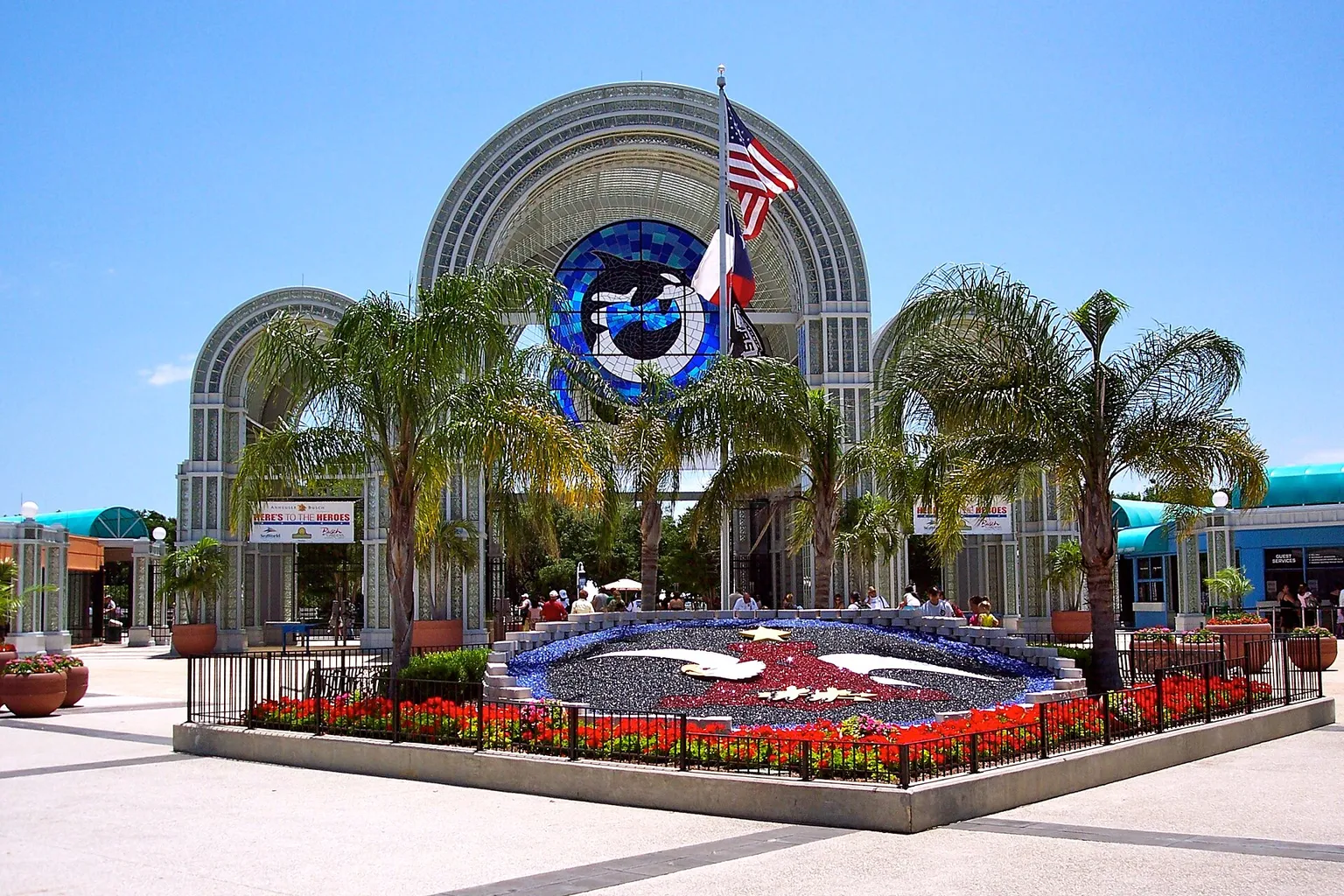
On the other, visitors stand in line discovering, in real time, what the box office charges for a date they could have selected days earlier. The difference is structural, not arbitrary. SeaWorld’s pricing rewards planning, and the gap becomes more noticeable around holiday weekends and during the busiest weeks of the summer operating schedule.
Tickets and prices
SeaWorld San Antonio
| Option | Type | Rating | From | |
|---|---|---|---|---|
| Entry ticket with optional dining or upgradesGetYourGuide | entry ticket | ★ 3.345 reviews | fromUSD42.95 | Book tickets |
| Skip-the-line ticket with optional second park entryGetYourGuide | skip-the-line | ★ 4.2127 reviews | fromUSD65 | Book tickets |
| Official ticket — 3-day, 2-park flex passOfficial | official ticket | — | fromUSD84.99 | Book tickets |
At the box officeAdultUSD7.99Official website — seaworld.com
What the park actually offers is not one universal ticket, but several ways to assemble the same day: direct online booking, authorized third-party sellers, and broader passes or hotel packages. The cheapest-looking ticket is not always the right ticket. The right choice is the one whose structure matches the structure of the trip and the certainty of the date. These three paths move from the most controlled option outward.
The First Path: Reading SeaWorld’s Direct Booking Window
SeaWorld’s own online channel is the foundation of the ticketing system, and understanding its anatomy clears up much of the confusion that resellers and bundles create later. The park sells two structurally different admission products through that channel: date-specific tickets, which tie the visitor to a selected calendar day at the price displayed for that day, and Any-Day tickets, which leave the date open and charge a premium for that flexibility.
For visitors with fixed plans, a date-specific ticket is usually the cleaner financial choice because it removes uncertainty from the booking. For visitors working around a school break, an unpredictable schedule, or a hotel arrival time that may shift, an Any-Day ticket pays for optionality. That flexibility has an economic value even when the ticket itself costs more. Paying for an open date can be rational if changing the date later would otherwise force a new purchase or complicate the itinerary.
The booking calendar operates in two layers. SeaWorld San Antonio runs on a select-dates cadence throughout the year, with denser availability in spring and the heaviest operating density during the summer months. Aquatica San Antonio, the adjacent water park, follows a separate rhythm, generally opening in early March and operating through mid-October. Anyone planning to cool off after a coaster-heavy morning should treat Aquatica as a second calendar to coordinate, not as an automatic companion to a SeaWorld admission ticket.
The overlap matters. A date on which both parks are open is not the same thing as a date on which either park operates independently. A two-park plan therefore begins with the operating calendars, not with the ticket selector. A combined ticket has limited value if the second park is closed on the only day available in the itinerary.
Build the ticket around the day, not around the offer label
The direct channel is also where visitors can assemble the main upgrade options during the purchase process. Those additions can include Quick Queue Unlimited, reserved seating, and the All-Day Dining Deal. They can be added online, but their value and pricing should be checked against the specific offer and visit date rather than assumed in advance.
Quick Queue Unlimited provides priority access at participating headline rides, including attractions such as Wave Breaker: The Rescue Coaster, Steel Eel, and Texas Stingray. It is not a different admission ticket and it does not eliminate every operational constraint at the park. Its purpose is narrower and more useful: it changes how much time the visitor spends in the regular queue for eligible attractions.
Reserved seating for major presentations, with Orca Encounter as the clearest example, guarantees access to a designated seating section rather than leaving the visitor to compete for space in a first-come area. The value is less about speed than about protecting the shape of the day. It can be particularly useful when the schedule includes a show at a fixed time and the group does not want to arrive far in advance to secure a workable view.
The All-Day Dining Deal folds meals and beverage refills into a set per-visit arrangement at participating restaurants. It suits visitors who expect to eat inside the park several times and who prefer predictable meal stops over paying separately each time. It is less compelling for a short visit built around a single meal and a snack.
The correct question is not whether every add-on belongs in the cart. It is whether a particular upgrade solves a problem the day is likely to create. A long ride list points toward Quick Queue. A show-heavy itinerary may justify reserved seating. A full-day family visit with several planned meal breaks may make the dining plan worth considering. None of these additions should be treated as an automatic online bargain; the specific price and terms still belong in the comparison.
A direct booking is not a single transaction. It is a stack — admission, priority access, dining, and reserved seating — assembled before the visitor leaves home, so the park day runs on rails instead of reaction.
The Second Path: Where Authorized Resellers Earn Their Margin
Resellers are not redundant to the direct channel. They occupy a different layer of the distribution system and can be useful when the direct booking path is awkward: multi-day visits, multi-park itineraries, or visitors whose calendars remain flexible.
FunEx, Undercover Tourist, and aRes Travel are the names that recur in this layer. Depending on the current inventory and offer terms, these sellers may provide single-day, multi-day, or multi-park options for SeaWorld San Antonio. The appeal is not simply that a reseller displays a lower number. It is that the reseller may package admission in a different format or connect it to a broader itinerary.
That difference requires attention. A ticket sold as a voucher may need to be exchanged or activated according to the seller’s instructions before entry. Other tickets may be scannable directly at the gate. Some sellers use a nearby redemption location, while others issue a ticket that bypasses that step altogether. There is no universal conversion time or single redemption procedure that applies to every reseller product. The practical task is to read the delivery and redemption instructions before payment and allow enough flexibility on arrival if an exchange is required.
The discipline with resellers is to identify what is actually being sold. A “discount ticket” that locks the visitor to a specific date is functionally comparable to SeaWorld’s own date-specific ticket. The comparison is meaningful only when the date, admission type, park access, validity period, and restrictions line up. A flexible ticket that allows the visitor to choose the date later should instead be compared with an Any-Day or other flexible product, not with the lowest date-specific price shown on SeaWorld’s calendar.
The comparison that matters
Before choosing a third-party offer, compare the following elements rather than stopping at the headline discount:
- Date validity: whether the ticket is tied to one date, valid on any operating day, or usable within a defined window.
- Admission scope: whether it covers SeaWorld San Antonio alone, includes Aquatica, or applies across multiple parks.
- Redemption method: whether the ticket is scanned at the entrance or must be exchanged for admission materials elsewhere.
- Delivery format: whether the seller provides a mobile ticket, printable voucher, or confirmation that requires an additional step.
- Refund and change rules: whether the ticket can be altered if the itinerary moves.
- Add-on compatibility: whether Quick Queue, dining, or reserved seating must be purchased separately through SeaWorld.
A reseller’s lower price may be useful, but it can be offset by a rigid validity window, a redemption requirement, or the loss of an upgrade that would have been valuable on the chosen day. The purchase is only a saving if the ticket still performs the job the visitor needs it to perform.
One quiet advantage of the reseller layer is that it operates with inventory and promotional rules separate from SeaWorld’s own sales channel. When demand pushes the direct calendar into a higher price tier, a reseller may still have a different offer available. That is not guaranteed arbitrage; it is simply the practical result of two distribution systems that do not always display identical inventory. It is worth checking before committing to the first direct price on the screen, particularly when the date is flexible.
For visitors searching for discount tickets SeaWorld San Antonio, the best approach is therefore comparative rather than loyal to one channel. Check the direct date-specific price first, then compare equivalent reseller products. If the products are not equivalent, the lower number is not enough to settle the decision.
The Third Path: Bundling Logic, City Passes, and Hotel Packages
Once a visitor starts stacking purchases — a second park, several downtown attractions, a hotel night, and perhaps transportation — the individual ticket price stops being the right unit of analysis. The bundle becomes the unit that matters.
Two formats dominate this part of the planning landscape, and they rest on different assumptions.
The Go City San Antonio Pass is a multi-attraction sightseeing pass that includes SeaWorld admission alongside a curated list of other San Antonio venues. It makes sense for visitors whose itinerary already contains several of those attractions, such as the Alamo, River Walk boat tours, or the San Antonio Zoo. In that scenario, SeaWorld is one stop on a broader urban circuit rather than the sole purpose of the trip.
The decision rule is simple but often ignored: would the other attractions have been purchased anyway? If the answer is yes, a pass can turn a sequence of separate admissions into one credential and reduce the friction of managing each booking independently. If the answer is no, the pass may only make the ticket appear more sophisticated while adding attractions the visitor never intended to use.
The hotel vacation package rests on a different assumption: the visitor is traveling specifically for SeaWorld and needs accommodation as part of the same plan. These packages can combine park admission with one or more hotel nights and, depending on the offer, dining or transportation elements. They may appear through SeaWorld’s reservations portal or through hotel-booking platforms with park partnerships.
The arithmetic of a package is only part of the decision. The other part is the cancellation window. The standard cutoff in the offer described here is 72 hours before arrival for fee-free cancellation, but package terms can differ, and the specific booking conditions control. After the cutoff, the reservation may become non-refundable or only partially refundable. That policy should be read before payment, especially when the park date and the hotel date are linked.
A package is most useful when it removes several separate decisions without taking away flexibility the visitor still needs. It is less attractive when the hotel is already booked, when the trip may shift, or when the package forces a park date that does not match the operating calendar.
The bundle is the right unit the moment the trip contains more than one ticket-shaped purchase. Pass logic for the urban itinerary. Package logic for the dedicated SeaWorld trip.
Entry Essentials: Age, Upgrades, and the Shape of the Day
Several details quietly govern how the day unfolds, and they are easier to resolve at the booking screen than at the gate.
Children under the age of three do not require an admission ticket. This is an age policy, not a coupon or a limited promotion. Families traveling with very young children should not add an infant admission product simply to make the booking look complete. The child’s eligibility should be checked against the current park terms, but the basic distinction is important: a child who does not require admission should not be assigned a paid ticket by default.
For visitors planning a high-tempo day, Quick Queue Unlimited is the clearest way to reduce dependence on the regular attraction lines. It provides priority access at participating rides, including major coasters and other eligible attractions. Wave Breaker: The Rescue Coaster uses a launch-based design, so the relevant consideration is not a traditional lift hill but whether priority access will save meaningful time across the visitor’s planned ride list.
The value of Quick Queue depends on use. A visitor planning only a few rides may view it as an indulgence. A visitor trying to repeat several headline attractions may treat it as infrastructure. The more important question is not whether the pass sounds premium, but how much of the day would otherwise be spent waiting and whether the group is willing to follow the ride schedule required to use it well.
A simple planning model helps:
1. List the rides the group considers essential rather than every attraction it might possibly try.
2. Mark which of those rides participate in Quick Queue on the chosen date.
3. Estimate whether the group would visit them once or return for repeats.
4. Compare that plan with the price of the upgrade and the group’s tolerance for regular queues.
5. Keep in mind that priority access does not guarantee immediate boarding or override ride closures and operating limits.
The All-Day Dining Deal follows a similar scaling logic. It can include a meal and beverage at participating restaurants at set intervals, making it more relevant to visitors who expect several substantial food stops inside the park. A group that plans one early lunch and a late snack may not use enough of the allowance to justify the purchase. A family spending the full day at the park may value the predictability, especially when separate meal purchases would otherwise accumulate without a clear budget.
Reserved seating serves a different need. A confirmed section for a show such as Orca Encounter protects the schedule and removes the need to arrive early simply to search for a workable place to sit. It is not necessarily the most important upgrade for every visitor, but it can prevent a long pre-show wait from interfering with rides, meals, or a child’s energy level later in the afternoon.
The three upgrades solve three different problems:
| Upgrade | Problem it addresses | Best fit |
|---|---|---|
| Quick Queue Unlimited | Time spent in regular attraction lines | Ride-focused visitors and groups planning several headline attractions |
| Reserved seating | Uncertainty over where and when to watch a major show | Visitors building the day around scheduled presentations |
| All-Day Dining Deal | Repeated food purchases and meal planning | Full-day visitors expecting several meals or substantial refills |
The table is not a recommendation to buy all three. It is a reminder that the additions should be evaluated separately. A visitor who wants faster rides does not automatically need a dining plan, and a family prioritizing shows may gain more from reserved seating than from a queue-focused upgrade.
Seasonal Calendar and Parking Logistics
The calendar is the silent variable underneath every booking channel, and SeaWorld San Antonio effectively requires visitors to track two calendars rather than one. The main park operates year-round on a select-dates schedule, with denser availability through the warmer months and the heaviest operating density during the summer calendar. Aquatica adds its own operating window, generally from early March through mid-October.
That second calendar changes the economics of a multi-park ticket. If the water park is closed, the combined product may still be valid in a technical sense but useless for the itinerary the visitor had in mind. Check both calendars during the same booking session, then verify the ticket’s validity rules. A pass that permits admission to both parks is not the same as a promise that both parks will operate on every eligible date.
Seasonality also affects the value of flexibility. A fixed date is easier to price when the trip is certain and the calendar is known. A flexible ticket becomes more defensible when weather, work, school, or hotel arrangements may force a change. The best way to buy SeaWorld San Antonio tickets is therefore partly a calendar decision: the more uncertain the date, the more carefully the visitor should value flexibility instead of chasing the lowest displayed admission price.
Parking operates on a separate track. General parking at SeaWorld San Antonio is a paid category and is not normally folded into standard single-day general admission. Visitors driving to the park should treat it as a distinct line item from the start. Preferred and VIP parking tiers cost more and place the vehicle closer to the entrance. Their value depends on the group’s priorities, mobility needs, arrival time, and willingness to exchange money for convenience.
The parking decision should not be made in isolation from the admission plan. A group arriving early with a simple single-day ticket may have little reason to pay for a higher parking tier. A family carrying supplies, traveling with young children, or arriving after a long drive may reasonably place more value on a shorter walk. The point is not that one parking category is universally smart. It is that parking belongs in the total-trip calculation rather than appearing as an unpleasant surprise after the ticket has already been purchased.
The practical order is straightforward: check the operating date first, choose the admission structure second, evaluate upgrades third, and price parking last. Reversing that order can lead visitors to overpay for convenience while still holding a ticket that does not fit the day.
The Three-Path Decision
The booking decision becomes clearer once the visitor answers two questions: what is the shape of the trip, and what is the shape of the date?
| Trip shape | Date status | Booking channel |
|---|---|---|
| Single dedicated SeaWorld day | Fixed | SeaWorld direct, with only the upgrades the day needs |
| Single dedicated SeaWorld day | Flexible | Authorized reseller or another valid flexible product |
| Urban itinerary, with SeaWorld as one stop | Any | Go City San Antonio Pass, if the other attractions are already part of the plan |
| Dedicated trip with a hotel night | Usually fixed | Hotel vacation package, after checking cancellation terms |
The four rows are not interchangeable. Treating “cheap SeaWorld tickets” as an undifferentiated search almost always produces a ticket that does not match the day the visitor actually has: a single-park direct ticket stapled onto a multi-attraction itinerary, a date-specific ticket bought while the calendar still needs to move, or a flexible ticket purchased even though the date was already certain.
That mismatch has a cost beyond the ticket line. It can mean unused attractions, a redemption step that was not planned for, an upgrade purchased too late, or a parking choice made without considering the rest of the day. The final price matters, but so does the amount of friction built into the visit.
The transaction that matters at the end of the booking screen is not the line item. It is the day the ticket is buying back. A direct booking with a carefully chosen upgrade can buy back time inside the park. A reseller booking with the right flexible format can buy back calendar freedom. A city pass can buy back itinerary simplicity. A hotel package can consolidate the trip when accommodation and admission genuinely belong together.
That is the logic behind the three smart ways to book tickets SeaWorld San Antonio: match the ticket to the date, match the channel to the itinerary, and treat every add-on as a separate decision. The best booking is not the one with the most features or the loudest discount. It is the one that leaves the visitor with a park day shaped from the booking screen rather than improvised in line.
FAQ
What is the difference between SeaWorld San Antonio date-specific and Any-Day tickets?
Can I use a SeaWorld San Antonio ticket for Aquatica?
What should I compare when buying SeaWorld San Antonio tickets from a reseller?
Is Quick Queue Unlimited worth adding at SeaWorld San Antonio?
Do children under three need a SeaWorld San Antonio admission ticket?
Is parking included with SeaWorld San Antonio admission?
Photo: TheConduqtor / CC BY-SA 3.0 — Wikimedia Commons