Palm Springs Aerial Tramway Tickets: How to Skip the Lines
The Palm Springs Aerial Tramway runs a ticket system that looks like a single queue on the booking page and behaves like two distinct lanes the moment you pull into the Valley Station parking lot.
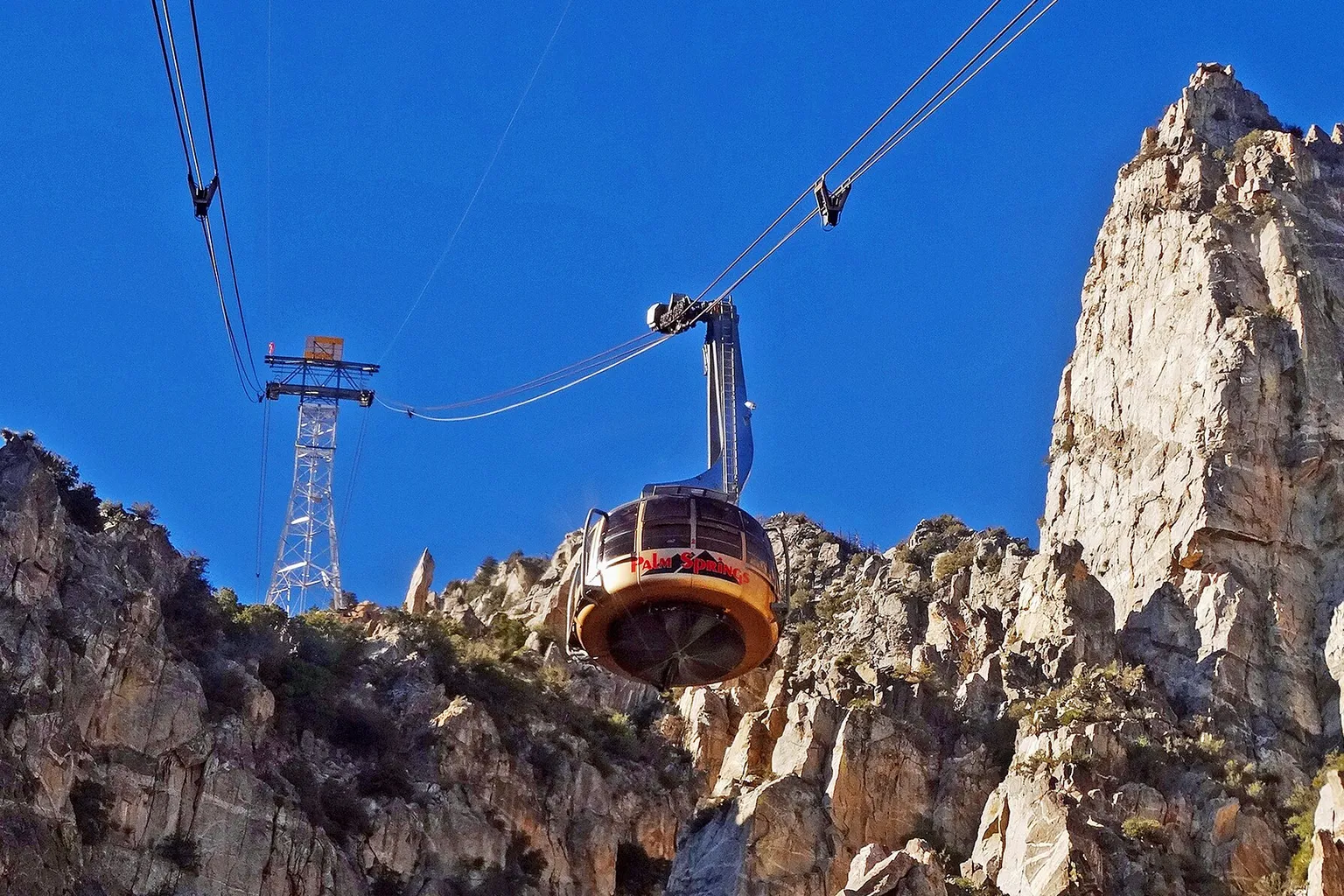
Only a portion of the day’s seats are released for online reservations; the remainder are available through the walk-in pool at the Valley Station ticket booth. Visitors who read the system that way move through the morning cleanly. Visitors who do not watch the line bend around the building and learn patience the long way.
Tickets and prices
Palm Springs Aerial Tramway
| Option | Type | Rating | From | |
|---|---|---|---|---|
| Entry ticket · Round-tripGetYourGuideBestseller | entry ticket | ★ 4.61,327 reviews | fromUSD34.97 | Book tickets |
| Official ticket · AdultOfficial | official ticket | — | fromUSD36.95 | Book tickets |
At the box officeAdultUSD36.95ChildUSD20.95ReducedUSD33.95Official website — pstramway.com
That distinction matters more than the advertised palm springs tramway ticket price. A slightly cheaper or more flexible plan can become expensive in time if it leaves you arriving after the walk-in queue has formed. Conversely, paying the per-ticket processing fee for a confirmed online reservation may be worthwhile when the day is fixed and the group is working around a tight Palm Springs itinerary.
This is the kind of operation where a small amount of structure pays for itself. The online release, the walk-in pool, the timing windows, the refund policy, the infant boarding-pass requirement, and the annual maintenance closure all affect how smoothly the visit begins. The tram ride itself is short. The planning around it is where most of the useful decisions happen.
Reading the Hybrid System: Online Reservations and Walk-In Availability
The first thing to internalize is that sold out online and sold out for the day are two different statements. The tramway holds back a portion of its daily capacity for guests who arrive in person, which means a fully booked online calendar does not necessarily close the door. It redirects the problem from advance planning to arrival strategy.
That structure rewards flexibility but punishes assumption. A traveler who sees no online availability and decides the day is lost may miss the walk-in window entirely. A traveler who knows that walk-in tickets are part of the system can plan around an early arrival and treat the online booking page as one channel among several.
A sold-out online calendar is a routing decision, not a verdict.
The practical implication is straightforward: when advance reservations are unavailable, the day may still be possible, but it shifts from a confirmation email to a queue at the Valley Station ticket booth. That is a meaningful change in logistics. You need to account for parking, the booth opening time, the size of your party, and the possibility that a group may not be able to board in one identical time slot.
The hybrid model also changes how to think about buying Palm Springs Aerial Tramway tickets online. An online reservation provides a cleaner arrival process when the date and schedule are settled. A walk-in plan preserves flexibility when weather, hiking conditions, or the rest of the day’s itinerary remain uncertain. Neither route is automatically superior; they solve different problems.
Online reservations versus walk-in tickets
The choice is easier when the trade-off is stated plainly:
| Booking route | Main advantage | Main limitation |
|---|---|---|
| Online reservation | Lets you arrange tickets before arriving and plan the day around a selected visit | A processing fee applies to each ticket, and online capacity is limited |
| Walk-in purchase | Avoids the online booking fee and may remain available when online reservations are gone | Requires an early arrival and time at the Valley Station ticket booth |
| Phone refund route | Allows eligible unused tickets to be handled through the tramway’s Sales Office | The processing fee is deducted from the refund |
The walk-in pool should not be treated as a secret reserve that guarantees a seat at any hour. It is better understood as a separate part of the operating model. On a busy weekend, the advantage comes from arriving before the booth opens, not from assuming that the remaining allocation will stay available throughout the morning.
For larger parties, flexibility matters even more. A family or group may find that the online inventory does not place everyone into one convenient departure window. Splitting the party across several slots can create its own problem, especially if the group includes young children, older relatives, or hikers carrying equipment. The walk-in route may offer another possibility, but it still depends on the availability at the counter when you arrive.
The Online Window: Processing Fees and the Refund Path
Online reservations are convenient, but they are not bottomless. Each ticket booked through the tramway’s website carries a processing fee per ticket, charged at checkout. That fee is easy to overlook when thinking only about the headline palm springs tramway ticket price, particularly when several people are traveling together.
For a solo traveler, the charge may be a minor part of the decision. For a family or a larger group, the per-ticket structure compounds across the booking. The question is less whether the fee is large in isolation and more whether the certainty of arranging the visit in advance is worth paying for.
A useful rule is simple: book online when the day is firm enough that the reservation has real value. If the visit is only one option among several, or if the group’s schedule may change, the walk-in channel can preserve more flexibility. That is not a promise that walk-in tickets will be available; it is a recognition that the two channels carry different risks.
If plans change after booking, unused tickets can be refunded up to one year from the date of purchase, with the processing fee deducted. The refund is handled by phone through the tramway’s Sales Office. That is the operational detail to remember: a refund request is a phone transaction, not something to build into the itinerary as an instant online adjustment.
A few points make the policy easier to apply:
- The refund eligibility period runs one year from the purchase date, rather than one year from the date of the planned visit.
- The processing fee is non-refundable; the ticket value is the portion that may be returned.
- The request is handled through the Sales Office by phone, so keep the confirmation details available when you call.
- The refund policy applies to unused tickets, which makes it important to deal with a change of plans rather than simply letting the reservation disappear into the calendar.
For a group, this policy also puts a premium on keeping the booking information organized. One person should have access to the confirmation details and know which tickets belong to the reservation. That sounds minor until a family is managing bags, children, parking, and a changed schedule at the same time.
The broader point is that a reservation is not just a piece of admission. It is a commitment to a particular planning strategy. You are paying the per-ticket processing fee in exchange for arranging the visit ahead of time, while accepting that the fee will not be part of the refund. Once that trade-off is clear, the online purchase decision becomes much less mysterious.
Walking In: Arrival Windows That Compress the Queue
The ticket booth does not open at the same time as the parking lot, and that gap is where the morning is won or lost. On weekends and holidays, the parking lot opens at 7:00 AM and the ticket booth follows at 7:30 AM. The thirty-minute interval between them is the queue’s soft underbelly: arriving when the lot opens puts you in position before the booth begins selling tickets.
The same logic, shifted later, applies to weekdays. Parking opens at 9:00 AM and the ticket booth opens at 9:30 AM. Arriving at nine turns the booth opening into a starting point rather than an already established line.
A compact reference for the morning:
| Day type | Parking lot opens | Ticket booth opens |
|---|---|---|
| Weekend or holiday | 7:00 AM | 7:30 AM |
| Weekday | 9:00 AM | 9:30 AM |
The contrast between these windows is what many visitors miss. Showing up at the booth’s opening time on a Saturday places you behind everyone who arrived at seven. Showing up at ten on a Tuesday means joining after the weekday early cohort has already begun moving through the system. The clock matters more than the length of the queue visible from the curb.
Thirty minutes earlier is the difference between a queue and a doorway.
Arriving at the parking-lot opening does not eliminate every variable. A busy day can still produce a line, and a walk-in ticket is not the same thing as an online reservation. But the timing gives you the best chance of handling the ticket purchase before the rest of the morning accumulates around it.
That early arrival also creates a more useful day afterward. Once the ticket question is settled, you are not forced to keep reorganizing the itinerary around a possible purchase. You can move through the Valley Station, prepare for the ride, and decide how much time to spend at the Mountain Station without carrying the first logistical problem through every later decision.
Why late arrival is particularly costly
The queue is not the only cost of arriving late. A delayed ticket purchase can compress everything that follows:
- A group may have less time to gather before boarding.
- Families with infants or toddlers may need to make an additional stop at the booth for boarding passes.
- Hikers may begin a trail later than planned, leaving less daylight or less time for a relaxed return.
- Lunch, transportation, and other Palm Springs reservations become harder to coordinate.
- The temperature difference between the valley and the summit may catch visitors without enough clothing once the day is already underway.
This is why the palm springs aerial tramway skip the line strategy is primarily about sequencing, not a special ticket type. There is no magic phrase at the booth that replaces arriving at the right time. The most reliable advantage is to remove the ticket transaction from the busiest part of the morning.
The Smallest Passengers: Infants and the Counter Stop
Children under two ride free, but the ticket structure does not remove the boarding-pass requirement. Every infant or toddler under two still needs a physical boarding pass, and that pass is issued in person at the ticket booth on the day of the visit.
For families, this turns the morning into a deliberate two-stage process: obtain the boarding pass for the child under two at the counter, then proceed to boarding with the full party. It is a small logistical wrinkle, but it is exactly the kind of detail that becomes important when a parent has assumed that the rest of the group’s ticket arrangements cover everyone automatically.
The simplest approach is to assign the counter task clearly. One adult can handle the ticket-booth stop while another parks, gathers the stroller and bags, or keeps the rest of the group together. The adults then reunite before boarding. The point is not to create a complicated division of labor; it is to prevent the infant requirement from becoming a surprise at the point when the group expects to walk straight onto the tram.
Families should also think about what the child will need at the summit before leaving the Valley Station. The temperature swing between the Valley Station and the 8,516-foot summit is one of the day’s quietest surprises. A child who is comfortable in the desert heat may be underdressed several minutes later, particularly if the visit includes time outside the Mountain Station.
A few items are worth keeping accessible rather than buried in the car:
- An extra warm layer for the infant or toddler.
- Water and simple snacks appropriate for the child.
- A carrier or stroller plan suited to the family’s time at the station.
- The adult’s confirmation information, if any members of the party booked online.
- Enough room in the schedule for the counter stop rather than treating it as an afterthought.
The in-person boarding-pass requirement is not a reason to avoid online reservations. It is a reason to include one more physical step in the morning plan. Parents who account for it at the beginning can keep the rest of the visit moving normally.
Cadence, Closure, and the Ten-Minute Ascent
Once the tickets and boarding passes are in hand, the tram’s operating rhythm takes over. Tramcars depart roughly every twelve to fifteen minutes, carrying passengers up Chino Canyon to the Mountain Station at 8,516 feet in about ten minutes. That cadence is steady enough that boarding rarely becomes the dominant wait once the ticket problem has been solved.
The bottleneck is usually upstream, at the ticket booth and the arrival stage. This is another reason not to spend too much mental energy trying to optimize the ride itself. The ascent is brief. The decisions that shape the experience happen before the doors close.
A few practical consequences follow from that cadence:
- Keep the party together after the ticket transaction so that boarding does not become a second round of searching for people.
- Have jackets, carriers, and other equipment ready before the tram arrives rather than opening every bag on the platform.
- Leave room in the schedule for the walk-in purchase and the boarding process, even though the ride itself lasts only about ten minutes.
- Remember that the return journey follows the same general twelve-to-fifteen-minute pattern, which helps when coordinating a descent with lunch or transportation in Palm Springs.
The Mountain Station sits more than 5,000 feet above the Valley Station, and the change is not merely scenic. The temperature difference between the Coachella Valley floor and the alpine summit can be more than thirty degrees in the warmer months. Layers are not optional if you plan to spend time outside after arriving.
The ride also changes the light faster than many visitors expect. The Valley Station begins in bright, flat desert luminance. As the tram climbs through Chino Canyon, the relationship between sunlit rock, shadow, and distance changes in front of you. By the time the cabin reaches the upper station, the light is cooler and the landscape has taken on the sharper contrast associated with higher elevation.
That transition is part of what makes the Palm Springs Aerial Tramway more than a transportation link. But it is best enjoyed after the practical work has been handled. A family that is still trying to resolve a ticket or boarding-pass issue will notice the queue more than the canyon.
Planning Around the Annual Maintenance Closure
There is one date range that belongs at the beginning of any fall planning: the tramway closes annually for preventative maintenance from September 8, 2026, through October 4, 2026. During that period, the service is shut down, so the question is not whether to buy online or arrive early. The question is whether to move the visit outside the closure altogether.
Travelers planning an autumn trip should check the maintenance calendar before arranging accommodation, hiking plans, or other activities around the tramway. This is particularly important for visitors hoping to combine the ride with higher-elevation trails in Mount San Jacinto State Park. The closure can affect more than a single morning; it may require shifting the order of an entire itinerary.
The maintenance period is also a reminder not to treat a familiar seasonal pattern as a guarantee. Operating dates and schedules belong in the planning stage, alongside the ticket decision. If the tram is central to the trip, confirm that the intended date falls within the operating calendar before paying for connected reservations that are harder to change.
Peak transit periods create a different kind of pressure. Weekends, holidays, and popular hiking days bring more people into the same narrow arrival window. The response is not complicated: either reserve online when the day is certain, or arrive when the parking lot opens if you are relying on walk-in availability. Waiting until the booth has been open for a while gives away the main advantage of the walk-in strategy.
Putting the Morning Together
The Palm Springs Aerial Tramway rewards visitors who treat the day as a sequence of small, deliberate decisions rather than as a single ticket purchase. The system is not difficult, but it has edges, and those edges determine whether the morning glides or grinds.
A clean sequence looks like this:
1. Decide whether the date is firm enough to justify the per-ticket processing fee. If it is, buy Palm Springs Aerial Tramway tickets online and keep the confirmation details accessible. If it is not, plan around a walk-in arrival rather than assuming online availability will return.
2. Match the arrival time to the parking-lot opening: 7:00 AM on weekends and holidays, and 9:00 AM on weekdays.
3. If the group includes a child under two, plan an in-person stop at the ticket booth for the child’s physical boarding pass.
4. Keep the Sales Office phone-refund process in mind if plans change. Unused tickets may be eligible for a refund up to one year from purchase, with the processing fee deducted.
5. Check the September maintenance closure before building an autumn itinerary around the tramway.
6. Pack layers for a temperature swing of thirty degrees or more between the valley and the summit.
7. Treat the ticket booth as the likely bottleneck and the ten-minute ascent as the easy part.
The best route depends on what you value. Reserve online when the day is firm and the fee is worth the certainty. Arrive at the parking-lot opening when flexibility is more important and you are prepared to buy in person. If you are traveling with a toddler under two, include the boarding-pass stop in the plan from the beginning. If you are visiting in fall, mark the maintenance closure before making the rest of the itinerary depend on the tram.
A tram ticket is a small object, but the morning it unlocks is the kind that lingers: the slow rotation of the world’s largest rotating tram car, the desert heat falling away through the cabin window, and the alpine light sharpening as the elevation climbs toward Mount San Jacinto State Park.
Get the queue behind you early, and the rest of the visit has room to breathe.
FAQ
Is it possible to get tickets if the online calendar shows as sold out?
What time should I arrive to get walk-in tickets?
Can I get a refund if my plans change after booking online?
Do children under two need a ticket?
Why is there a temperature difference between the valley and the summit?
Photo: Don Graham from Redlands, CA, USA - God bless it! / CC BY-SA 2.0 — Wikimedia Commons