Sensory overload in kids has distinct neurobiological roots
A new study from Washington University School of Medicine has traced sensory over-responsivity in children to specific patterns of brain connectivity, separating the phenomenon from the conditions it usually gets bundled into.
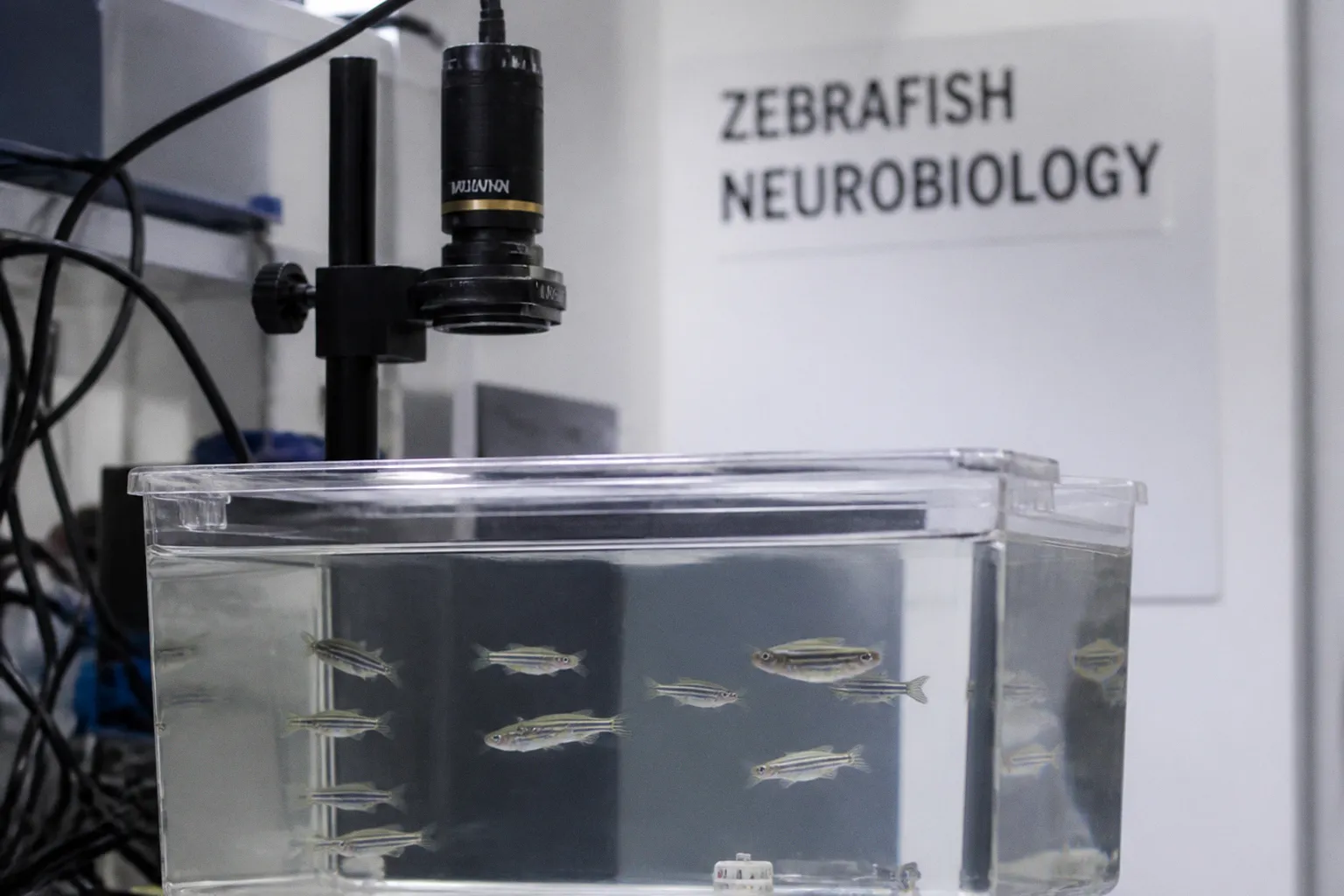
Researchers analyzing data from more than 15,000 children found that hypersensitivity to everyday stimuli — a scratchy shirt tag, a roaring vacuum cleaner, an unfamiliar smell — tracks with anxiety and autism-related traits, but not with ADHD. For anyone mapping how developing neural circuits translate into lived behavior, the work reframes a familiar clinical label as a measurable wiring pattern.
Untangling the clinical overlap
Sensory over-responsivity was folded into the diagnostic criteria for autism spectrum disorder in 2013 and has since been observed across anxiety, OCD, ADHD and other psychiatric conditions. That overlap left clinicians without a clear sense of what sensory distress actually signals. Schwarzlose and colleagues pooled parent- and caregiver-report data from 15,728 children aged 6 to 18 across five studies, then applied a statistical approach designed to isolate which conditions are independently associated with sensory sensitivity rather than riding on the back of an overlapping diagnosis. Most associations fell away. What persisted was a specific, consistent signal: elevated sensory over-responsivity alongside elevated symptoms of both anxiety and autistic traits, with ADHD dropping out of the picture.
What the scans show
In a subset of those children, the researchers examined neuroimaging data and found that even mild sensory sensitivity aligns with distinct patterns of brain connectivity. "These sensory challenges are not kids just 'being difficult,' but are behaviors rooted in specific neurological differences," Schwarzlose noted, adding that children without autism can struggle with the sensory environment just as visibly. The implication is procedural rather than philosophical: when occupational therapy and other supports are matched to a child's actual sensory profile, the profile itself has to be identified first.
A principle for working with developing circuits
For those of us who watch sensory pathways assemble — the long choreography by which thalamic inputs reach cortical targets and refine their topographic maps — the study lands at a familiar junction. The same environmental input can recruit very different downstream circuitry depending on a child's wiring, and that wiring is now legible in principle. Treat the child's sensory profile as a circuit diagram rather than a character trait; the right modification follows from the right map.