Swiss Museum of Transport: 4 ways to book your tickets
The Swiss Museum of Transport in Lucerne is large enough to punish casual planning.
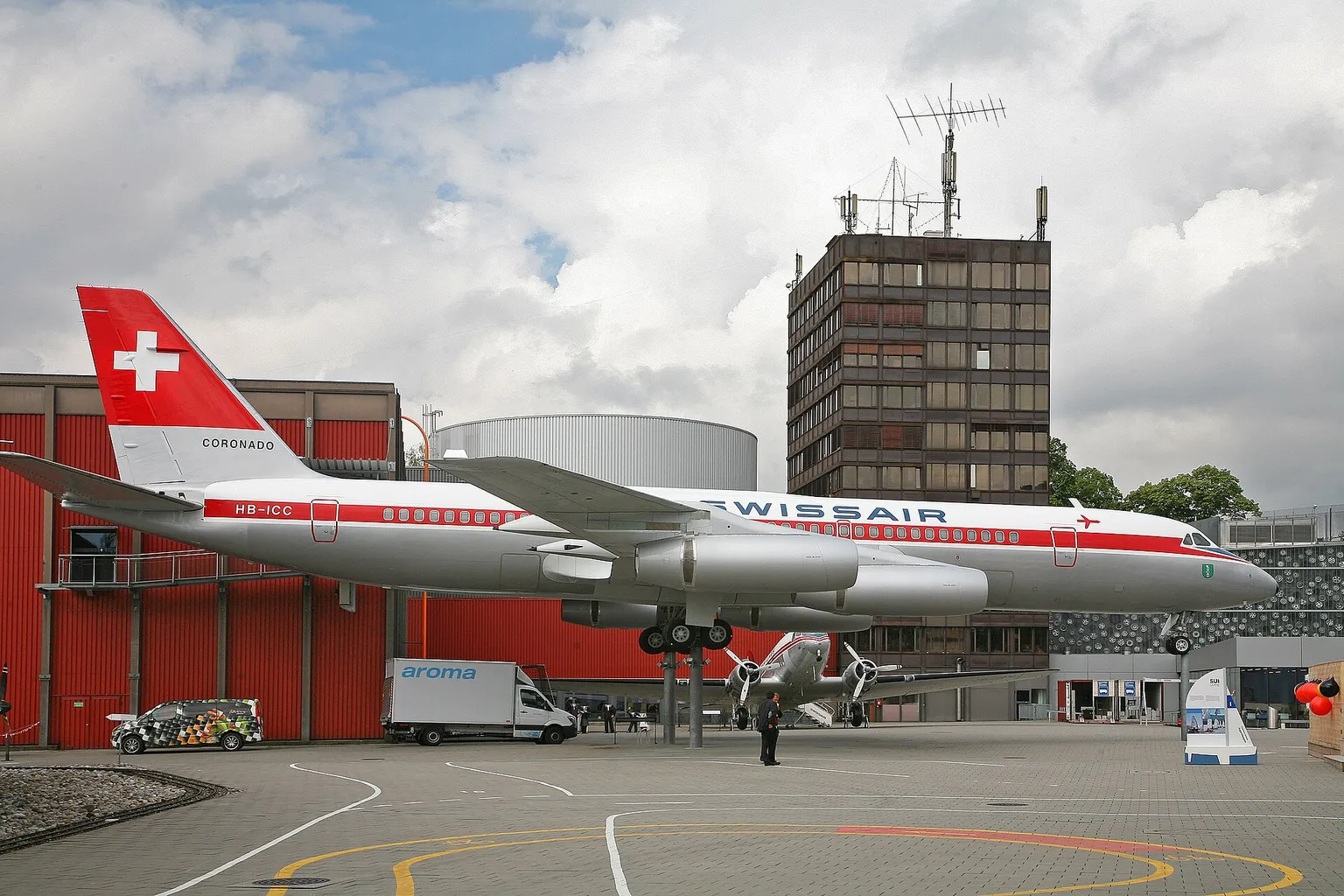
More than 3,000 objects are spread across over 20,000 square metres, with aviation, rail, road transport, navigation, space travel, media, and communications arranged as a sequence of visual environments rather than a single quiet exhibition hall. A short visit can easily become a half-day.
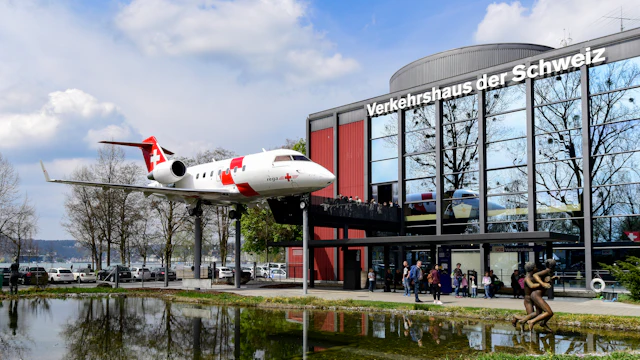
- Guided tour — Day tripfrom€390
- Pass — Full dayfrom€66
Prices checked on August 15, 2026 · current price on the partner page.
Official website — verkehrshaus.ch
- Best time to visit: morning
Prices are indicative and may change — confirm the price and availability on the partner page.
Partner link — GetYourGuide ticketsThat scale affects the way you should book. The right ticket depends less on finding a mysterious cheapest option and more on how you are reaching Lucerne, how much time you have, and whether you want only museum access or the attractions attached to a full day at Verkehrshaus Luzern.
There are four practical routes: the official online shop, the museum’s ticket counters, SBB RailAway combination offers, and established third-party booking platforms. Each has a slightly different logic.
1. Book through the official online channels
For most visitors, the cleanest way to book tickets for the Swiss Museum of Transport is through the official Verkehrshaus online shop. Tickets can also be found through the official regional tourism shop at shop.luzern.com.
The advantage is not theatrical. It is visual clarity. You can see the available ticket categories in the same environment as the museum’s own admission information, rather than comparing several reseller interfaces that may display inclusions differently. This matters because the museum is not simply selling one undifferentiated entrance ticket.
Before choosing, separate two questions:
- Do you want access to the main museum galleries?
- Do you want a broader Day Pass that includes additional attractions?
A standard museum ticket is suited to visitors who mainly want the permanent exhibitions: locomotives, aircraft, cars, ships, spacecraft, communication technology, and the other systems that make up the museum’s unusually dense collection. A Day Pass is designed for a longer visit and includes the museum together with the Swiss Chocolate Adventure, Media World, the Hans Erni Museum, daytime filmtheatre screenings, and daytime planetarium shows.
That distinction is easy to miss when planning from a mobile screen. The additional attractions are not decorative extras around the edges of the visit. They change the rhythm of the day. A planetarium show introduces a fixed time; a filmtheatre screening adds another point on the schedule; Media World and Swiss Chocolate Adventure require attention of a different kind from the large mechanical exhibits. The result is less like walking through one collection and more like composing a route through several sensory rooms.
What to decide before paying
Use the official booking channel when you already know:
- the date of your visit;
- whether you need museum-only admission or a Day Pass;
- whether you qualify for a reduced category, such as student or apprentice admission under 26;
- whether fixed-time experiences fit comfortably into your day;
- whether you need a digital ticket for a direct arrival at the entrance.
The official online route is also the most sensible starting point if you are planning around the museum’s current opening hours. These can change with seasonal schedules, special events, or attraction-specific programming, so check the official calendar for the date you intend to visit rather than relying on a generic travel listing.
The best ticket is the one that matches the visual and temporal shape of your visit: a focused museum route needs less structure than a full day of exhibitions, screenings, and planetarium shows.
A useful practical rule is to avoid buying the broadest pass merely because it contains more. If your time in Lucerne is limited, a Day Pass can create unnecessary pressure. The museum itself commonly takes around four to five hours for visitors who want to explore it properly. Adding the planetarium, filmtheatre, and other experiences may be rewarding, but only when the day has enough open space.
2. Use SBB RailAway when transport is part of the plan
If you are travelling to Lucerne by public transport, the SBB RailAway route deserves a separate look. RailAway offers combined public transport and museum packages online, with savings of up to 20% on museum admission or Day Passes.
This is not simply another place to buy the same ticket. It bundles the journey and the visit, which makes the calculation more useful for travellers arriving from elsewhere in Switzerland. Instead of comparing the museum entrance in isolation, you can assess the complete movement of the day: origin station, return journey, museum access, and any included attractions.
The key is to compare like with like. A combined package may relate to standard museum admission in one case and to a Day Pass in another. The apparent saving depends on which version you select and on the transport component attached to it. Look at the final package rather than assuming that every RailAway offer has the same structure.
When RailAway is likely to make sense
SBB RailAway is particularly useful when:
1. You are making a dedicated day trip to Lucerne.
The transport element is not incidental; it is part of the value of the booking.
2. You are travelling from another Swiss city by train.
A combined offer reduces the need to coordinate separate purchases.
3. You already want a Day Pass.
If the plan includes the planetarium or daytime filmtheatre, the package may be more efficient than assembling the visit piece by piece.
4. Your route and date are settled.
Combination tickets are most useful when the journey is not still changing.
The trade-off is flexibility. A direct museum ticket is visually simple and usually easier to understand if you are staying in Lucerne or deciding your transport locally. A RailAway package is more coherent when the trip has a fixed origin and timetable, but less elegant for an improvised afternoon.
There is also a psychological benefit to booking the journey and museum together: the day acquires a clear frame. That can be helpful at Verkehrshaus, where the abundance of objects creates a high visual load. Without a rough plan, visitors often spend too long in the first major hall and reach the later galleries with less attention than they expected.
3. Buy tickets at the museum counters
Visitors can purchase tickets in person at the museum counters at Haldenstrasse 44, CH-6006 Lucerne. This remains a useful option, especially for travellers whose plans are dependent on weather, train delays, hotel check-in, or the changing energy of a family group.
The counter is also the right place to resolve uncertainty at the point of entry. If you are not sure whether the standard admission or a Day Pass suits your schedule, the staff can clarify the current ticket structure and attraction access. That is more valuable than treating the entrance as a last-minute transaction.
Buying on site does not automatically mean paying less, and there is no reason to assume that a counter ticket is cheaper than an online one. The strength of this route is flexibility, not a guaranteed price advantage.
Who benefits from buying at the counter?
On-site purchase works well for:
- visitors who have not fixed their arrival time;
- travellers who want to inspect the day’s programme before choosing additional attractions;
- families or groups whose plans may change during a trip;
- people who prefer speaking with staff rather than interpreting several ticket categories online;
- visitors who have already reached Lucerne and want to decide spontaneously.
The weakness is equally clear: busy periods can create a queue, and a ticket counter cannot recover time already lost in the day. If you are arriving close to a planned planetarium or filmtheatre screening, purchasing online in advance gives you a cleaner start.
The museum’s location is central enough to fit into a Lucerne itinerary, but it is not a small stop that can be absorbed casually between two nearby sights. Allow time for the journey to Haldenstrasse, entry, orientation, and the internal distances between exhibition areas. The first minutes inside are often spent recalibrating your sense of scale. Large vehicles and aircraft are not arranged at a glance; the collection unfolds.
4. Consider third-party platforms when convenience matters
Swiss Museum of Transport tickets are also available through recognised travel platforms, including GetYourGuide, Tiqets, Trip.com, and Booking.com. These services can be convenient when the rest of your trip is already organised through one booking ecosystem.
The advantage is interface familiarity. If your hotel, transfers, or other activities are already stored in a travel app, keeping the museum reservation in the same place may make the day easier to manage. Third-party platforms can also be useful for visitors who want to book an available entrance option quickly without navigating several official pages.
But convenience has a visual cost: reseller pages may present ticket names and inclusions in different ways. One listing might emphasise admission, another might foreground a tour format, and a third might show a broad attraction bundle. The page may look polished while leaving the actual boundary of access less apparent.
Read the inclusion list with the same care you would apply to a museum map. Confirm whether the booking includes:
- entry to the main museum;
- Swiss Chocolate Adventure;
- Media World;
- the Hans Erni Museum;
- daytime filmtheatre screenings;
- daytime planetarium shows;
- any reservation or time requirement;
- cancellation or modification conditions.
Booking fees can vary between platforms, and current promotional arrangements are not uniform. The final amount and cancellation terms should be checked at the point of purchase. The museum’s own ticket categories remain the reference point for understanding what the visit contains, even when the transaction takes place elsewhere.
Official shop or reseller?
| Booking route | Best for | Main strength | Watch closely |
|---|---|---|---|
| Official Verkehrshaus online shop | Visitors who want a direct museum booking | Clear connection between ticket types and museum attractions | Current opening hours, date availability, and Day Pass inclusions |
| Regional tourism shop | Visitors planning a wider Lucerne itinerary | Convenient connection with local travel information | Whether the selected product is museum-only or bundled |
| SBB RailAway | Travellers arriving by Swiss public transport | Combined journey and museum package, with savings of up to 20% in eligible offers | Transport conditions and the exact admission tier |
| Museum ticket counters | Flexible or spontaneous visits | Staff assistance and last-minute decision-making | Queues and reduced flexibility during busy periods |
| Third-party platforms | Visitors managing several bookings in one app | Familiar interface and quick reservation | Fees, cancellation rules, and what the ticket actually includes |
No route is universally superior. The official shop is the clearest starting point; RailAway is the most integrated for a rail journey; the counter is the most adaptable once you are in Lucerne; and third-party platforms can be the most convenient when the rest of your itinerary already lives there.
Choose the ticket tier by designing the day first
The question of a Swiss Museum of Transport ticket price is less useful when treated as an isolated number. The more revealing question is what the admission allows you to do with the hours available.
A museum-only visit gives the collection room to breathe. You can move from transport history to engineering details, from full-scale vehicles to smaller instruments and displays, without watching the clock for a scheduled screening. This is a strong choice for visitors who are especially interested in trains, aviation, road transport, shipping, or the material history of mobility.
A Day Pass changes the composition. It combines the museum with several additional experiences, including the Swiss Chocolate Adventure, Media World, the Hans Erni Museum, daytime filmtheatre screenings, and daytime planetarium shows. It is better suited to visitors who want variety, families with different interests, or anyone treating Verkehrshaus as the central destination of the day.
The two options can be understood through attention rather than volume:
- Museum-only admission preserves flexibility and supports a deeper, slower reading of the collection.
- A Day Pass increases the range of experiences but requires more deliberate time management.
- A reduced student or apprentice ticket under 26 may apply if you meet the current eligibility conditions.
- A transport combination can be more efficient when your arrival and departure are part of a planned rail journey.
The museum’s visual density is part of its appeal, but it also creates cognitive load. Bright displays, large machines, repeated signage, and the movement of other visitors compete for the same perceptual bandwidth. A good itinerary therefore includes pauses. Do not treat every attraction as a mandatory data point to collect. Choose the rooms and experiences that will remain legible by the end of the day.
A workable visit pattern
For a focused visit, begin with the major transport galleries while your attention is fresh. Use the large vehicles as anchors, then move toward the smaller technical details and contextual displays. If you have selected a Day Pass, place one scheduled attraction in the middle of the visit rather than stacking several timed experiences together. The change in visual scale can reset attention before you return to the collection.
For a family visit, it is usually better to agree on a few fixed points than to insist on a complete route. The museum contains enough material to support different interests at once: locomotives for one visitor, aircraft for another, interactive media for someone else. A shared timetable should create room for divergence, not eliminate it.
For a short Lucerne itinerary, check the current opening hours and attraction schedules before buying. The museum’s overall opening window and the timetable for the planetarium or filmtheatre are not the same kind of information. One tells you when you can enter; the other determines when a particular experience can happen.
Practical planning for 2026 visits
For 2026, ticket availability and product details should be checked close to the date of travel. The broad booking routes are stable, but seasonal schedules, special programming, third-party fees, and attraction availability may change.
A calm booking process takes only a few decisions:
1. Set aside enough time.
Many visitors spend four to five hours at the museum. If you want to include the planetarium, filmtheatre, Media World, or Swiss Chocolate Adventure, plan for a longer and more structured day.
2. Check the museum calendar.
Confirm the current opening hours for your date, then look separately at the schedules for daytime shows and timed attractions.
3. Choose the entry scope.
Decide whether the permanent museum collection is the central purpose or whether you want a Day Pass with the additional attractions.
4. Match the booking channel to your journey.
Use the official shop for direct clarity, RailAway for a combined train-and-entry plan, the counter for flexibility, or a recognised reseller for booking convenience.
5. Review every inclusion before payment.
Do not infer that a ticket includes the planetarium or Swiss Chocolate Adventure simply because the listing uses broad language about museum access.
6. Keep the arrival sequence simple.
Save a digital ticket where it is easy to retrieve, note the address at Haldenstrasse 44, and avoid scheduling another fixed appointment immediately after the museum.
The final point is about perception as much as logistics. A visit to Verkehrshaus is not improved by moving through every room at maximum speed. Its strongest objects need scale and silence: the length of a train, the wing span of an aircraft, the layered control surfaces of a machine built for a world before touchscreens. Give those forms enough time to register.
The clearest route for most visitors
If you are staying in Lucerne and want a straightforward reservation, start with the official online shop. If your trip is built around Swiss rail travel, compare the SBB RailAway combination. If your plans are uncertain, buy at the museum counters. If you are already using a major travel platform for the rest of your itinerary, a reputable reseller may be the most convenient option—but read the inclusions carefully.
The Swiss Museum of Transport rewards preparation because its scale is generous rather than compact. Book the ticket that fits the actual day, not the one with the longest list of features. Then leave enough time for the collection to move from spectacle into understanding.
Practical info
Currency: CHF
Driving: on the right
Emergency number: 112
Key facts
Built: 1959
Heritage status: class A Swiss cultural property of national significance
Official website: verkehrshaus.ch
FAQ
What are the ways to book tickets for the Swiss Museum of Transport?
What is included in the Swiss Museum of Transport Day Pass?
Does SBB RailAway offer a discount for the Swiss Museum of Transport?
Can I buy Swiss Museum of Transport tickets at the entrance?
How much time should I allow for the Swiss Museum of Transport?
Photo: W. Bulach / CC BY-SA 4.0 — Wikimedia Commons