Zebrafish sensory processing models: selection criteria
A zebrafish model can give you a beautifully clean sensory phenotype—or a beautifully clean readout of lighting artifacts, handling stress, and an overenthusiastic stimulus rig.
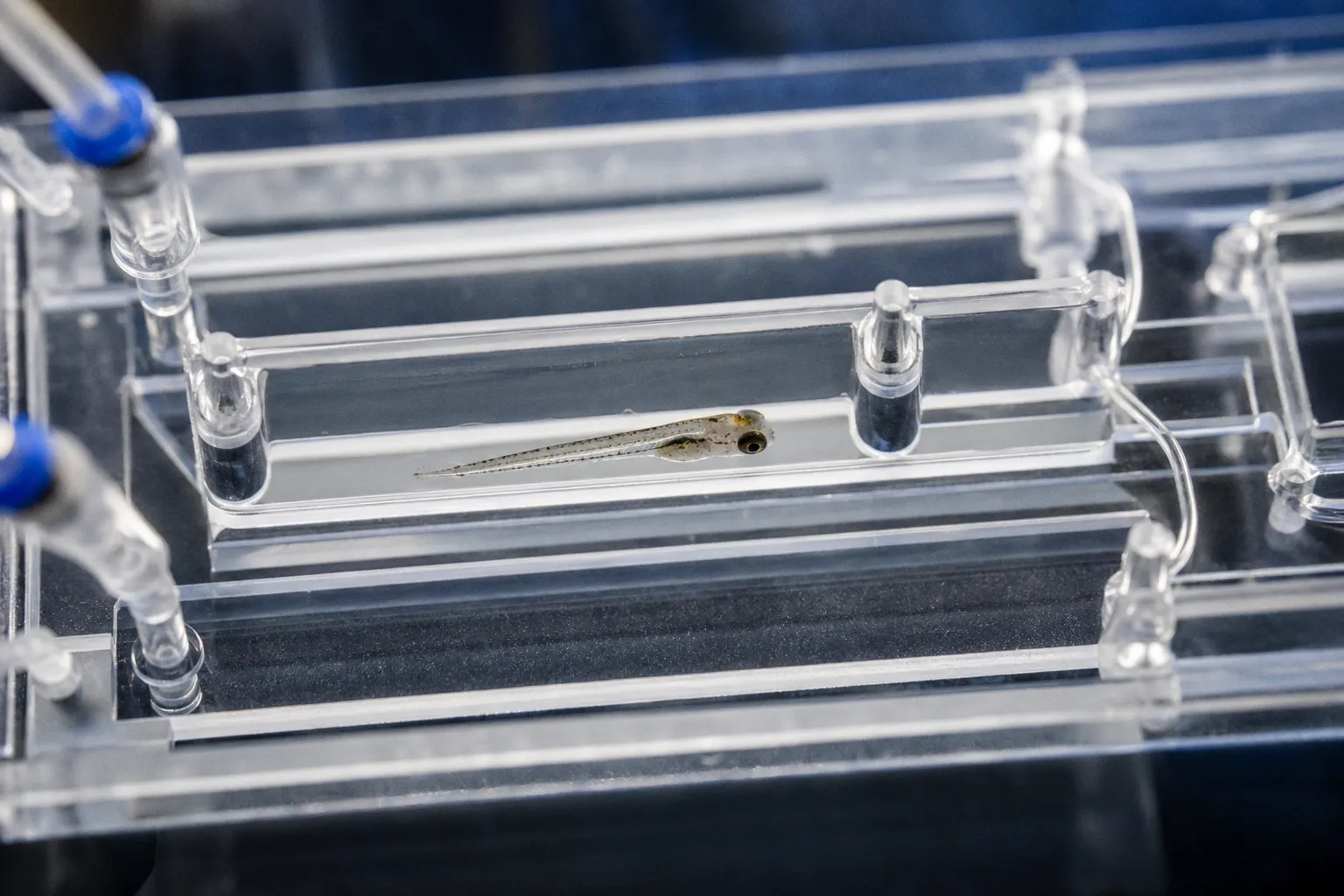
The difference usually appears before the first fish enters the plate: it sits in the choice of mutation or pharmacological manipulation, sensory modality, developmental window, and assay design.
Compare car rental deals in United Kingdom
See available offersPartner link — DiscoverCars comparisonFor zebrafish sensory processing disorder model selection, the central question is not simply which line shows unusual behavior. The better question is: which biological disturbance, sensory input, and neural readout can be connected clearly enough to interpret? If you cannot say what the fish sensed, what changed in its response, and where that response appeared in the circuit, you have a phenotype—but not yet a useful model.
We have all been tempted by the line that produces the most dramatic swimming burst. Resist that temptation for a moment. A strong model is not the loudest one in the room. It is the one that gives you a clean signal across appropriate controls and lets you distinguish altered sensation from altered arousal, movement, motivation, or motor capacity.
Start with the sensory question, not the favorite mutant line
The first decision in choosing zebrafish sensory models is to define the sensory operation you want to study. “Sensory processing” is a useful umbrella, but it covers several different failures:
- detecting a stimulus at all;
- responding too strongly or too weakly;
- filtering repeated or irrelevant input;
- integrating information from more than one modality;
- linking sensory input to a reliable behavioral decision;
- recovering after an unexpected stimulus.
These are not interchangeable. A fish that freezes after a sudden acoustic pulse may have altered acoustic sensitivity, impaired habituation, elevated arousal, or a motor response that looks exaggerated because the animal cannot regulate its escape sequence. The assay must help you separate those possibilities.
For olfactory work, the same discipline applies. A reduced response to an odorant can reflect impaired receptor signaling, disrupted olfactory-bulb processing, poor orientation, developmental delay, or a general reduction in movement. A chemosensory behavior assay becomes much more informative when you include a neutral stimulus, a movement-capacity measure, and an assay of another sensory modality.
That is why the model should follow the biological question rather than the other way around.
Match the phenotype to the modality
A practical first pass looks like this:
1. Choose the sensory modality.
Decide whether the primary input is olfactory, visual, acoustic, tactile, or social/visual. If the project concerns sensory integration, define the combination explicitly rather than treating “multisensory” as a decorative label.
2. Define the processing failure.
Are you studying hyper-responsiveness, hypo-responsiveness, abnormal habituation, poor gating, stimulus discrimination, or circuit-level integration?
3. Select the genetic or pharmacological perturbation.
Mutations in genes such as shank2b, shank3b, and syngap1 can be considered in neurodevelopmental disorder work, but they should not be treated as interchangeable sensory models. The relevant phenotype depends on the line, developmental stage, assay, and modality.
4. Choose a readout that can test the mechanism.
Automated locomotion is useful, but it is not the same thing as a sensory measurement. Pair behavior with neural activity, receptor-level logic, or circuit mapping when the question demands it.
5. Build in a way to challenge your preferred explanation.
If you think a line is hypersensitive to sound, include conditions that test baseline movement, visual responsiveness, habituation, and recovery. Otherwise, every large movement becomes “hypersensitivity,” which is how protocol folklore is born.
A sensory phenotype becomes convincing when the stimulus, response, and circuit are all named—not when the fish simply swims more.
Genetic models: what the mutation gives you, and what it does not
Genetic models are attractive because they offer a defined perturbation and the possibility of connecting a molecular pathway to behavior. They also create a common trap: assuming that a gene associated with a human neurodevelopmental condition automatically produces a complete or directly equivalent human sensory phenotype in zebrafish.
It does not. A zebrafish line models selected biology under selected experimental conditions. That can be extremely valuable, but the boundaries matter.
shank2b: useful for excessive reactivity, with a careful baseline
Reported shank2b mutant zebrafish show sensory processing deficits that include hypersensitivity to acoustic noise and abnormal hyper-reactivity during dark-to-light transitions. Reduced expression of GABAergic receptor subunits has also been reported in this context.
This makes the line a strong candidate when your question concerns stimulus reactivity, sensory gain, or inhibitory control. But the protocol needs to distinguish at least three things:
- response to acoustic input;
- response to a sudden visual transition;
- general stress or arousal caused by the experimental environment.
If the fish reacts strongly to both sound and a dark-to-light transition, that is not automatically evidence for one universal sensory defect. It may point toward broader regulation of salience or inhibition. The next experiment should therefore compare modalities rather than simply repeat the most dramatic stimulus.
For a sensory gating project, you might use repeated acoustic stimulation and quantify response decay across trials. The key is not only the first escape response. Habituation, inter-trial recovery, and baseline locomotion tell you whether the line has altered filtering rather than just a larger motor output.
shank3b: behavior and brain activity should travel together
shank3b-deficient zebrafish display altered thigmotaxis, the tendency to remain close to the walls of a test arena, alongside impaired forebrain and midbrain activity measured with GCaMP6s-based whole-brain calcium imaging.
Thigmotaxis is a useful behavioral entry point because it can reveal changes in exploration, anxiety-like state, or environmental processing. It is not, on its own, a specific assay of one sensory modality. The behavior becomes more interpretable when you pair it with:
- a visual or acoustic challenge;
- a baseline locomotion period;
- a measure of spatial exploration;
- neural activity in relevant forebrain and midbrain regions;
- controls for developmental delay and reduced motor capacity.
This is where whole-brain imaging earns its keep. If the behavioral phenotype changes but neural activity remains unaffected in the expected regions, you may be looking at a downstream motor or motivational effect. If neural activity shifts across forebrain and midbrain networks during the same stimulus, the model begins to support a circuit-level interpretation.
Where syngap1 fits
syngap1 is another example of a gene considered in zebrafish models of neurodevelopmental disorders. It belongs in a selection framework, not in a promise that one mutation will reproduce the full sensory profile associated with a human condition.
When evaluating a candidate line, ask whether the existing phenotype has been demonstrated in the sensory domain you actually care about. A line that is informative for social or visual responsiveness may not answer an olfactory question. If the literature does not establish the connection, treat the experiment as exploratory and design it accordingly.
That sounds cautious because it is cautious. Good model selection is not a ceremony of confidence. It is the part where we stop the protocol from making claims larger than the data.
Choose the assay as a matched pair: stimulus and response
A sensory assay has two halves. The first is the input: what reaches the fish, at what intensity, duration, timing, and repetition. The second is the output: what you measure and how specifically that measurement reflects the sensory operation.
If either half is vague, noise moves in and starts paying no rent.
Behavioral assays across modalities
High-throughput behavioral screening can evaluate zebrafish models across multiple sensory modalities, including social or visual hyper-responsiveness, tactile sensitivity, and reduced responsiveness to olfactory cues. That breadth is useful, but only if the assay battery is organized around interpretable comparisons.
A sensible battery might include:
- Visual response: dark-to-light transitions, patterned motion, or other controlled visual stimuli, with stimulus timing kept consistent across wells or arenas.
- Acoustic response: calibrated pulses or noise presentations, followed by analysis of response magnitude, latency, habituation, and recovery.
- Tactile response: controlled mechanical stimulation rather than inconsistent contact from handling or fluid movement.
- Olfactory response: defined odorant exposure with a clean vehicle control, stable delivery, and a movement-independent orientation or preference measure where possible.
- Social or visual salience: carefully separated from general activity, because a fish can be hyperactive without being unusually responsive to social information.
For chemosensory behavior assays in zebrafish, the delivery system deserves as much attention as the odorant. Residual compounds, uneven mixing, temperature shifts, bubbles, and flow changes can all create false differences. If the stimulus arrives with a mechanical disturbance, the fish may respond to the water movement rather than the chemical cue. Your odorant experiment then becomes a hydrodynamics experiment wearing a lab coat.
The right behavioral variables
Do not reduce every assay to total distance moved. That measure is convenient and often useful, but it compresses several biological processes into one number.
Depending on the question, record:
- response latency;
- peak velocity;
- distance traveled in a defined response window;
- freezing or pausing;
- turning angle and path structure;
- time spent near or away from a stimulus zone;
- habituation across repeated exposures;
- recovery after stimulus removal;
- baseline activity before the stimulus;
- variability between individuals.
For a sensory gating protocol, trial-to-trial change may matter more than the first response. A model with an unusually large initial reaction but normal habituation is not the same as a model that fails to suppress responses to repeated input. Those are different biological stories and should not share the same headline.
When behavior is not enough
A behavioral result tells you what the animal did. It does not always tell you where the sensory computation changed.
Larval zebrafish offer a major advantage here: optical transparency enables high-speed, whole-brain functional imaging, including GCaMP-based calcium imaging. Fast volumetric microscopy can reach millisecond temporal resolution for imaging whole-brain electrical activity, allowing the timing of neural responses to be compared with stimulus onset and behavioral output.
The imaging design still needs discipline. A fluorescent trace is not a magical window into “sensory processing” in the abstract. You need to ask:
- Which brain regions respond?
- Does the response begin at the expected time?
- Does it persist after the stimulus?
- Does it habituate?
- Does the neural response predict the behavioral response?
- Is the signal localized to sensory entry regions, integration centers, or motor-related networks?
For olfactory processing, the olfactory bulb and connected telencephalic regions are obvious places to examine, but the broader network matters. Zebrafish sensory processing involves hierarchical circuits connecting the olfactory bulb, telencephalon—including pallial and subpallial regions—diencephalon, thalamus, habenula, and optic tectum. These regions coordinate sensory integration and decision-making rather than operating as isolated relay stations.
That network view becomes particularly important when the phenotype crosses modalities. A fish that responds abnormally to odor, light, and sound may have a shared change in salience assignment or inhibition rather than three independent receptor defects.
Comparing model strategies
There is no universally superior zebrafish sensory model. A genetic mutant, a pharmacological protocol, and a sensory-stimulus manipulation answer different kinds of questions. Choose based on the causal claim you want to make.
| Model strategy | Best suited to | Main strength | Main interpretive risk |
|---|---|---|---|
| Defined genetic mutation, such as shank2b or shank3b | Linking a neurodevelopmental pathway to sensory behavior and neural activity | Stable biological perturbation that can be studied across developmental stages | The phenotype may be broad, modality-specific, or influenced by genetic background |
| Pharmacological manipulation | Testing pathway involvement, reversibility, or acute changes in sensory response | Timing and exposure can be controlled more directly | Off-target effects, developmental toxicity, and general arousal changes can mimic sensory phenotypes |
| Acute sensory challenge | Measuring response gain, gating, habituation, and recovery | Direct control over input and repeated trials | Poor calibration or mechanical artifacts can overwhelm the intended stimulus |
| Multi-modal assay battery | Separating modality-specific effects from broad processing changes | Shows whether a phenotype generalizes across sensory systems | More variables, more normalization work, and greater risk of overinterpreting a large dataset |
| Whole-brain GCaMP imaging paired with behavior | Mapping sensory responses onto neural circuits | Connects timing, anatomy, and behavior in the same model | Motion, expression variability, and analysis choices can introduce their own noise |
The table is not a menu where you select one option and go home. In practice, the most persuasive design often combines approaches. For example, a genetic model can establish the baseline phenotype, a repeated stimulus can test gating, and calcium imaging can reveal whether altered behavior corresponds to altered activity in sensory and integration circuits.
Genetic background and controls
A mutant-control comparison is only as good as the controls behind it. Use siblings or appropriately matched controls when possible, keep rearing conditions consistent, and track developmental stage carefully. The commonly used assay window stretches from approximately 7 to 90 days post-fertilization, but a behavioral result at one developmental stage should not be treated as a timeless property of the line.
Larval assays and juvenile or adult assays also answer different questions. Larvae are particularly powerful for optical access and high-throughput screening. Later stages offer richer behavior and more mature circuit function but may introduce additional variables in housing, sex, social context, and handling.
For early development, spontaneous activity is already present: zebrafish embryos show spontaneous coiling muscle activity from around 17 hours post-fertilization. That does not make 17 hpf an automatic sensory assay window. It does remind us that early motor activity can complicate the interpretation of later sensory responses, especially when a perturbation affects development broadly.
Build the assay around clean signal
The most expensive part of many sensory experiments is not the microscope or the behavior platform. It is the time spent trying to explain why the controls moved differently on Tuesday.
Let’s reduce that problem before data collection.
Control the physical environment
Sensory experiments are exquisitely vulnerable to unintended input. Record and standardize:
- illumination intensity and transition timing;
- acoustic background and vibration;
- water temperature and flow;
- plate position and well geometry;
- odorant delivery and washout;
- handling interval before testing;
- time of day;
- larval density and social context;
- camera frame rate and tracking settings.
For acoustic work, background noise matters even when nobody in the room can hear it. Pumps, incubators, nearby equipment, and plate movement can create a stimulus landscape the protocol never mentions. For olfactory assays, the same principle applies to flow and contamination. A clean signal is not only a statistical ambition; it is a physical property of the setup.
Separate sensory response from movement capacity
If a mutant swims less in the baseline period, a small response to an odorant may reflect reduced locomotor capacity rather than olfactory hyporesponsiveness. If the fish swims constantly before the stimulus, a large distance traveled during the stimulus may reflect generalized activity rather than sensory hyper-responsiveness.
Use baseline movement and an independent stimulus to support interpretation. Normalize where appropriate, but do not normalize away the phenotype. A line with lower baseline movement may still show a clear, time-locked response to a stimulus. Preserve both the raw behavior and the analyzed measure so the reader—and your future self—can see what happened.
Plan the analysis before collecting the exciting video
Automated phenotyping is valuable because it reduces subjective scoring and makes high-throughput comparisons practical. It also produces a great deal of data, which can make weak experimental logic look impressively complicated.
Define in advance:
1. the primary response variable;
2. the response window;
3. the baseline window;
4. the exclusion rules;
5. the number and spacing of repeated trials;
6. the way missing tracks or abnormal wells will be handled;
7. the neural regions or activity features that will be tested.
Then keep secondary measures available for interpretation rather than quietly promoting whichever one gives the cleanest group difference.
For calcium imaging, motion correction, signal extraction, and region selection need particular care. Whole-brain imaging is powerful precisely because it offers many possible signals. That is also its danger. If you search enough regions and time windows, noise will eventually arrive dressed as a discovery.
What-if scenarios that save a second round of experiments
What if the mutant responds strongly to every stimulus?
Start by testing whether the response is stimulus-specific, time-locked, and repeatable. Measure baseline locomotion, response latency, and habituation. If acoustic, visual, tactile, and olfactory challenges all produce excessive movement, consider altered arousal, inhibition, or salience processing before claiming a receptor-specific defect.
The shank2b phenotype associated with acoustic hypersensitivity and dark-to-light hyper-reactivity is a useful reminder that more than one modality can be involved. The correct next step is not to choose the most convenient explanation. It is to compare the modalities under matched conditions.
What if the fish does not respond to the odorant?
First, confirm that the stimulus reached the animal and that the vehicle itself did not alter behavior. Then check baseline movement and test a non-olfactory stimulus. If visual or tactile responses are intact but the odorant response is reduced, an olfactory-specific interpretation becomes more plausible. If all responses are reduced, the problem may sit in development, movement, arousal, or assay delivery.
Also ask whether the odorant concentration and exposure duration are appropriate for the developmental stage. A null result can mean the pathway is unaffected, but it can also mean the experiment never delivered a clean, detectable cue.
What if behavior changes but calcium activity does not?
Check timing first. Neural activity may shift in latency or duration without a large change in peak amplitude. Examine the relevant sensory entry and integration regions rather than relying on a whole-brain average. Confirm GCaMP expression and motion correction, and compare spontaneous activity as well as stimulus-evoked activity.
If the neural response is genuinely stable while behavior changes, that result is still informative. It may point toward downstream decision-making, motor selection, or motivational state rather than altered sensory encoding.
What if calcium activity changes but behavior does not?
Again, timing and localization matter. A subtle circuit change may be compensated by downstream networks, particularly when the assay is not demanding enough to reveal a behavioral difference. Increase the challenge carefully—through repeated stimuli, competing cues, or a more discriminating task—rather than simply increasing stimulus intensity until the fish gives you a dramatic movie.
A practical selection workflow
When we are choosing among zebrafish sensory processing models, a short written decision record prevents the project from drifting. Keep it specific:
- Target modality: olfactory, visual, acoustic, tactile, social, or multi-modal.
- Target process: detection, gain, gating, habituation, integration, or recovery.
- Model: exact mutation or pharmacological manipulation, with developmental stage.
- Primary assay: the one readout that directly answers the question.
- Secondary assay: the control that challenges the leading interpretation.
- Neural measurement: whether GCaMP imaging or another circuit-level readout is needed.
- Main confound: movement, arousal, developmental delay, stimulus delivery, or tracking.
- Decision point: what result would support, weaken, or redirect the model.
This is not bureaucratic prep. It is how you stop a screening platform from becoming a collection of unrelated endpoints.
If your project focuses on olfactory receptor networks, map the experiment from the sensory receptor and odorant pathway outward: stimulus delivery, olfactory bulb response, telencephalic activity, and behavior. If it focuses on sensory gating, map it across time: first response, repeated response, habituation, and recovery. If it focuses on neurodevelopmental disorder biology, connect the mutation to the circuit phenotype without claiming that one fish line represents every clinical subtype.
The selection criteria that actually matter
The best zebrafish sensory model is the one that gives you a defensible chain from perturbation to perception to behavior. In practice, that means weighing several criteria together:
- Biological fit: Does the mutation or manipulation plausibly affect the pathway under study?
- Modality fit: Has the model shown a phenotype in the sensory system you plan to test?
- Assay specificity: Can the readout distinguish sensory processing from general movement or arousal?
- Developmental fit: Is the chosen age appropriate for the circuit and behavior?
- Imaging compatibility: Can you connect behavior to neural activity with the tools available?
- Reproducibility: Are stimulus delivery, handling, lighting, and analysis stable enough to produce a clean signal?
- Interpretive range: Does the design allow you to detect both hyper-responsiveness and hypo-responsiveness?
- Translational restraint: Can you describe what the model captures without turning it into a complete replica of human sensory processing disorder?
No single gene mutation in zebrafish models the full clinical spectrum of human sensory processing disorders, and no larval assay replaces validation across modalities and species when the question involves higher-order sensory integration. That limitation is not a reason to abandon the model. It is a reason to use it precisely.
Pick the model that makes your causal argument easier, not the one that makes your first figure look busiest.
Final position
Zebrafish are exceptionally useful for sensory neuroscience because they let us combine scalable behavior with direct access to developing neural circuits. Their optical transparency supports high-speed, whole-brain functional imaging; automated platforms can test several sensory modalities; and genetic models can expose how neurodevelopmental perturbations alter reactivity, exploration, gating, and integration.
But the fish will not rescue a mismatched protocol. A shank2b line tested only with an uncalibrated noise stimulus cannot tell you whether the problem is acoustic sensitivity or experimental vibration. A shank3b thigmotaxis phenotype cannot, by itself, answer an olfactory question. A reduced odorant response without movement and delivery controls is an unresolved observation, not a finished conclusion.
So let’s make the selection logic explicit: define the sensory operation, match the model to the modality, pair behavior with the right neural readout, and design controls that can disprove your preferred explanation. Do that prep before the screening run, keep the noise out of the signal, and your zebrafish model becomes more than a convenient organism. It becomes a precise way to ask how neural architecture shapes perception.