Sensory exploration in New York: a neurobiological itinerary
New York can feel like a badly calibrated sensory experiment: sirens arrive before the ambulance, subway brakes scrape across the auditory field, sunlight ricochets off glass, and every few steps bring a new smell, texture, crowd density, or visual demand.

If you are looking for things to do in New York but find conventional sightseeing exhausting, the city becomes much more manageable when you stop treating stimulation as background noise and start planning it as part of the itinerary.
Top attractions and activities in New York

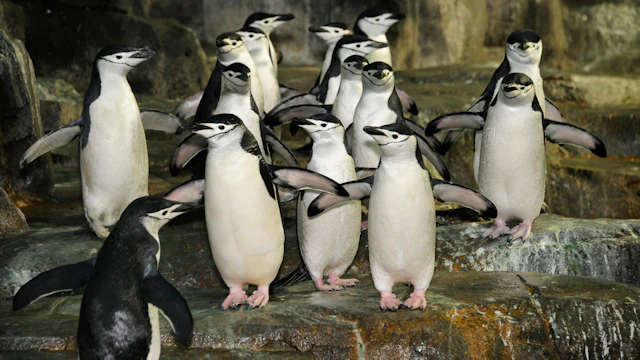
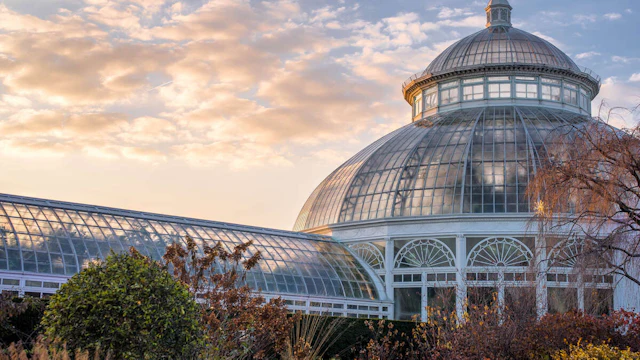

Let’s build the trip the way we would build a clean experiment: one strong sensory input at a time, enough recovery between conditions, and no pretending that a packed ferry terminal is a neutral environment. This route moves from deliberate tactile play at Sloomoo Institute to animal movement and multisensory media at Central Park Zoo, then out across the harbor to the Statue of Liberty and into the slower, greener scale of the New York Botanical Garden.
The point is not to turn sightseeing into a neuroscience worksheet. We are using neurobiology as a practical lens: how novelty competes for attention, how predictable environments reduce load, and why a good day in New York depends as much on transitions as on headline attractions.
Start with touch: Sloomoo Institute and controlled sensory intensity
Sloomoo Institute in SoHo is the obvious first stop for a sensory-focused itinerary because the experience begins with touch rather than with a view. You are not simply looking at an installation and moving on; you are handling materials, choosing textures, mixing colors, and deciding how much input you want to add.
That distinction matters. Tactile exploration gives the nervous system a more active role in the experience. Instead of receiving a constant stream of urban information, you can slow down and make choices: softer or firmer, sticky or smooth, bright or muted, contained or gloriously messy. The DIY bar offers more than four million slime customization combinations, which sounds excessive until you watch someone spend ten minutes adjusting a texture by a fraction and realize that the choice itself is part of the attraction.
There is also a practical lesson here for anyone who becomes overloaded in busy environments: agency helps. When you control the pace and the next action, the sensory field feels less like an ambush.
Sloomoo also offers sensory-friendly hours, designed around lower crowd levels, quieter surroundings, and calmer conditions. If noise, dense queues, or unpredictable proximity make attractions difficult, do not treat those sessions as a minor scheduling detail. They may be the difference between a visit that feels exploratory and one that feels like an endurance event.
A few useful decisions before you go:
- Choose the sensory-friendly session if you know that crowd density is a problem, rather than hoping the venue will happen to be quiet.
- Wear clothing and shoes that can tolerate a little mess; this is not the day for the outfit that requires a forensic cleanup afterward.
- Decide whether you want a contained tactile visit or a more immersive one. Enhanced experiences can include getting slimed at Sloomoo Falls, so check exactly what your ticket includes before booking.
- Build in a quiet transition afterward. SoHo is visually dense, busy, and full of competing storefronts, traffic, and pedestrian movement.
The mistake we often make in a high-stimulation venue is adding every available feature because we have already paid for access. That is classic experimental drift: the protocol starts with one question and ends with seventeen uncontrolled variables. You do not need to try every texture, every room, and every interactive element for the visit to work.
The best sensory experience is not the one with the most stimulation. It is the one where you still have enough attention left to notice what the stimulation is doing.
When to place Sloomoo in your trip
Sloomoo works particularly well on the first day, when novelty is high but your body has not yet accumulated two days of subway noise, long walks, and restaurant decisions. It can also be a useful reset after a morning flight, provided you do not arrive already depleted and expect tactile play to repair everything.
For a one-day visit, pair it with a short, low-pressure walk through SoHo and nearby neighborhoods rather than attempting to cross the entire city afterward. For a three-day itinerary, use it as the anchor for a downtown or lower-Manhattan day, then keep the evening simple.
Move from touch to movement: Central Park Zoo
Central Park Zoo gives us a different sensory problem. At Sloomoo, you choose and shape the input. In a zoo, the input moves independently: animals change direction, visitors gather and disperse, water reflects light, calls emerge from enclosures, and children’s attention shifts at high speed.
The zoo occupies 6.5 acres in Manhattan and includes the main animal exhibits, the Tisch Children’s Zoo, and a 4-D Theater with multisensory film effects. That compact footprint is useful for a city trip because you can experience several environments without committing to a full-day expedition across a sprawling campus. It is also exactly why pacing matters. A smaller site can still produce a dense sensory load when visual motion, animal sounds, crowds, and interactive effects arrive close together.
Think of the visit as a sensory map rather than a race through exhibits. Notice where the environment feels open or compressed, where sound carries, and where you naturally slow down. The animals provide the obvious visual focus, but the more interesting experience often comes from integration: movement, sound, distance, enclosure design, and the behavior of the crowd all arrive in the same perceptual package.
The 4-D Theater deserves a separate decision. Multi-sensory effects can add vibration, movement, changes in air, and other physical cues to the visual film. For some visitors, that makes the experience vivid and engaging. For others, it is the point at which the clean signal disappears under too much input. If motion sensitivity, dizziness, or sound reactivity is part of your travel reality, ask what the presentation involves before committing.
Here is how I would structure the visit:
1. Start with the main animal habitats while your attention is fresh. Give yourself time to watch rather than collecting exhibit names like specimens.
2. Use the Tisch Children’s Zoo according to the group’s energy, not because it appears next on the map. A child who has already had enough social and auditory input will not recover because the next stop contains an appealing animal.
3. Treat the 4-D Theater as an optional high-intensity module, not as a compulsory finale.
4. Leave Central Park by a quieter route if possible. The transition out is part of the visit, especially after a busy indoor or enclosed experience.
Central Park itself gives you room to downshift. A short walk in a less congested section can function as sensory decompression before lunch or the next attraction. This is where central park sensory mapping becomes useful in practice: not a formal measurement exercise, but a simple awareness of how tree cover, open lawns, traffic edges, and pedestrian density change the feel of the same park.
A what-if scenario: the zoo is already too much
If the entrance queue is crowded, the weather is sharp, or the group arrives tired, do not force the original sequence. Begin with the least demanding section, shorten the visit, or skip the 4-D Theater entirely. You are not failing to complete the itinerary; you are preserving the quality of the day.
The travel version of bad lab practice is continuing because the protocol says so after the sample has clearly degraded.
Harbor navigation and cognitive load at the Statue of Liberty
The Statue of Liberty is visually dominant, but the experience is not only about seeing the monument. It is a navigation task involving departure logistics, security procedures, ferry movement, open water, multiple points of orientation, and a large number of other visitors making decisions around you.
That makes the trip a useful example of cognitive load in urban exploration. You must hold onto tickets, timing, directions, personal belongings, and meeting points while processing announcements and negotiating physical space. The statue itself is iconic enough that visitors often underestimate the mental work required to reach it.
Statue City Cruises is the sole authorized ferry concessionaire providing public passenger transport directly to Liberty Island and Ellis Island. That detail is practical, not decorative. Buy through the authorized channel and be skeptical of anyone offering a supposedly faster or more official route elsewhere. The ferry segment is not something to improvise once you are standing near the departure area.
The self-guided audio tours included with ferry tickets are available in twelve languages, including English, Spanish, French, German, Italian, Russian, Mandarin, Japanese, Korean, Hindi, Arabic, and Portuguese. An audio guide can help organize the visit, but it also adds another auditory stream. If you are already processing engine noise, crowd conversation, wind, and announcements, you may prefer to pause the narration and look around without trying to absorb every historical detail in real time.
This is where the idea of “cognitive load” earns its place. The goal is not to diagnose your brain from a ferry deck. The goal is to recognize that attention is limited, and a landmark can be meaningful even if you do not consume every available fact while standing in a queue.
How to make the harbor day cleaner
Book the ferry portion ahead of time, especially during popular travel periods. The attraction itself is not the only variable; departure slots and security procedures shape the entire day. Arrive with enough margin that a slow-moving line does not turn the morning into a sprint.
Keep the sequence simple:
- Confirm the departure location and arrive with your ticket information ready.
- Wear layers. Wind on the water can change the sensory conditions quickly, even when Manhattan feels comfortable.
- Decide in advance whether you want Liberty Island only or a route that also includes Ellis Island.
- Set a meeting point before anyone separates to take photographs.
- Keep the audio tour optional rather than treating it as homework.
- Leave room after the ferry for food and recovery instead of scheduling another major timed attraction across town.
The Statue of Liberty National Monument and Ellis Island drew 3.7 million visitors in 2023, so the attraction is not a hidden corner of the harbor. Its scale and popularity are part of the experience. If you want photographs without rushing, or if queues quickly drain your attention, an earlier start and a deliberately modest plan will serve you better than trying to attach several downtown stops to the same morning.
Botanical immersion: the New York Botanical Garden
After the compressed stimuli of SoHo, a zoo, and a ferry terminal, the New York Botanical Garden offers a different kind of sensory architecture. The garden spans 250 acres in the Bronx, enough space for the city to recede in layers rather than all at once.
This is not simply a place to look at flowers. It is a change in the ratio between signals. Paths, plant forms, seasonal color, shade, humidity, birdsong, and open distance all compete differently for attention than storefronts, traffic, and digital signage. The result can feel restorative, but we should be precise about the claim: the garden does not magically switch off the nervous system. It gives you a more predictable and spacious environment in which to regulate your attention.
The garden generally operates from 10:00 a.m. to 6:00 p.m., Tuesday through Sunday. Wednesdays have particularly useful admission arrangements: grounds admission is free all day for New York City residents, and free from 10:00 to 11:00 a.m. for other visitors. Because seasonal exhibitions and special programs can alter the rhythm of a visit, check the current schedule before you go.
Two recurring events are especially relevant when planning around sensory conditions. The Holiday Train Show runs annually from mid-November to mid-January, while the Orchid Show typically runs from February through April. Both can be visually rich and popular, which means they may require more advance planning than a quiet grounds walk.
The garden is large enough that you should choose a purpose rather than trying to conquer the entire acreage. You might focus on conservatory spaces, seasonal displays, woodland paths, or a slower loop with places to pause. A day here is not improved by proving that you walked every possible route.
Green space does not remove sensory input; it changes the texture of the input, giving attention fewer sharp edges to fight.
Why the garden belongs at the end of the itinerary
If you have one day, the New York Botanical Garden is a strong alternative to stacking several indoor attractions downtown. If you have three days, place it after the louder urban experiences. The geographic distance also helps create a genuine change of state: you are not simply stepping from one crowded Manhattan block into another crowded Manhattan block with a different sign above the door.
Allow more travel time than the map suggests, particularly if your route involves transfers. Pack water and a layer for changing conditions, and check whether the areas you most want to see require a separate timed entry or seasonal reservation. When you arrive, resist the impulse to begin with the most photogenic feature. Start with the route that lets your body settle.
Building a one-, two-, or three-day sensory itinerary
A sensory-focused trip works best when each day has a dominant rhythm. We want contrast, but not chaos.
One day: choose one anchor and one release valve
You cannot sensibly fit every major attraction into one day and still call the result sensory-friendly. Choose based on the experience you want:
Downtown tactile day
- Begin at Sloomoo Institute in SoHo.
- Use a sensory-friendly session if crowd conditions are likely to affect the visit.
- Take a short neighborhood walk and have lunch nearby.
- Finish with a quiet section of lower Manhattan rather than adding another timed attraction.
Harbor and history day
- Reserve the authorized ferry service in advance.
- Visit Liberty Island, with Ellis Island if the group has the stamina and interest.
- Use the audio tour selectively.
- Return to Manhattan with enough time for food and a low-demand evening.
Green-space day
- Travel to the New York Botanical Garden.
- Pick one seasonal or landscape focus.
- Leave generous time for walking slowly and stopping.
- Treat the return trip as part of the schedule, not an afterthought.
Two days: pair high input with open space
With two days, use one day for denser urban stimulation and one for decompression.
Day one: Sloomoo Institute followed by a manageable SoHo and downtown route.
Day two: New York Botanical Garden, with the garden’s seasonal program chosen according to your tolerance for crowds and visual intensity.
This pairing is especially useful for families and mixed groups. One person can enjoy tactile novelty while another may need a slower environment the next day. Nobody has to pretend that everyone’s ideal itinerary contains the same amount of noise.
Three days: add the zoo as a middle condition
A three-day route allows the four experiences to function as distinct sensory conditions:
1. Day one — Touch: Sloomoo Institute and a restrained downtown walk.
2. Day two — Movement and sound: Central Park Zoo, with the 4-D Theater treated as optional.
3. Day three — Open space or harbor navigation: choose the New York Botanical Garden for a lower-density day, or the Statue of Liberty for a structured historical excursion.
If the Statue of Liberty is your priority, place it on the day when everyone can handle an early start and a fixed schedule. Do not put it after a late night simply because the ferry looks easy to fit into the calendar. Timed transport plus security plus crowds is a high-load combination, even when the sightseeing itself is enjoyable.
Transport, queues, and the unglamorous part that saves the day
New York rewards flexible curiosity, but it punishes vague logistics. A sensory itinerary needs a little more preparation because transitions consume attention.
Book these elements ahead
Reserve in advance when the experience depends on a specific time, limited capacity, or a popular seasonal program:
- Sloomoo Institute sessions, especially sensory-friendly hours.
- Statue City Cruises ferry departures.
- Popular Central Park Zoo time slots or add-on experiences, where applicable.
- Seasonal exhibitions and special events at the New York Botanical Garden.
Do not assume that “we’ll decide when we get there” is the more relaxed option. Sometimes it simply relocates the stress to a crowded entrance with poor phone reception and several hungry people.
Plan around queue exposure
Queues are not all equally difficult. An outdoor wait with room to move may be manageable; a dense indoor line with loud conversation and no clear endpoint may not be. Look for the least complicated version of each attraction:
- Choose earlier or calmer sessions where available.
- Avoid stacking two timed entries with no buffer.
- Keep snacks and water accessible rather than buried at the bottom of a day bag.
- Agree on a pause signal that means stop now, not after the next exhibit.
- Carry headphones or ear protection if they help, but do not rely on them to solve every environmental problem.
The city will provide plenty of noise without your assistance.
Use transitions as part of the itinerary
A useful rule is to schedule recovery before you think you need it. After Sloomoo, allow a quiet meal. After the zoo, walk through a less crowded part of Central Park. After the ferry, do not immediately send everyone into another security line across town.
This is not wasted time. It is how you preserve a clean signal for the next experience.
Seasonal planning: the same city, different sensory conditions
New York changes character with the season, and so does the practical difficulty of this itinerary.
Spring is an excellent time for the Botanical Garden, particularly when the Orchid Show is running, but popular displays can increase crowd density. Expect a mix of emerging greenery, damp paths, variable temperatures, and busy weekends.
Summer gives you long daylight and strong access to outdoor spaces, but heat, glare, humidity, and packed attractions can raise sensory load quickly. Schedule outdoor visits earlier, carry water, and do not mistake a bright day for an easy day.
Autumn can offer comfortable walking conditions and strong color in the garden, while school breaks and weekend demand may affect family-oriented attractions such as the zoo.
Winter brings sharper logistics. The Holiday Train Show at the Botanical Garden is a major seasonal draw, and the harbor can feel especially exposed to wind. Indoor venues may be appealing, but they can also become crowded when the weather pushes everyone inside.
Across all seasons, weekday mornings usually give you more control than weekend afternoons, though no time slot guarantees a quiet experience. Check the current opening arrangements, timed-entry requirements, seasonal schedules, and accessibility information directly before departure. Attractions change their operations more often than a travel article can keep up with, and pretending otherwise is how outdated advice ends up running your day.
The neurobiology of urban exploration, kept practical
A city visit is not a laboratory protocol, and we should not oversell the science. Sloomoo Institute is not a tactile neuroscience experiment, Central Park Zoo is not a controlled study of multisensory integration, and the Botanical Garden is not a guaranteed intervention for stress. What these places offer is a set of environments that make different demands on attention, movement, prediction, and sensory selection.
That lens is still useful.
You can ask:
- Is the next step predictable, or am I constantly solving navigation problems?
- Am I choosing this attraction because I want the experience, or because I feel obliged to maximize the ticket?
- Does the group need more novelty, or more space?
- Would an audio guide improve orientation, or add another stream to an already noisy environment?
- Is this a good moment for a high-input activity, or do we need a clean baseline first?
Those questions will not make New York quiet. They will make your decisions better.
The most successful sensory itinerary is not the one that proves you can tolerate the city at full volume. It is the one that lets you notice the difference between input and overload, between novelty and noise, and between a packed schedule and a genuinely rich day.
Start with one anchor. Leave room between conditions. Book the parts that depend on time and capacity. Then let the city do what it does best: deliver an astonishing amount of signal, while you decide which parts deserve your attention.