Zebrafish Behavior Tracking Software: Selection Guide
The tracking software works beautifully until the assay starts. Then the larvae disappear into glare, a stimulus change becomes “movement,” and your clean dose-response curve turns into a very…
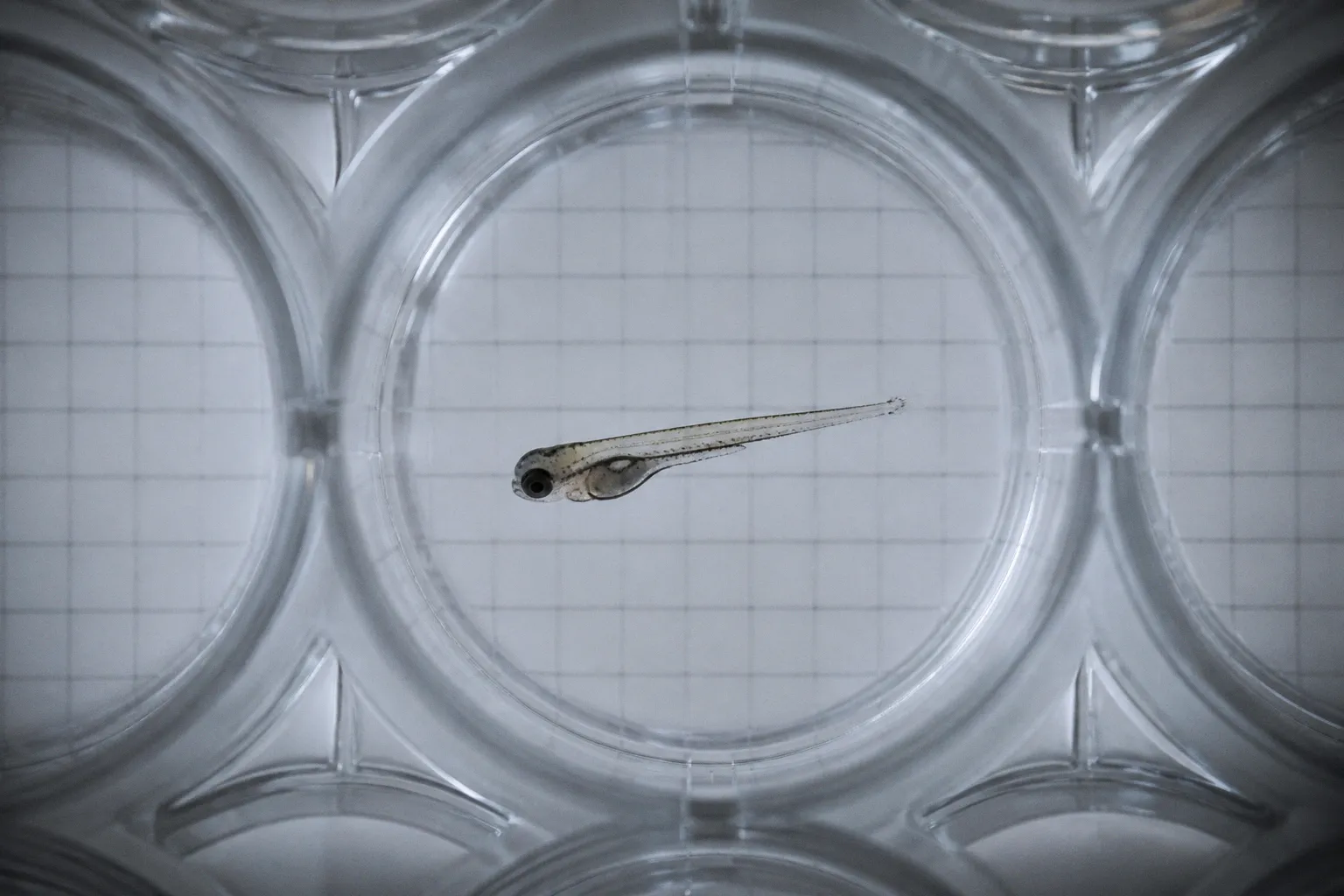
The tracking software works beautifully until the assay starts. Then the larvae disappear into glare, a stimulus change becomes “movement,” and your clean dose-response curve turns into a very expensive collection of suspicious blobs.
Compare car rental deals in United Kingdom
See available offersPartner link — DiscoverCars comparisonWe have all made some version of this mistake: choosing software because it says “automated zebrafish tracking,” then discovering that automation only works when the arena is perfectly lit, the fish never touch, the background behaves, and the behavior of interest looks exactly like the demo video. Real larval zebrafish are less cooperative. They drift, dart, freeze, collide, hide at the wall, and occasionally produce a beautiful biological response that looks exactly like an imaging artifact.
The right choice in a larval zebrafish behavior tracking software comparison depends on the question you need to answer. If you are screening hundreds of wells for locomotor activity, you need throughput and reliable hardware integration. If you are measuring eye angle, tail curvature, bout structure, or subtle posture changes, you need markerless pose estimation. Those are not the same problem, and no software package can make them the same by adding the word “AI” to its brochure.
Start with the behavior, not the software
Before you compare platforms, write down what the fish actually need to do for your experiment to count as a success. “Track the larvae” is not an experimental endpoint. It is a technical requirement that may support several very different endpoints.
For a basic locomotor assay, you may need:
- total distance moved;
- average or maximum speed;
- movement duration;
- active versus inactive time;
- freezing;
- thigmotaxis or wall preference;
- response to light, sound, vibration, or another stimulus;
- movement across repeated time windows;
- a reliable output from 24-, 48-, or 96-well plates.
For a more detailed neurobehavioral assay, the useful variables may look completely different:
- tail-beat frequency;
- tail curvature and bend angle;
- eye position;
- body orientation;
- turn angle;
- initiation latency;
- bout classification;
- left-right asymmetry;
- coordination between body segments;
- response trajectory after a sensory stimulus.
A centroid tracker can handle some of the first group very well. It cannot suddenly become a tail-kinematics system because you need one more graph. Conversely, a pose-estimation pipeline may give you exquisite body-point data while demanding considerably more preparation, annotation, training, and quality control than a high-throughput locomotion assay can tolerate.
That distinction should drive the entire procurement conversation.
The best zebrafish tracking software is not the one with the longest feature list. It is the one that produces the cleanest signal for the behavior your hypothesis actually requires.
Two families of tracking problems
Commercial systems such as EthoVision XT, ZebraLab, and ANY-maze generally appeal to labs that want a structured, integrated workflow. They can support multi-arena tracking, automated locomotion analysis, stimulus control, or high-throughput plate-based experiments, depending on the configuration.
Open-source tools such as ToxTrac, DeepLabCut, and SLEAP give you more flexibility, but they solve different technical problems:
- ToxTrac uses background subtraction and contour-based algorithms for multi-organism tracking. It is useful for movement, position, and trajectory analysis, but it does not provide markerless body-part pose estimation such as eye angle or detailed tail kinematics.
- DeepLabCut and SLEAP support markerless pose estimation. You define body points, annotate frames, train a model, and then extract detailed movement features.
- Specialized analysis packages may sit between these options, depending on the assay and the image format, but the same rule applies: inspect the actual output rather than trusting the label on the software page.
The phrase “open source” also needs a little bench-side translation. It often means lower licensing cost and greater control. It does not mean zero cost. Your time, annotation labor, GPU access, pipeline maintenance, and troubleshooting all belong in the budget, even if nobody sends you an invoice.
Commercial systems: when integration earns its keep
Commercial software makes the strongest case when your experiment has many arenas, repeated sessions, standardized stimuli, and limited tolerance for manual intervention. In that setting, the value does not come only from tracking. It comes from keeping acquisition, stimulation, tracking, and data export in one workflow.
EthoVision XT
EthoVision XT is a broad behavioral tracking platform with different licensing tiers and capabilities. The Essential tier is priced at $3,495 excluding tax for single-animal tracking. The Advanced tier is priced at $9,995 excluding tax for tracking multiple animals in multiple arenas.
That price difference tells you something important about how to think about the platform. You are not simply buying a more polished version of the same analysis. You are paying for a different scale of experiment and a different level of tracking complexity.
EthoVision may make sense when you need:
- a commercial interface that multiple users can learn quickly;
- repeatable arena definitions;
- multi-arena workflows;
- structured behavioral outputs;
- support for recorded video or live acquisition, depending on the setup;
- a platform that fits into a larger behavioral phenotyping environment.
The trap is buying a license tier that does not match the assay. If you track one larva in a single arena and need only distance moved, the Advanced tier may be unnecessary. If you need several animals across several arenas, an entry-level license may leave you redesigning the experiment around the software’s limitations.
Treat the license as part of the experimental design. Ask how many animals you need to track, whether they may overlap, whether you need individual identity over time, and whether your endpoint depends on body parts rather than the animal’s center. Those answers matter more than the product name.
ZebraLab with ZebraBox
ViewPoint’s ZebraLab, integrated with ZebraBox, targets automated zebrafish behavioral experiments with a stronger emphasis on high-throughput workflows. The system can track larval locomotion across multi-well plates, including 24-, 48-, and 96-well layouts, while pairing the assay with stimuli such as light and sound.
This is a very different proposition from building a flexible pose-estimation pipeline. ZebraLab is attractive when your experiment needs consistent plate geometry, repeated stimulation, and a large number of larvae processed under comparable conditions.
A typical use case might involve:
1. placing larvae into a standardized multi-well format;
2. defining an acclimation period;
3. applying a light or sound stimulus;
4. measuring locomotion before, during, or after the stimulus;
5. exporting speed, distance, or related movement metrics across wells.
The strength lies in repeatability and throughput. The weakness appears when your biological question becomes more specific than locomotion. If the phenotype involves a subtle tail bend, an abnormal eye movement, or a particular sequence of motor bouts, a plate-based integrated system may not give you the resolution you need without additional imaging and analysis.
Also, do not confuse automated acquisition with automated interpretation. A system can collect thousands of movement traces and still leave you with a poor assay if the camera sees reflections, larvae sit at inconsistent depths, or the stimulus creates a global brightness change. Hardware integration reduces some sources of variation. It does not repeal optics.
ANY-maze
ANY-maze supports automated tracking of zebrafish larvae in up to 48 arenas simultaneously, using either live feeds or pre-recorded videos. That makes it relevant for labs that need multi-arena throughput but may not want to commit every experiment to a specialized plate-reader configuration.
Its appeal is practical: you can work with a larger number of apparatuses or arenas while preserving a structured analysis workflow. This can help with assays that use individual wells, small tanks, or repeated behavioral chambers rather than one specific integrated plate system.
The question to ask is not merely whether 48 arenas fit on the specification sheet. Ask whether all 48 arenas will produce comparable data in your room, with your camera, your illumination, your larvae, and your stimulus timing. Throughput on paper is not the same as usable throughput. If half the arenas sit in glare or fall outside the clean field of view, the software has not given you a 48-fold improvement. It has given you a larger file-management problem.
Current ANY-maze pricing may require a custom quote, so compare the full system cost rather than trying to infer it from a license headline. Include cameras, acquisition hardware, stimulus equipment, installation, training, and the time required to validate the setup.
Open-source tools: flexible, powerful, and not magically effortless
Open-source zebrafish tracking software can be an excellent choice when you have unusual arena geometries, a strong computational collaborator, or a biological question that standard locomotion outputs cannot capture. It can also be the sensible option for a small lab that needs to begin with existing video rather than purchase a complete commercial rig.
But open source shifts responsibility toward your team. You gain control over the pipeline, and you inherit the pipeline’s maintenance.
ToxTrac: efficient locomotion tracking without deep learning hardware
ToxTrac is a free, open-source Windows program designed for high-speed multi-organism tracking. It can process more than 25 frames per second in HD video using background subtraction and contour-based algorithms, without requiring deep learning hardware.
That combination makes ToxTrac useful when the endpoint is primarily movement and position:
- trajectory;
- distance;
- speed;
- occupancy;
- movement patterns across arenas;
- multi-organism tracking where body-part detail is not the central question.
It is especially attractive when you need a quick, low-cost route from video to locomotion data. You can avoid a major hardware investment and use a conventional video-processing workflow.
Here is where we need to be precise: ToxTrac is not a pose-estimation tool. It does not give you markerless tracking of the eye, individual tail points, or detailed body curvature. Its contour-based approach can identify and follow organisms, but that is not the same as reconstructing the geometry of the fish’s body.
If your phenotype is reduced activity after drug exposure, ToxTrac may be entirely appropriate. If your phenotype is a change in tail-beat symmetry during an acoustic startle response, you need a different class of analysis.
DeepLabCut and SLEAP: when the body is the data
DeepLabCut and SLEAP use deep learning for markerless pose estimation. Instead of treating the larva as a moving object with one center point, you define the body points that matter to your hypothesis. Depending on the assay, those points might include the eyes, head, trunk, and several positions along the tail.
The workflow requires real preparation:
1. collect representative video frames;
2. manually annotate body points;
3. train the model;
4. inspect predictions on new videos;
5. correct weak or ambiguous predictions;
6. extract biologically meaningful features from the tracked points;
7. document the version, training data, and quality-control decisions.
The annotation set needs to reflect the conditions in which the model will work. If you annotate only bright, isolated larvae in the center of the arena, the model may struggle with larvae near walls, partially overlapping animals, low-contrast frames, unusual orientations, or stimulus-induced blur. The model is not being difficult. You gave it a narrow visual education.
DeepLabCut and SLEAP become compelling when the movement feature itself carries the biology. You may want to distinguish a short exploratory bout from a startle response, quantify tail curvature, or measure how a mutant line changes coordination between body segments. Those questions need more than a centroid and a velocity trace.
The trade-off is time. Training and validating a pose model takes work, and the work does not end when the first prediction file appears. You need to inspect confidence, identify failure modes, and decide how to handle frames where the fish disappears, overlaps, or moves too quickly for reliable localization.
A practical comparison of the main options
The following table is deliberately less glamorous than a vendor feature matrix. It focuses on what each tool is good at in the lab, where it creates friction, and what kind of endpoint it can support.
| Tool or platform | Best fit | Main output strength | Throughput and integration | Main limitation |
|---|---|---|---|---|
| EthoVision XT Essential | Single-animal or simpler tracking workflows | Structured locomotion and arena-based analysis | Commercial workflow with a $3,495 license price excluding tax for the Essential tier | May not fit multi-animal, multi-arena, or detailed pose-estimation needs |
| EthoVision XT Advanced | Multi-animal, multi-arena behavioral tracking | Scaled tracking and organized behavioral outputs | Advanced tier priced at $9,995 excluding tax | Cost can be difficult to justify for simple single-animal assays |
| ZebraLab with ZebraBox | High-throughput larval assays in plates | Locomotion, speed, and distance across repeated wells | Integrated workflows for 24-, 48-, and 96-well layouts, with light and sound stimuli | Less suitable when the key phenotype depends on fine body-part kinematics |
| ANY-maze | Multi-arena tracking with live or recorded video | Automated tracking across up to 48 arenas | Flexible multi-apparatus workflow | Exact current pricing requires a custom quote; validation still depends on camera and arena quality |
| ToxTrac | Low-cost multi-organism locomotion tracking | Contour-based trajectories, speed, and movement | Free, open-source Windows software; supports high-speed HD video above 25 FPS | Does not provide markerless eye or tail pose estimation |
| DeepLabCut | Custom body-part tracking | Detailed markerless pose estimation | Highly customizable and suitable for unusual assays | Requires frame annotation, model training, and ongoing validation |
| SLEAP | Multi-animal or custom pose-estimation workflows | Detailed body-point tracking and movement features | Flexible deep-learning pipeline | Requires technical setup, annotated training data, and careful quality control |
This is why a single ranking of “best zebrafish behavior software” usually misleads. The ranking changes when the endpoint changes.
The camera and lighting can defeat excellent software
A tracking pipeline starts before the software opens. If the image contains unstable illumination, reflections, shadows, or inconsistent depth, the algorithm has to spend its effort guessing what belongs to the fish and what belongs to the room.
For larval zebrafish, clean imaging often depends on details that feel annoyingly small until they ruin a whole run:
- keep the background visually simple and stable;
- avoid reflections from the plate or water surface;
- use consistent illumination across the full field;
- reduce vibration during stimulus delivery and recording;
- confirm that wells at the edge of the plate do not receive a different exposure;
- keep larvae within a predictable imaging plane;
- test the most difficult expected behavior, not only calm baseline swimming;
- record enough frame rate for the fastest movement you intend to quantify.
A high frame rate helps only if the image remains sharp and the file-handling workflow can keep up. ToxTrac’s ability to process high-speed HD video above 25 frames per second can be valuable for rapid movement, but the usable result still depends on contrast, segmentation, and the behavior itself.
For pose estimation, motion blur is particularly unforgiving. A centroid tracker may still find the approximate location of a blurred larva. A pose model asked to identify several tail points in that same frame may produce a confident-looking nonsense trace. This is where visual inspection earns its keep.
What if the software tracks the stimulus instead of the fish?
This is a common failure in light-dark or sensory-stimulation assays. A global brightness shift can change the segmentation threshold across the entire frame. The software then interprets the changing image as movement, even when the larvae barely move.
Build a control around the stimulus itself:
- record an empty plate or arena under the same illumination sequence;
- inspect the background signal before analyzing fish movement;
- test whether the same threshold behaves consistently before and after the stimulus;
- compare raw video with the tracking overlay;
- include a known inactive or immobilized control when appropriate for the assay.
If the tracking overlay jumps when the room changes brightness, do not begin with a more complicated biological interpretation. Fix the image first.
Validation: a small amount of manual work protects a large dataset
Automation does not remove the need for validation. It changes where validation happens.
For a commercial locomotion system, review representative videos from:
- baseline swimming;
- rapid escape or startle movement;
- freezing;
- wall contact;
- larvae close to one another;
- the brightest and darkest parts of the field;
- the first and last wells or arenas;
- any condition that changes the background or stimulus.
For a pose-estimation model, make the validation set deliberately unpleasant. Include low contrast, unusual orientation, partial occlusion, fast turns, larvae near boundaries, and the least photogenic frames in the experiment. If the model only performs well on the frames you would have chosen for a conference slide, it is not ready for the dataset.
A useful validation workflow has three layers:
1. Visual agreement: the overlay follows the larva or body points in the raw video.
2. Metric stability: small changes in thresholds or confidence settings do not radically alter the biological conclusion.
3. Known-behavior response: the pipeline detects behaviors that should appear in positive controls and does not invent them in negative controls.
That second layer matters more than many teams expect. If a tiny parameter change turns a normal swim trace into hyperactivity, your result is partly a software setting. You may still have a usable assay, but you need to know where the analysis becomes unstable.
Do not validate the pipeline on the prettiest video. Validate it on the frames that normally make you swear at the monitor.
Choose by assay scale and endpoint
Let’s make the decision more concrete. Suppose you have four common experimental situations.
You are screening compounds across a 96-well plate
Start with the integrated plate workflow. ZebraLab with ZebraBox is designed around high-throughput larval assays in 24-, 48-, and 96-well layouts, with options for stimuli such as light and sound. The important question is whether your endpoint is locomotion: distance, speed, activity, or a related time-resolved measure.
If yes, an integrated system may save substantial setup and analysis time. You still need to test edge-well effects, plate positioning, dosing consistency, and stimulus artifacts, but the hardware and software are designed to cooperate.
If the compound phenotype appears only as a subtle tail abnormality while total distance remains unchanged, the plate system may tell you that something happened without telling you what happened. That is the moment to add a targeted pose-estimation workflow rather than forcing every question through the screening platform.
You need individual tail kinematics
Look first at DeepLabCut or SLEAP. Define the body points and features that map to the biological question. For example, if you care about tail curvature, decide whether you need a single bend angle, several tail segments, or a full trajectory through time. If you care about startle behavior, define the latency, bout duration, and turn features before you train the model.
Do not begin by annotating thousands of frames. Begin with a representative pilot set that contains the difficult cases. Train, inspect, revise, and then expand. A smaller, well-chosen training set can teach you more about the assay than a large pile of nearly identical baseline frames.
You need multi-organism trajectories at low cost
ToxTrac is a sensible first option when your endpoint centers on locomotion and spatial behavior rather than body-part geometry. It is free, open source, and designed for high-speed multi-organism tracking on Windows.
The key phrase here is “first option,” not “automatic final answer.” Test it on your arena, your larval density, and your lighting. Background subtraction and contour methods can perform well when the image is clean and the fish remain separable. They become less comfortable when organisms overlap or the scene changes in ways the segmentation cannot distinguish.
You need a standardized workflow across many users
A commercial platform may earn its cost through consistency, training, and support. This matters when several people run experiments, when the project will continue for years, or when you need a method that a new researcher can reproduce without becoming the lab’s unofficial software archaeologist.
That does not make commercial software scientifically superior by default. It means the value may sit in workflow stability rather than algorithmic novelty.
The hidden cost is usually not the license
When labs compare commercial and open-source zebrafish tracking software, they often place the license price in one column and everything else in a vague category called “setup.” That hides the real trade-off.
For a commercial system, budget for:
- license tier;
- compatible camera and acquisition hardware;
- stimulus-control equipment;
- installation and training;
- support or service arrangements;
- storage for high-throughput video;
- method validation across plates, wells, and experimental days.
For an open-source workflow, budget for:
- annotation time;
- computing hardware;
- storage and backup;
- pipeline development;
- model retraining when the imaging setup changes;
- scripting and data-cleaning support;
- documentation so someone else can reproduce the analysis;
- time spent diagnosing failures that a vendor might otherwise help resolve.
A free program can be the most expensive option if nobody on the project has time to maintain it. A costly commercial platform can be wasteful if you use only a fraction of its capabilities for a small, simple assay. The correct comparison includes staff time and experimental delay, not just the number printed on the quote.
A practical selection sequence
Use this order when you narrow the field:
1. Define the endpoint in biological language.
Write down whether you need distance, speed, freezing, stimulus response, trajectory, body posture, tail kinematics, or a combination.
2. Define the scale.
Count animals, wells, arenas, videos, and experimental conditions. A single-fish assay and a 96-well screen should not share the same default workflow.
3. Choose the minimum tracking representation that can answer the question.
Use a centroid when a centroid is enough. Use body points when the biology lives in the body shape.
4. Test the hardest image conditions.
Include glare, wall position, fast movement, low contrast, overlapping fish, and stimulus transitions.
5. Compare outputs, not screenshots.
Export the metrics your analysis needs and check whether the files are complete, interpretable, and easy to connect with your statistical workflow.
6. Estimate human time honestly.
Count annotation, QC, troubleshooting, and documentation. “Open source” is not a synonym for “no labor.”
7. Run a pilot before committing to the full experiment.
A short pilot can reveal that your true bottleneck is lighting, camera geometry, or larval placement rather than software.
Where hybrid workflows work best
You do not have to choose one platform for every stage of the project. In fact, a hybrid design often makes more scientific sense.
A commercial plate-based system can handle the first-pass screen, measuring locomotor changes across many conditions. A pose-estimation pipeline can then examine selected compounds, mutant lines, or time points in greater detail. This separates throughput from mechanistic resolution instead of asking one tool to do both jobs badly.
For example:
- use ZebraLab with ZebraBox for a 96-well locomotion screen;
- identify conditions with altered activity or stimulus response;
- record a focused set of larvae under higher-resolution imaging;
- use DeepLabCut or SLEAP to quantify tail and body features;
- compare detailed kinematics with the original locomotion phenotype.
This approach also protects your data. If a compound leaves total distance unchanged but disrupts tail coordination, the high-throughput screen may miss the phenotype. If you begin with detailed pose estimation for every well, the project may become too slow to scale. Two linked assays can give you both breadth and resolution.
The same logic applies to developmental neurobiology. A larval zebrafish model may show a subtle behavioral change that only becomes interpretable when paired with neural activity imaging or a transgenic line. Behavioral tracking software will not explain the circuit by itself, but a clean behavioral endpoint can make the imaging experiment far more informative.
The failure modes worth catching before the real run
A few problems appear so often that they deserve a place in your prep notes.
The software tracks the arena boundary
This usually points to reflections, poor contrast, or an unstable background. Inspect the raw frame and the segmentation overlay together. If the boundary is more visually prominent than the larva, improve the image before adjusting the biological analysis.
The model performs well on baseline but fails during startle
Fast movement, blur, unusual posture, and rapid direction changes can break a pose model trained mostly on quiet swimming. Add those frames to the training and validation sets. Do not hide them by filtering them out unless you can justify the filter biologically.
Neighboring larvae merge into one object
Contour-based tracking and centroid methods can struggle when larvae overlap or approach one another. Lower density, adjust the arena geometry, improve contrast, or move to an identity-aware pose-estimation workflow if individual trajectories matter.
The output looks precise but does not map to the hypothesis
A spreadsheet full of speed values is not automatically useful. Ask what the metric means biologically. If your hypothesis concerns sensory startle, average speed across a long recording may erase the response you care about. Use latency, bout structure, or a defined post-stimulus window instead.
The analysis changes when the operator changes
This is a workflow problem, not a personality test. Document arena definitions, thresholds, confidence filters, exclusion rules, and file naming. Commercial software may reduce operator variability, while open-source pipelines may require more explicit documentation. Either way, write down the method while the details are still fresh.
So which software should you choose?
Choose EthoVision XT when you need a commercial, structured workflow and can justify the license level by the scale or complexity of your behavioral tracking. The Essential tier supports single-animal tracking at $3,495 excluding tax; the Advanced tier expands to multiple animals and arenas at $9,995 excluding tax.
Choose ZebraLab with ZebraBox when your priority is integrated, high-throughput larval locomotion across standardized multi-well plates, especially when light or sound stimuli belong in the assay.
Choose ANY-maze when multi-arena tracking across live or recorded video fits your workflow and the ability to process up to 48 arenas simultaneously is useful for your design. Get the complete quote and test the real camera arrangement before you build the study around the headline capacity.
Choose ToxTrac when you need free, open-source, contour-based locomotion tracking for multiple organisms and do not require detailed body-part pose estimation.
Choose DeepLabCut or SLEAP when your biological question depends on posture, eye position, tail movement, or another body-point feature that centroid tracking cannot capture. Plan for annotation, training, validation, and pipeline maintenance from the beginning.
And choose a hybrid workflow when your project genuinely has two jobs: screen broadly, then explain the phenotype in detail.
The software is only one part of the signal chain, but it is a part that can quietly decide what your experiment is capable of seeing. Start with the behavior, match the tracking representation to the biology, test the ugly videos, and price the human labor honestly. Once the prep is clean, the choice becomes much less mysterious—and your larvae can get back to doing the interesting part.