Rocky Top Mountain Coaster tickets: day vs night ride changes
Nine minutes and change. That is the runtime of a single descent on the Rocky Top Mountain Coaster — a track that threads across more than twenty acres of Smoky Mountain terrain, climbing four…
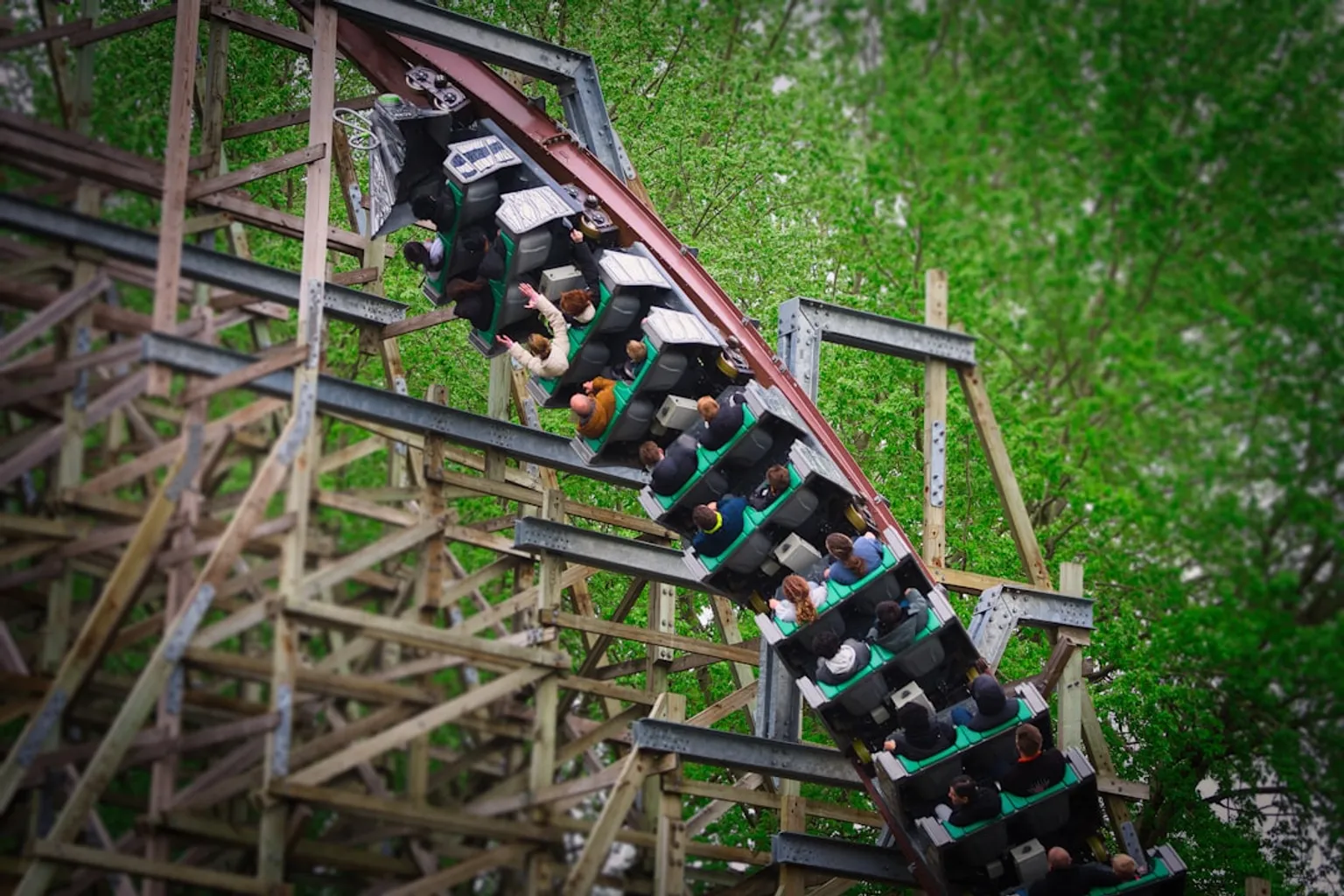
Rocky Top Mountain Coaster Tickets: Day vs. Night Ride Changes
Nine minutes and change. That is the runtime of a single descent on the Rocky Top Mountain Coaster — a track that threads across more than twenty acres of Smoky Mountain terrain, climbing four separate lift hills before dropping through four distinct descents. It is, by any structural measure, one of the longest alpine coaster experiences you can operate east of the Mississippi. And the single most consequential variable in how that nine minutes registers is not your braking technique or the sled you select. It is the hour on the clock when you board.
Prices checked on August 15, 2026 · current price on the partner page.
Official website — rockytopcoaster.com
- Time to spend: 2–3 h
- Best time to visit: early morning
Prices are indicative and may change — confirm the price and availability on the partner page.
Partner link — GetYourGuide ticketsThe difference between a daytime run and a nighttime run on this Pigeon Forge attraction is not cosmetic. It recalibrates the entire sensory input of the ride — what you track visually, how you process speed, and which cognitive load dominates your attention. If you are calibrating a visit around Rocky Top Mountain Coaster tickets, understanding this split is the first operational decision you need to make.
The Sensory Shift: Daylight Vistas Versus Illuminated Night Tracks
A daytime ride on Rocky Top prioritizes spatial orientation. The Great Smoky Mountain forest canopy stretches in every direction, and the track's elevation changes give you line-of-sight across ridgelines and valleys that you simply cannot access from the road. The visual field is wide, natural, and unobstructed. You read the terrain. You map the descent in real time against the landscape below.
Switch to a night ride, and the entire input changes. The track itself becomes the primary visual stimulus. Thousands of individual light points line the rails and surrounding structures, and four themed tunnels along the route transform into immersive light corridors. The forest recedes into darkness. Your visual field narrows to the illuminated path directly ahead, which compresses your perception of speed — the same thirty-mile-per-hour descent feels faster when you are tracking light streaks instead of tree lines.
Daytime gives you the mountain. Nighttime gives you the machine. Same track, same sled, same brakes — completely different ride.
This is not a trivial distinction. If you are riding with younger passengers or anyone prone to sensory overwhelm, the daytime configuration offers more environmental anchoring — horizons, depth cues, natural light. The night ride, with its concentrated light tunnels and darkness between them, is a higher-intensity visual event. Neither is superior. They solve different experiential problems.
Understanding the Ticket Structure and Re-Ride Savings
The pricing architecture at Rocky Top is straightforward, but it contains one mechanism worth isolating: the re-ride discount.
A standard single-ride ticket covers one full descent — day or night, your choice. There is no separate tiered product for daytime versus nighttime. The same ticket redeems at either time. What changes is the lighting configuration on the track, not the ticket class.
The re-ride option is where the value calculation shifts. If you ride once and want to go again the same day, the second ride is available at a significantly reduced rate. This is the structural incentive to experience both configurations — ride in daylight to map the terrain, then return after dark to run the illuminated version.
| Parameter | First Ride | Same-Day Re-Ride |
|---|---|---|
| Coverage | Full 9+ minute descent | Full 9+ minute descent |
| Day or night | Either, same ticket | Either, same ticket |
| Pricing tier | Standard adult or kid rate | Discounted re-ride rate |
| Best use case | Single experience | Compare day vs. night |
Kid tickets apply to riders ages three through nine. The re-ride discount extends to children as well, which makes the day-plus-night combination a practical family option rather than a budget stretch.
If you are visiting Pigeon Forge for multiple days and want to pair the coaster with other outdoor activities, the area offers several guided options. For riders who want to extend the adrenaline circuit beyond the coaster track, GetYourGuide runs a guided Smoky Mountains off-road ATV adventure that covers backcountry terrain you cannot access from the coaster itself.
Technical Specifications and Rider Safety Requirements
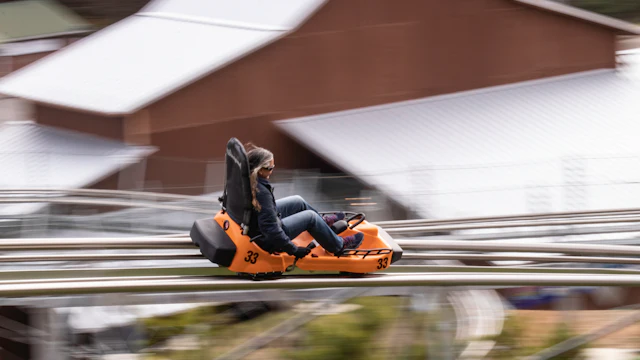
Rocky Top's sled system is manually braked. Each sled carries a hand-operated lever that lets the rider modulate speed from a crawl up to approximately thirty miles per hour. There is no automated speed governor on the descent — the rider calibrates velocity in real time based on comfort, corner radius, and track conditions.
This design places the safety burden directly on the operator, which is why the height and age requirements exist as hard gates rather than suggestions.
Solo control requirements:
- Minimum age: 16 years old
- Minimum height: 56 inches
- Must operate the hand brake independently throughout the ride
Passenger requirements:
- Minimum height: 38 inches
- Riders ages 3–6 must ride with someone 16 or older
- Maximum height: 84 inches (sled geometry constraint)
Weight limits per sled:
- Dry conditions: 375 pounds maximum
- Wet conditions: 330 pounds maximum
The forty-five-pound differential between dry and wet capacity is a friction coefficient adjustment. Wet rails reduce the braking margin, so the system compensates by lowering the total mass the brake must control. If you are riding after rain or during light snow — both permitted operating conditions — factor this into your sled loading plan.
The brake is yours. The speed is yours. The weight limit is physics.
One operational note: the track does not close for rain or snow. It closes for thunderstorms and severe weather. If you arrive during a passing shower, expect a brief weather hold rather than a cancellation. The surface drains and the sleds are designed for wet operation, just at reduced weight capacity.
Operational Logistics for Year-Round Mountain Coaster Access
Rocky Top runs a daily schedule from ten in the morning to ten at night, three hundred sixty-five days a year. This is a wider operating window than most alpine coasters in the Southeast, and it directly enables the day-versus-night comparison that defines the ride's dual identity.
Seasonal operating notes:
- Spring and summer: Longest daylight windows mean you can ride in full sun through roughly 8:30 p.m., then catch the night configuration in the final ninety minutes. Peak crowd density hits mid-afternoon.
- Fall: Shorter days shift the night-ride window earlier. The attraction runs seasonal light events during this period — the exact upcharge structure for special event nights varies, so check current availability at the ticket counter.
- Winter: Earliest nightfall means the longest illuminated ride window. Cold weather does not affect operations, but dress for an open-air descent at speed. Wind chill at thirty miles per hour in January is a real variable.
Crowd management strategy:
1. Arrive before noon for minimal queue times on weekdays.
2. Target the 8–10 p.m. window for night rides — most family traffic clears by then.
3. Use the re-ride discount to stack both configurations in a single visit rather than splitting across two days.
4. Weekday visits consistently outperform weekends for wait time reduction.
The attraction has been voted Best Mountain Coaster in Pigeon Forge across multiple recent years and earned Best Outdoor Attraction recognition as well. That ranking translates directly to queue density during peak tourist season — June through August and the October fall-color window are the highest-traffic periods. Plan accordingly.
Available Discounts for Military and First Responder Groups
Rocky Top runs a standing fifty-percent discount for active military, veterans, police officers, firefighters, and first responders. This applies to standard ride tickets and requires valid identification at the ticket window.
Group discounts activate at twenty or more riders. If you are organizing a team outing, corporate event, or large family gathering, the group rate stacks with the standard pricing structure — it does not replace the re-ride discount but operates as a separate tier on the initial ticket.
Discount eligibility quick reference:
- Military (active and veteran): 50% off with valid ID
- Police, fire, first responders: 50% off with valid ID
- Groups of 20+: dedicated group rate
- Kids ages 3–9: reduced kid ticket pricing
- Same-day re-ride: discounted rate regardless of other discounts
Verify current discount stacking rules at the point of sale. Policies on combining group rates with the re-ride discount can shift seasonally, and the ticket counter will confirm what applies to your specific booking.
Closing Checklist: Calibrating Your Rocky Top Visit
Before you commit to a ride time, run through this sequence:
1. Define your primary objective. Scenic mountain views and natural terrain mapping — ride daytime. High-intensity light immersion and compressed speed perception — ride night.
2. Check weather and weight thresholds. Wet conditions drop the sled capacity ceiling. If your combined rider weight is near the limit, dry conditions give you more margin.
3. Confirm rider eligibility. Solo operators must clear 56 inches and 16 years. Passengers must clear 38 inches. No exceptions on the height gates.
4. Budget for the re-ride. The day-plus-night comparison is the highest-value use of the ticket structure. The discounted second ride exists specifically for this purpose.
5. Time your arrival. Early for short queues. Late evening for the night configuration with lighter traffic.
6. Bring valid ID if eligible for service discounts. The fifty-percent rate is substantial but requires documentation at the window.
The coaster does not change between day and night. The track, the sleds, the brakes, the lift hills, the drops — all identical. What changes is the light, and light changes everything about how your nervous system processes the descent. That is the variable worth calibrating for.